Lost Language
How My Mother Tongue started Eluding Me as a Tool of Thought ever since October 7, 2023
Solo exhibition
Waidspeicher Galerie, Erfurt, Germany
23.3.25-27.4.25
Brecha
concrete, stainless steel, aluminum
2024


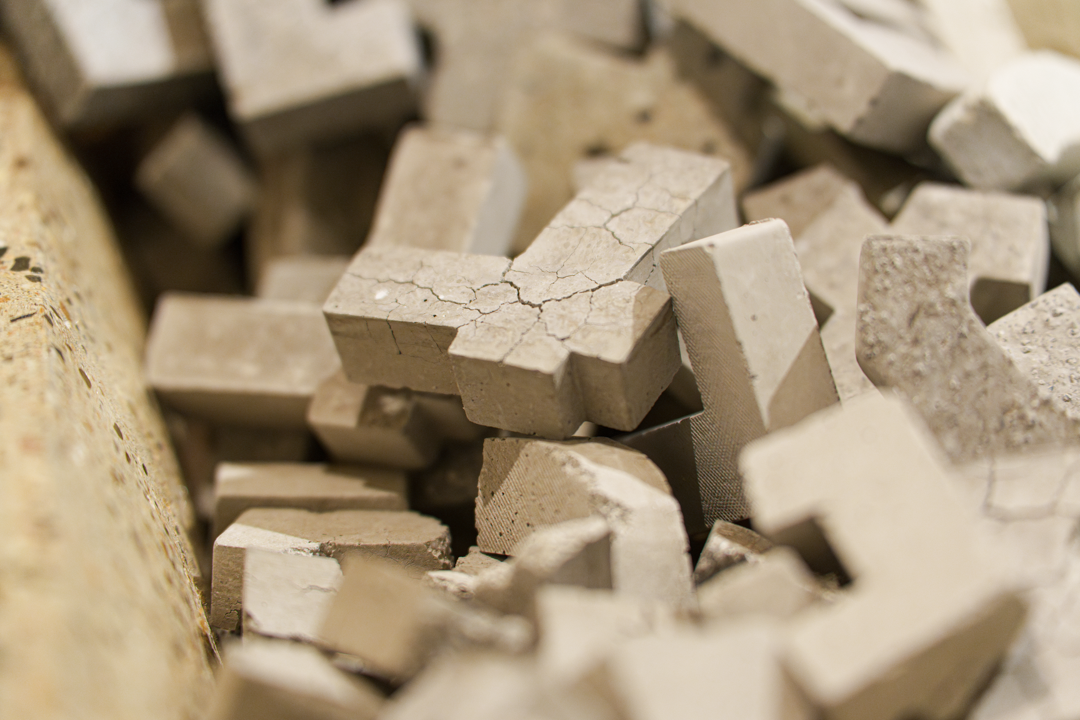
This work carries the double-edged title Brecha – a word that can mean both “escape” and “pool,” capturing a tension between departure and containment. It is here that the two typefaces featured throughout this exhibition converge.
One is a brutalist Hebrew font from the 1950s, historically associated with socialist aesthetics. Once common in Israeli public life, it now lingers only in fading government signage and mid-century communist posters. Its presence here evokes a sense of ideological relic – bold, rigid, and almost extinct.
In contrast stands Frank Ruehl, a more contemporary and versatile typeface. Still widely used today, it flows with a softer, more expressive character. It bends where the other stands firm, invites nuance where the other declares.
These two fonts – one brittle with memory, the other alive with possibility – meet within the framework of this artwork. Their dialogue is carved into repurposed domestic materials: plaster softens the hardness of the cupboard’s structure, allowing room for collapse, growth, or flight.
No Title, 2025
plaster, ready-made cupboard
2025

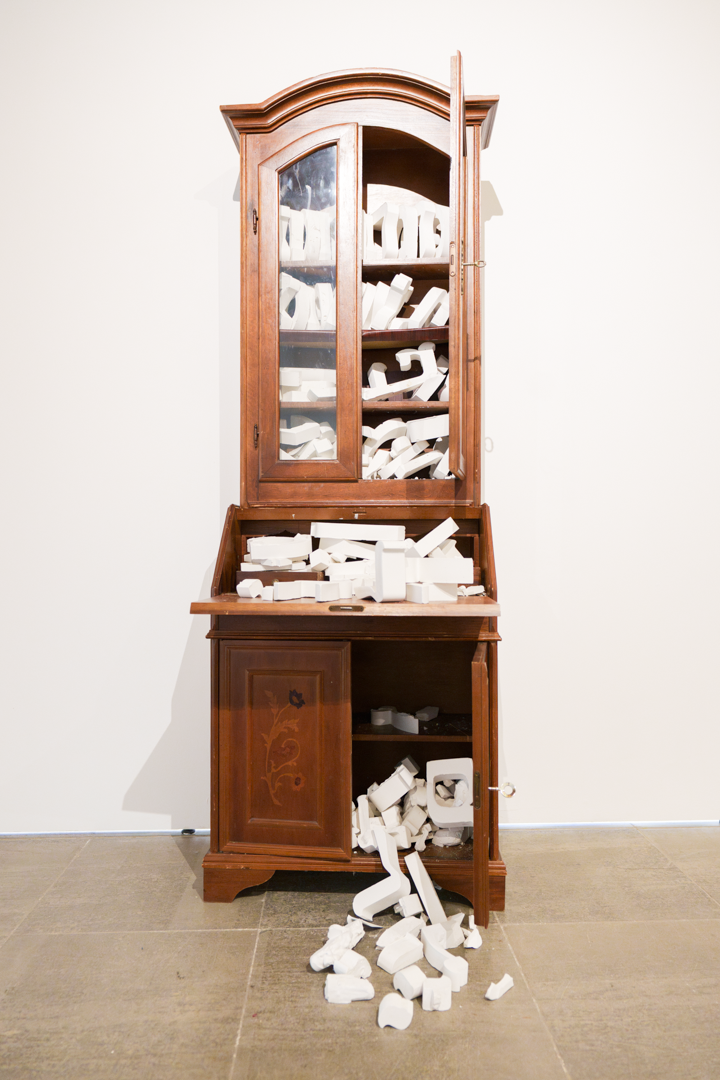


No Title 2025 is the only piece in this collection that doesn’t reference any specific text. In that sense, it comes closest to the kind of abstraction I often seek in my work. Interestingly, its concept was among the first to be resolved – even before the exhibition itself had fully taken shape, the idea was already forming. What proved most challenging here wasn’t the meaning but the material. I experimented with concrete and various metals before ultimately choosing plaster. That decision was driven by a desire to imbue the piece with a sense of impermanence – something fragile, almost provisional. Plaster gave the work a brittle, ephemeral quality, as though it might not survive the moment.
Luchot
concrete, stainless steel, moss, rust
2024


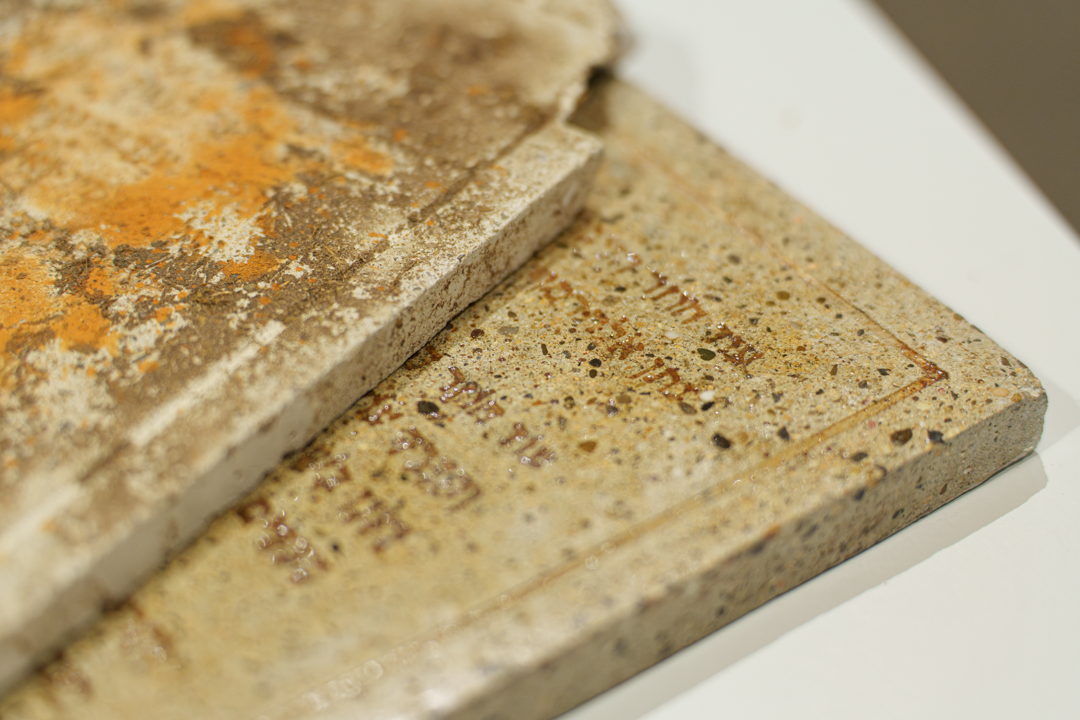

These two plates bear the engraved text of one of Natan Alterman’s most beloved poems, Od Chozer haNigun – The Tune Returns Again. The poem reflects on the cyclical nature of human experience: how melodies, memories, and emotions resurface over the course of a lifetime. Alterman’s words suggest that life is less a linear path than a spiraling movement, where the past reemerges in unexpected ways – as music, as memory, as haunting echo.
In its lines, the poem evokes a return not just to familiar moments, but to one’s own emotional roots – the inner landscape shaped by early encounters, joys, and wounds. The repetition of the “tune” becomes a metaphor for the enduring imprint of what once was, insisting gently, or sometimes forcefully, on being remembered.
For me, this poem has been a quiet companion for over two decades – especially through Berry Sakharof’s 1990s recording, which gave the text a new, raw intimacy. I carried that version with me like a thread. Over time, I too experienced that inevitable return: to language, to family, to longing, to origin.
And yet, in recent years, that same return feels obscured – buried under the weight of rubble, restlessness, and modern anxiety. The tune still plays, but now it’s muffled, echoing from beneath layers I’m still trying to sift through.
5 books
5 pieces of 600mm x 800mm
canvas, silk print, LED, wood
2024


Here we have another series of five. Once again I chose scans from books that have profoundly shaped me. There is my childhood Siddur, a book exploring the mystical dimensions of the Hebrew alphabet, a volume on the Baal Shem Tov, and a poem by Alexander Penn.
By juxtaposing the organic material, the canvas, with the inorganic, the plexiglas, I wanted to introduce friction. The texts are alternately legible and hidden, revealed in sharp clarity in some places and blurred or obscured in others. This treatment invites a sense of discomfort, a quiet dissonance. It mirrors the experience of approaching texts that feel like home, familiar yet layered, comforting yet unsettling when revisited with new eyes.
No Title
1300mm x 1300mm
canvas, acrylics
2021


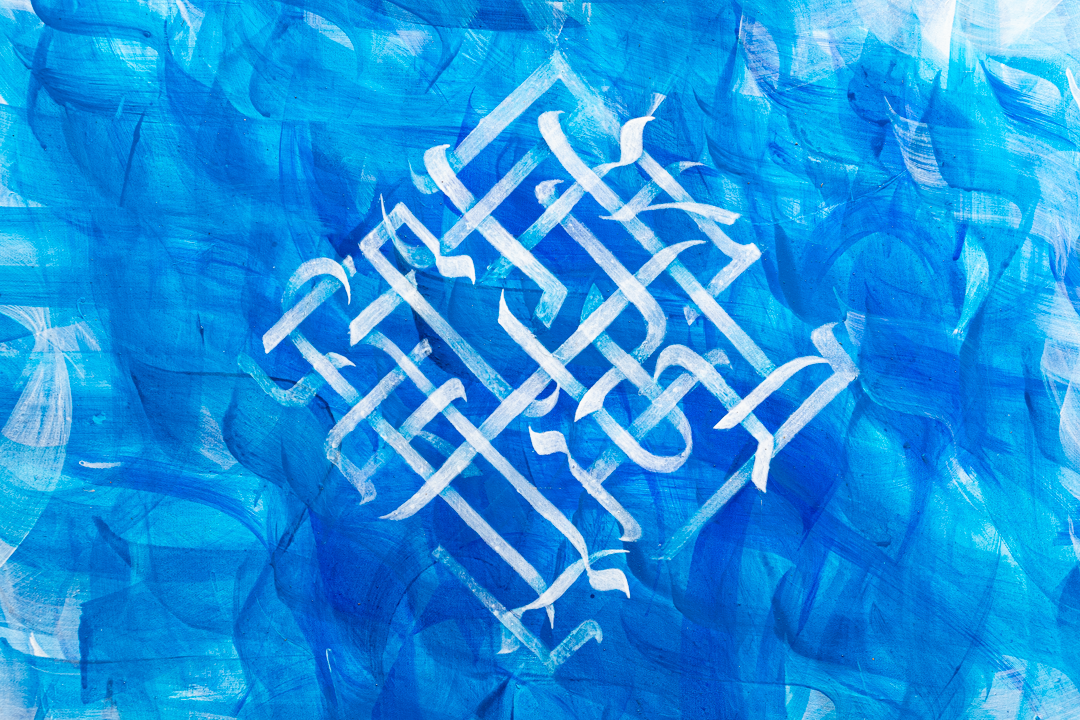


This work belongs to an earlier period in my practice. I painted it at a time when I had just begun to sense that there might be some hidden structure, some deeper coherence, lying behind the visible surface of the world. It was a moment of discovery, when I first felt that the chaos of experience might be underpinned by something quieter and more ordered, even if that order remained out of reach.
Looking back now, I see a kind of innocence in this piece. There is something almost naive about its trust in that underlying harmony. Although the text is illegible, the composition radiates a sense of calm and balance. It feels peaceful to me. At the time, I believe I was searching for that peace through the act of stepping away from language. Not abandoning it entirely, but moving beyond its noise, its rules, its insistence on clarity and precision.
For me, the experience of transcending language holds the possibility of stillness. A kind of silence that allows a larger or more essential truth to emerge. When we are no longer confined by grammar, no longer locked into predefined meanings and semantic structures, there is a space that opens. And in that space, something else may become visible. Something we could not access when language was still directing the terms of our encounter.
This work, then, is not about escaping language, but about loosening its grip. It is about creating a moment in which meaning is not delivered, but sensed. A moment in which the absence of clarity allows for a different kind of presence. One that feels less like explanation, and more like recognition.
5 texts
5 pieces of 600mm x 800mm
canvas, silk print, LED, wood
2024

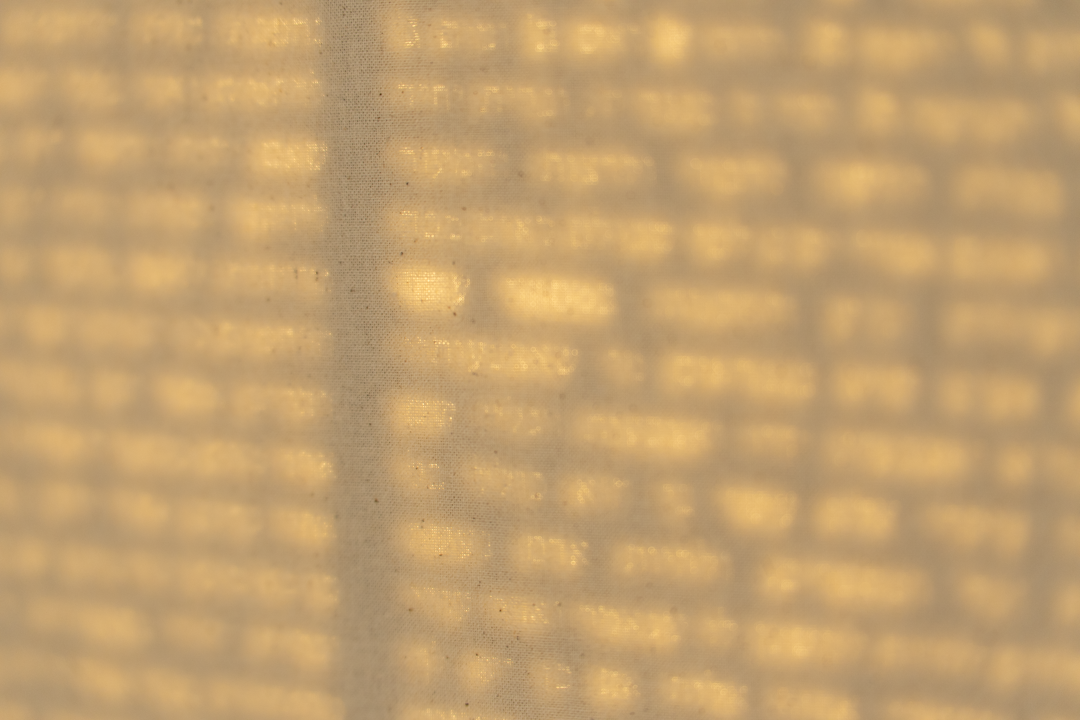


“5 texts” is a five-piece series that explores the threshold between legibility and illegibility. This tension runs through much of my artistic practice. It is not only a visual concern but also a deeply personal and philosophical one.
For this series, I selected texts that are close to my heart, each carrying a different emotional and intellectual resonance. Among them is a poem from my youth, still echoing with formative sentiment, a page from Pardes Rimonim, the sixteenth-century mystical treatise by Moshe Cordovero, and passages from Sefer Yetzirah, one of the earliest and most enigmatic works of Jewish mysticism. Each text serves both as an anchor and a departure point, familiar yet elusive.
I mounted the texts in a way that allows them to be perceived clearly from a distance. At first glance, they offer recognition, even comfort. But as the viewer steps closer, the letters begin to disintegrate, dissolve, or fragment. The words lose their stability. The closer one gets, the more the text evades. What initially appears accessible becomes opaque. This is not an accident. It is a deliberate choreography of distance and nearness.
This phenomenon reflects something I experience continually in my life. The act of drawing closer to language, to meaning, to memory often leads to rupture or loss. What promises intimacy can instead yield estrangement. The attempt to grasp, to see clearly, to understand, can end up unraveling both the object and the observer. It is a meditation on how knowledge, especially when pursued with intensity, can destabilize rather than ground us.
In that sense, this work is not only about text or mysticism. It is about the quiet violence of approaching something too closely. It is about how meaning withholds itself precisely at the moment we believe we are about to receive it.In this work, I took two layers, one simply a scan from the book and another, showing the same text but in a kind of “faux Hebrew font”. A font I created to be recognisable as Hebrew but illegible. None of the letters are truly Hebrew letters, but all of them look like they might be. As a result, we recognise the text as a familiar text, but fail at the attempt of actually reading it.
Sand
LED, wood, transparent paper, ink
600mm x 800mm
2025
Sand is a text by Shlomo Sand, a scholar teaching at the Tel Aviv university. In 2008 he published The Invention of the Jewish People, challenging traditional narratives about Jewish history. In the book, he argues that modern Jewish identity is largely a 19th-century construction, not a direct continuation of an ancient nation.
regardless of what we personally think about his research, the book sparked intense debate and for over a decade was an important question mark in my own world. It explained a lot. In fact, it was the only reasonable explanation to a lot of important questions. It felt like even though it raised questions, more than it offered answers I felt I could trust, it gave me some solid, rational ground to stand on in a world's dominated by ideology.
Reading through the book again, this year, my experience was simply that of more doubt, less ground, less clarity. And in this case, maybe I felt now what others had felt back when the book was first published.
Likutey Moharan 2025
LED, wood, transparent paper, ink
600mm x 800mm
2025
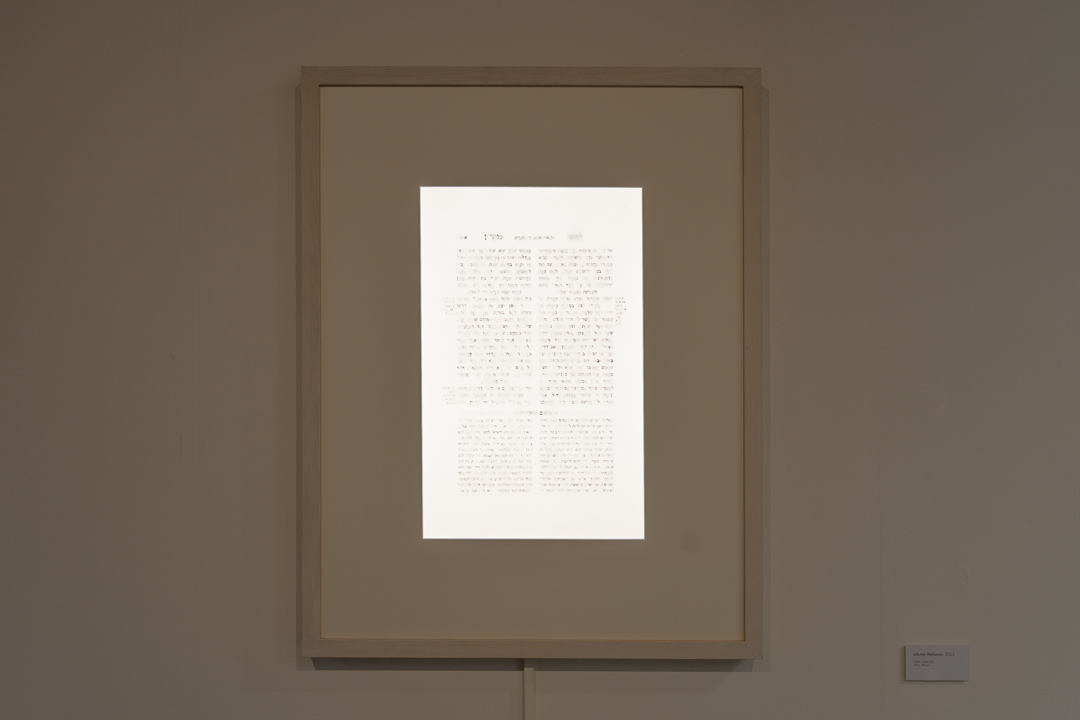
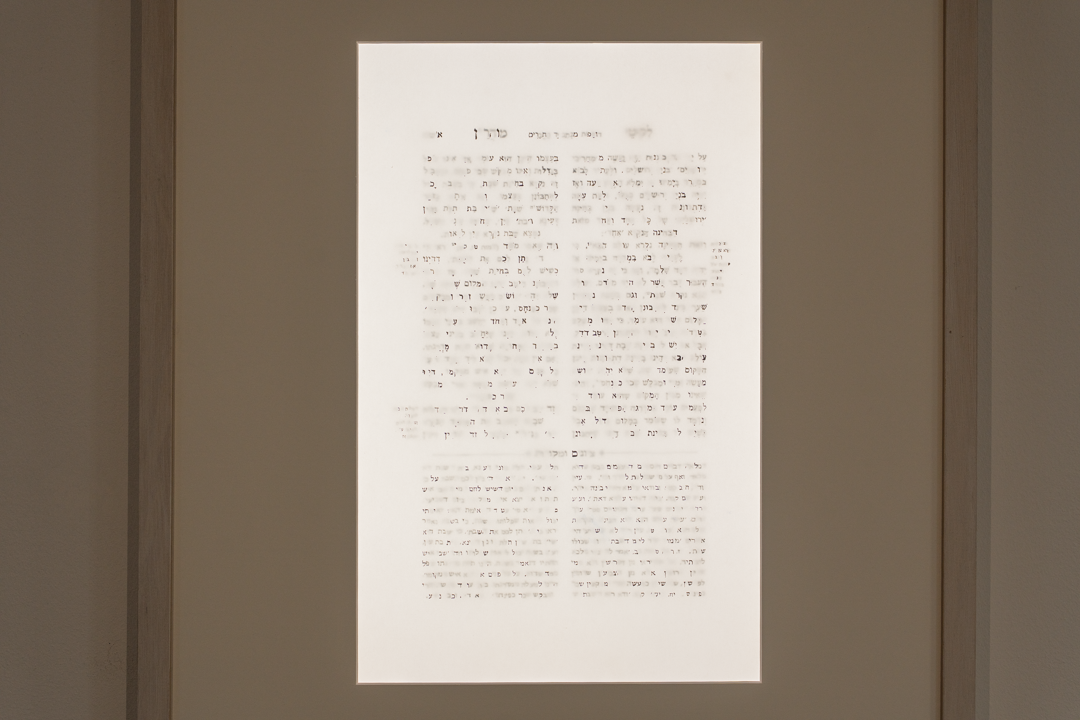
One of the texts I’ve always found the most difficult, and in some strange way the most important, is Likutey Moharan by Rebbe Nachman. I doubt I’m alone in that. It is clearly a central work. People return to it again and again, and I can see why. But still, every time I open it, I feel thrown.
There is something in it that speaks to me, that grabs me, and at the same time I can’t seem to hold onto it. It does not let me in easily. The language twists, the logic jumps, the images feel like they come from a world that is not mine, and yet I keep circling back to it. I cannot ignore it. It is like the text is aware of me, even as it keeps itself at a distance.
It is not just that it is hard. There are plenty of hard texts. It is more that it feels deliberately unavailable. Like it is not trying to be understood, at least not in any conventional way. There is a kind of holiness in how opaque it is. And that tension, between being drawn in and shut out, is exactly what keeps me coming back.
It calls me somehow from this place of not belonging. I do not know if I will ever really understand it, but maybe that is not the point. Maybe the not understanding is part of the work. Maybe it is the way the text insists on a kind of humility, or patience, or just staying with the mystery.
Whatever it is, it works on me. Even when I do not know what to do with it. Maybe especially then.
Yesh Yeladim ZigZag
5 pieces of 600mm x 800mm
Burnt canvas, acrylics, wood
2024
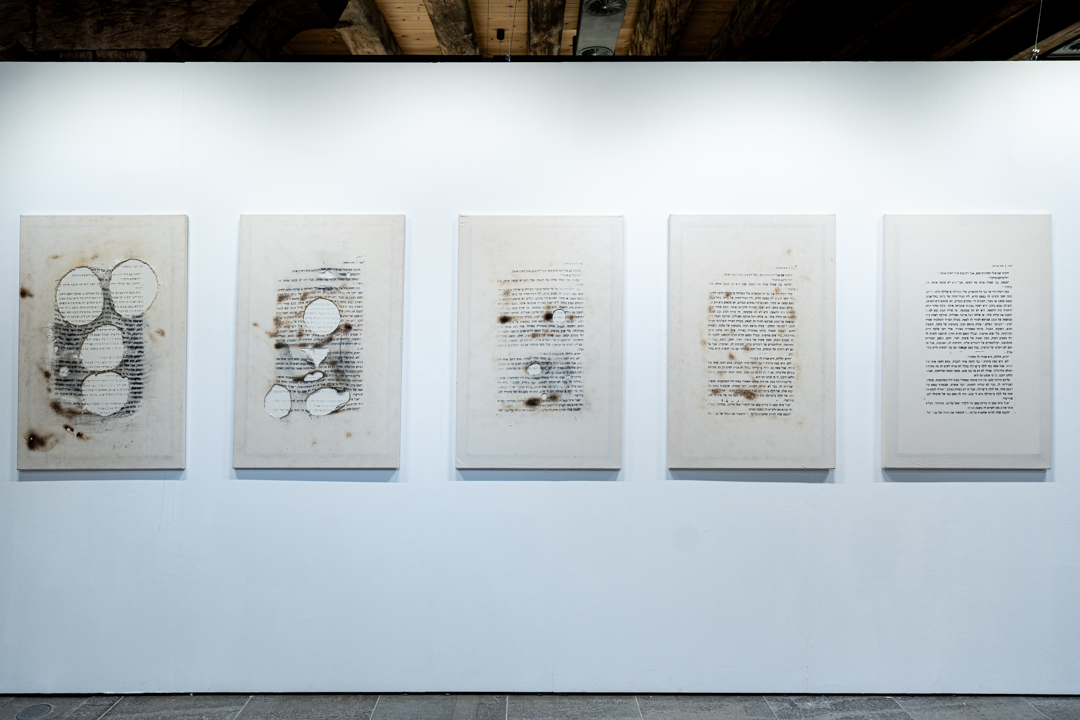
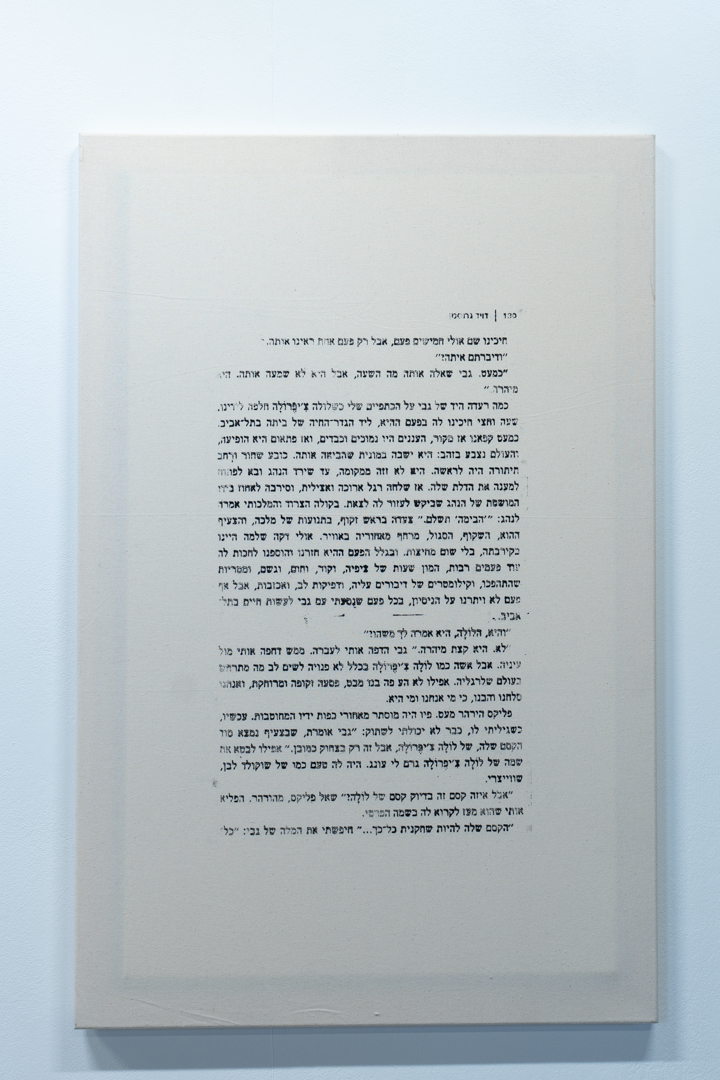
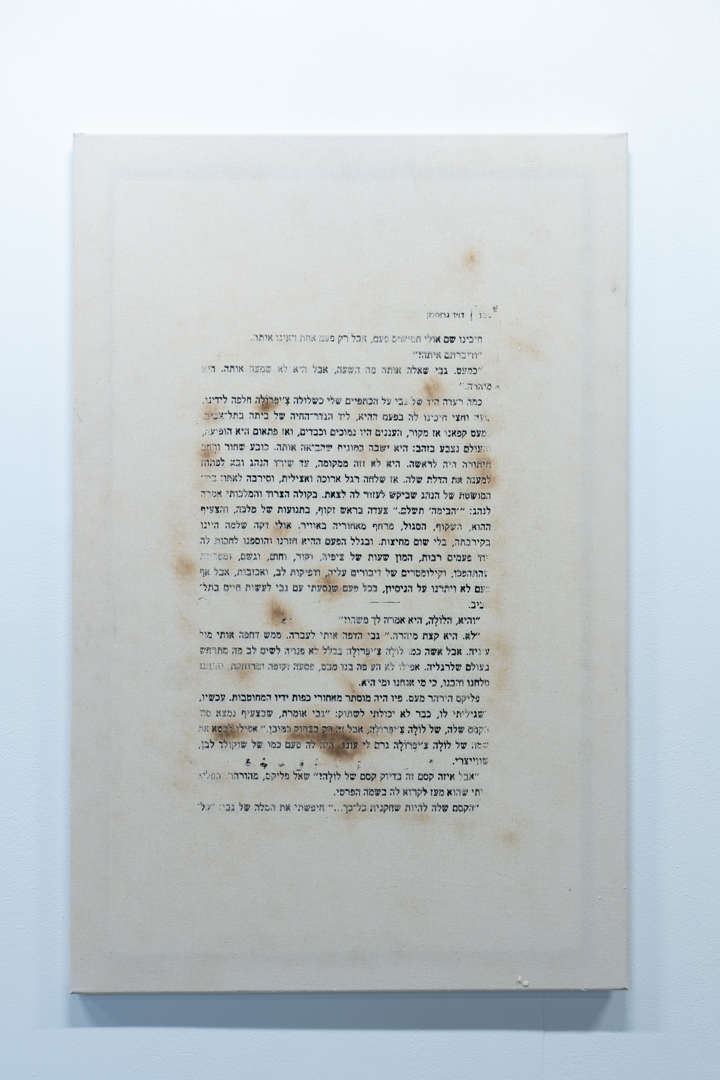
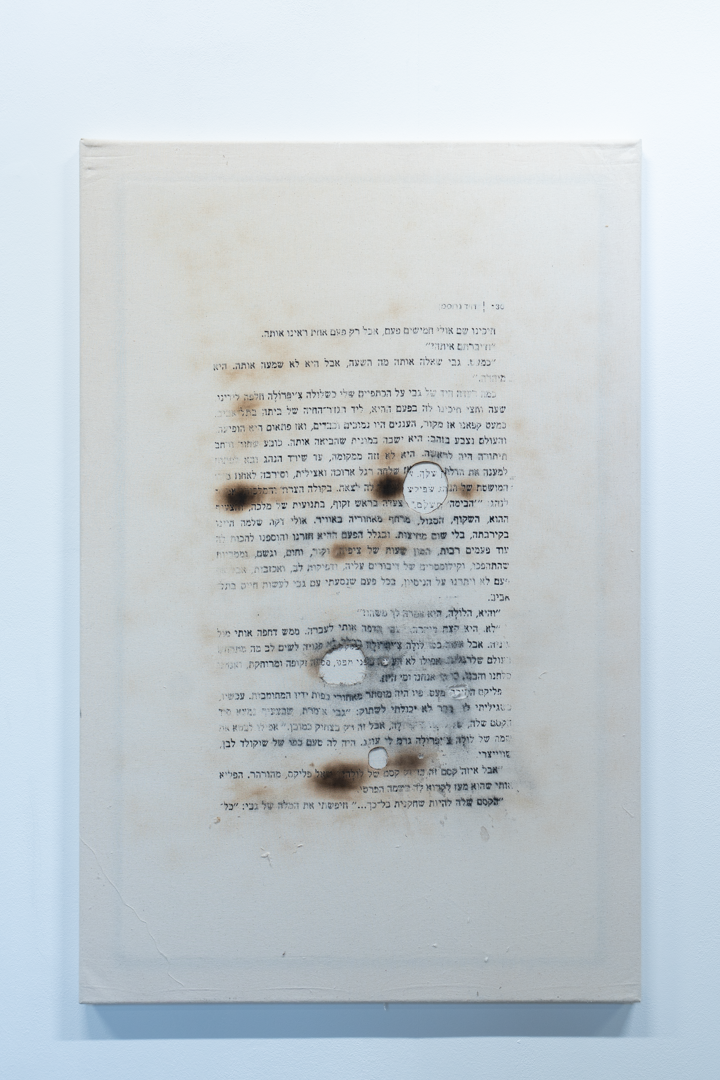
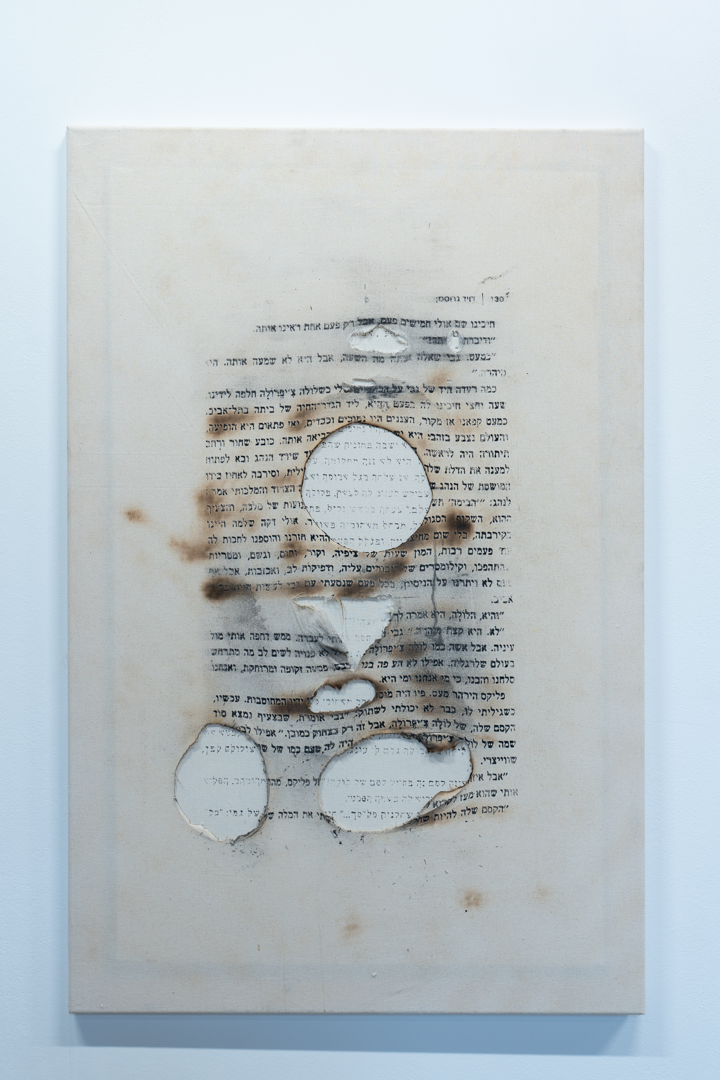
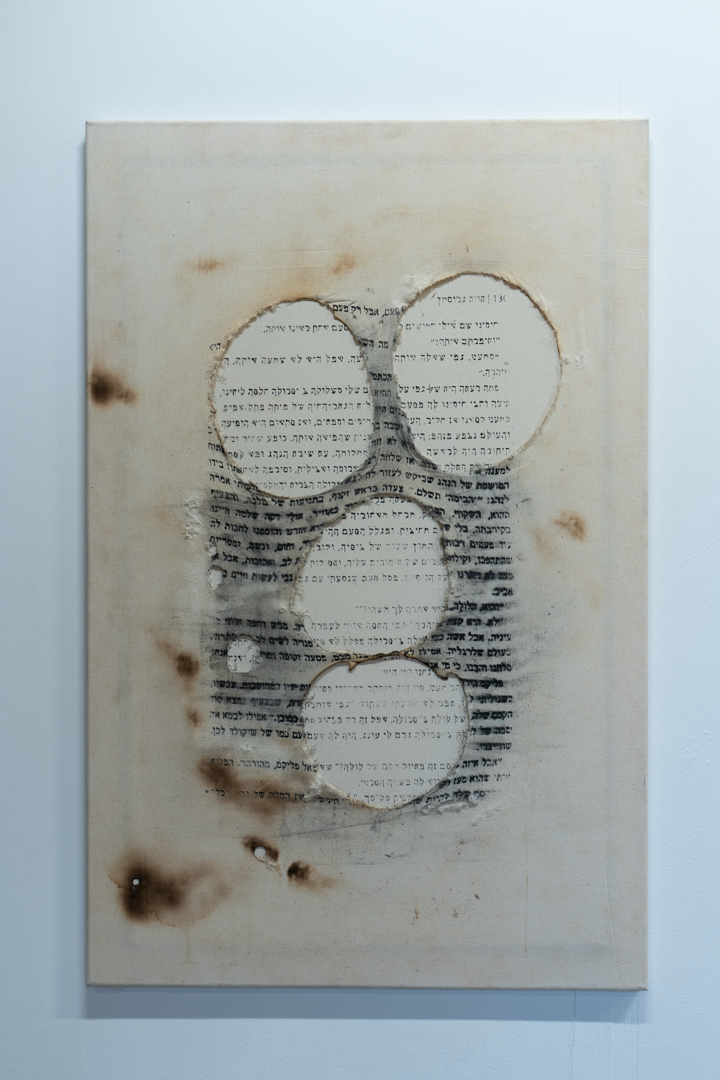
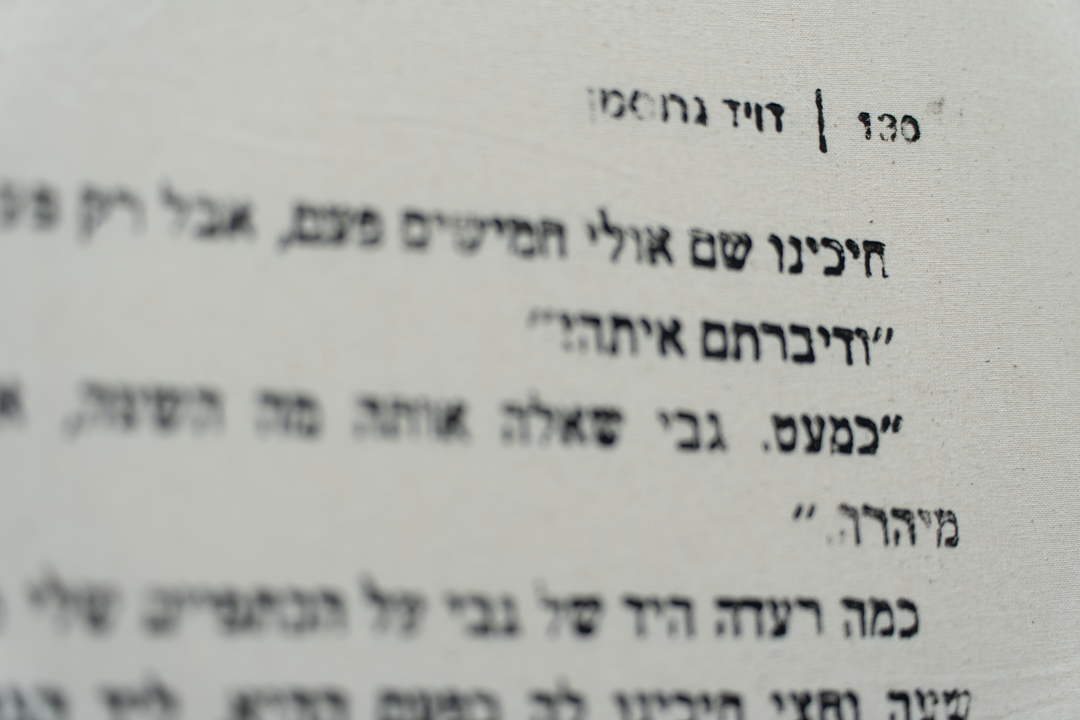
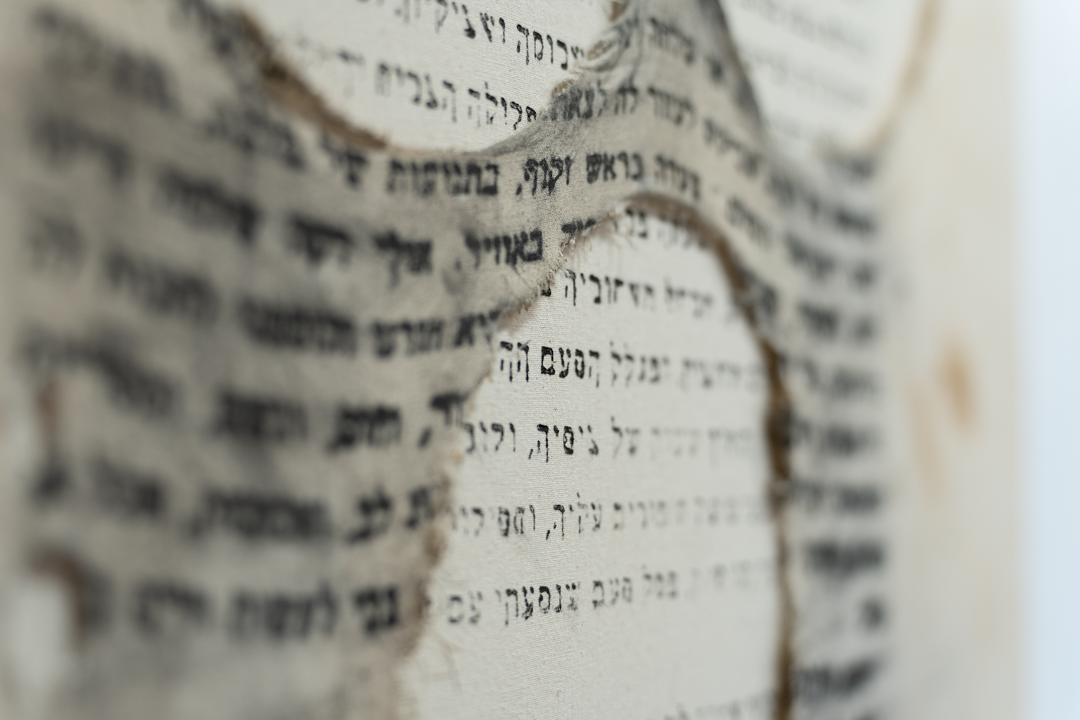
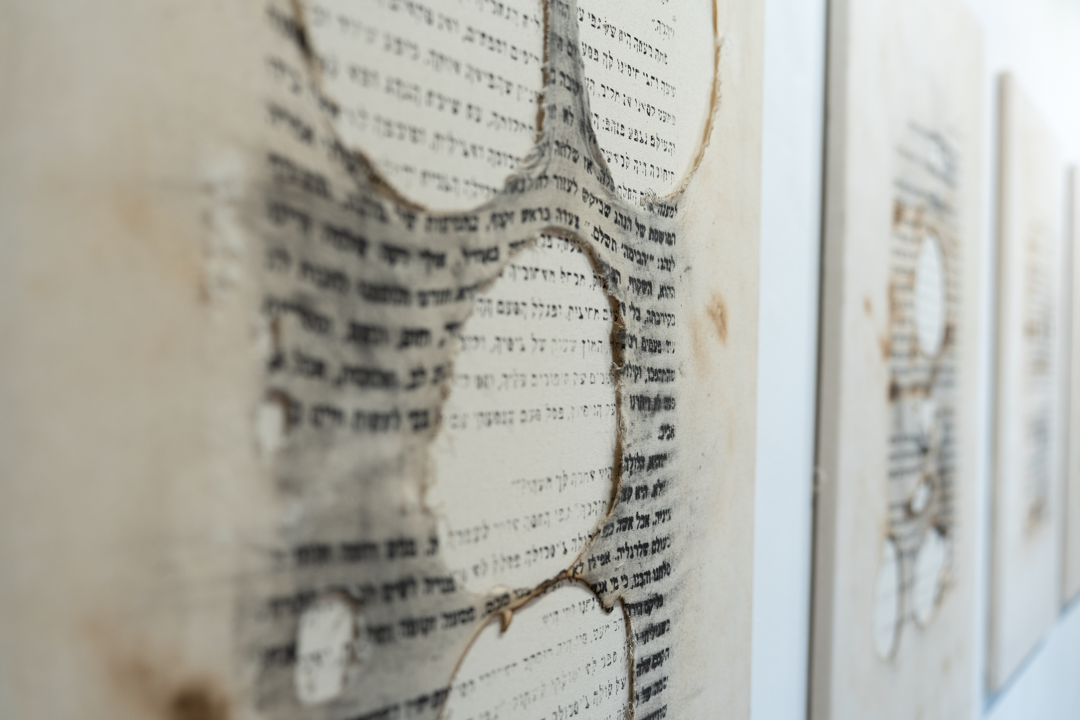
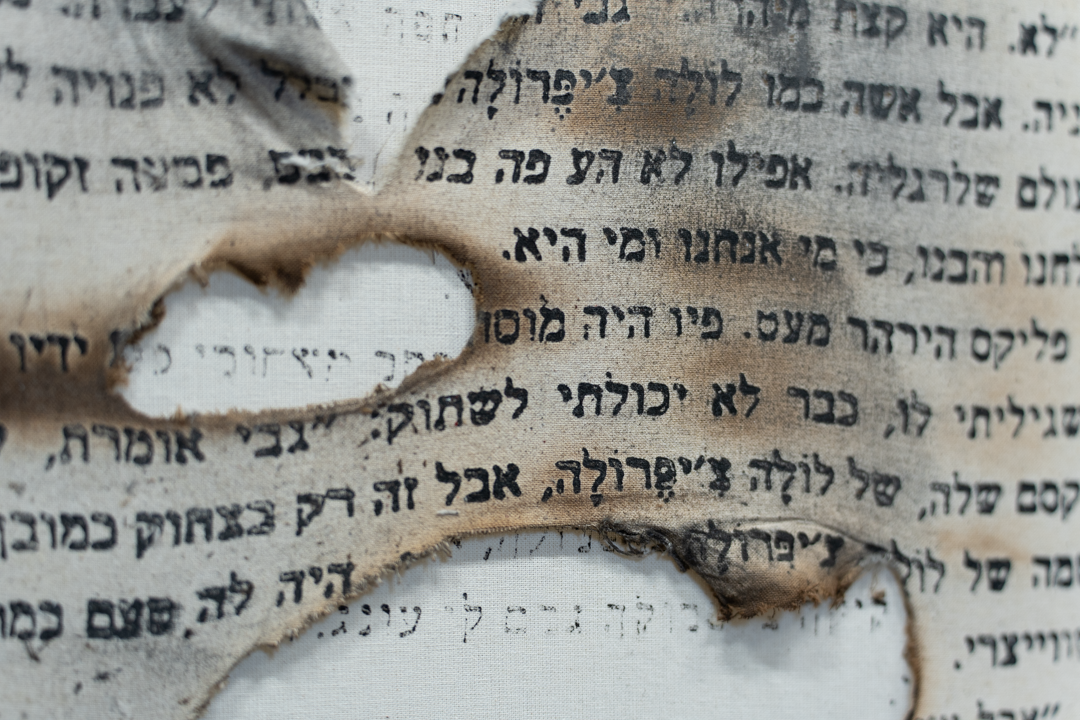
This is another series of five. In this case, we have a text from a book we read in high school, Yesh Yeladim ZigZag. It's a text all Israelis read at some point, so it is an important part of our collective memory and kind of our self definition. It connects us.
In this work, I took two layers, one simply a scan from the book and another, showing the same text but in a kind of “faux Hebrew font”. A font I created to be recognisable as Hebrew but illegible. None of the letters are truly Hebrew letters, but all of them look like they might be. As a result, we recognise the text as a familiar text, but fail at the attempt of actually reading it.
Off the wall
Cast brass, stainless steel
2025
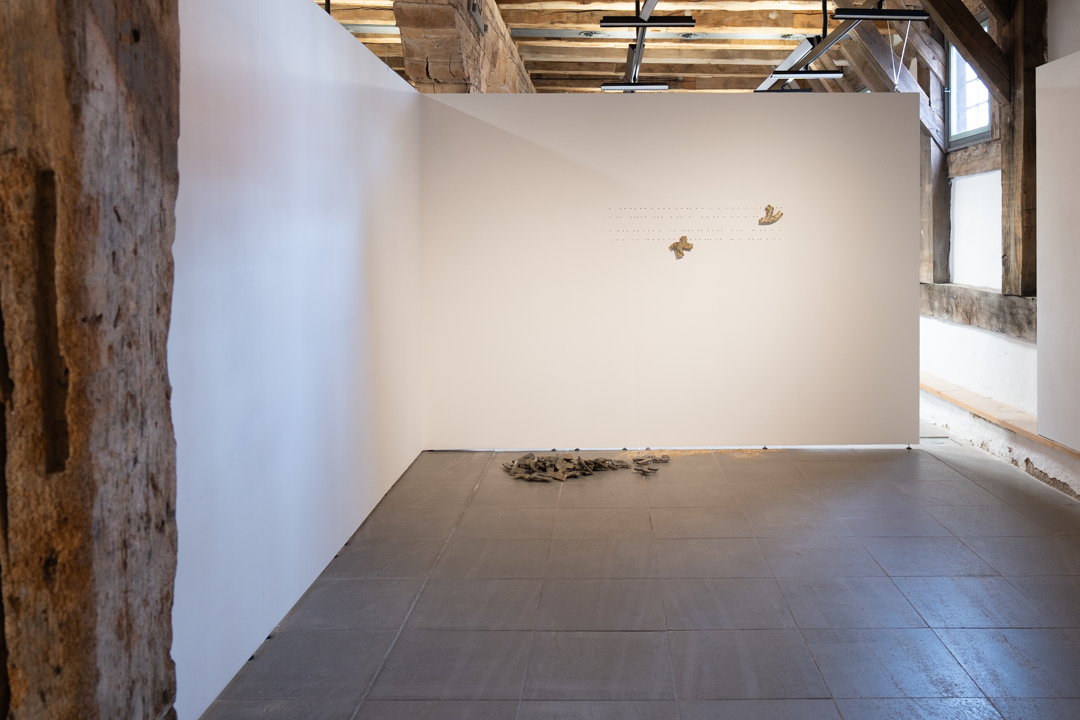
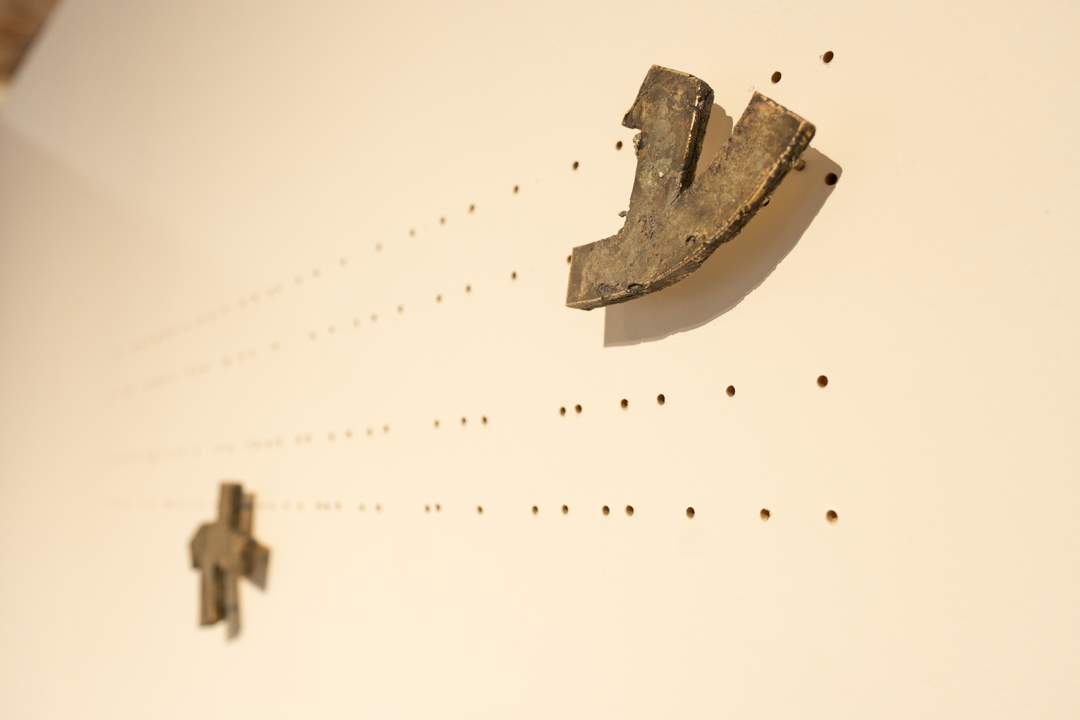
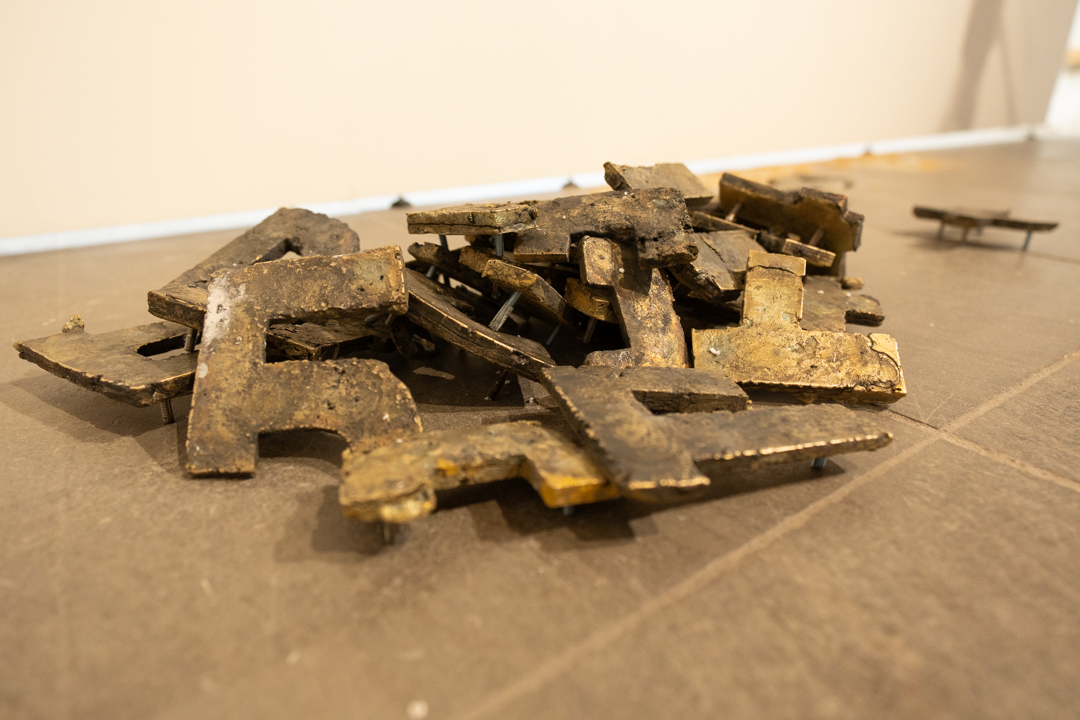
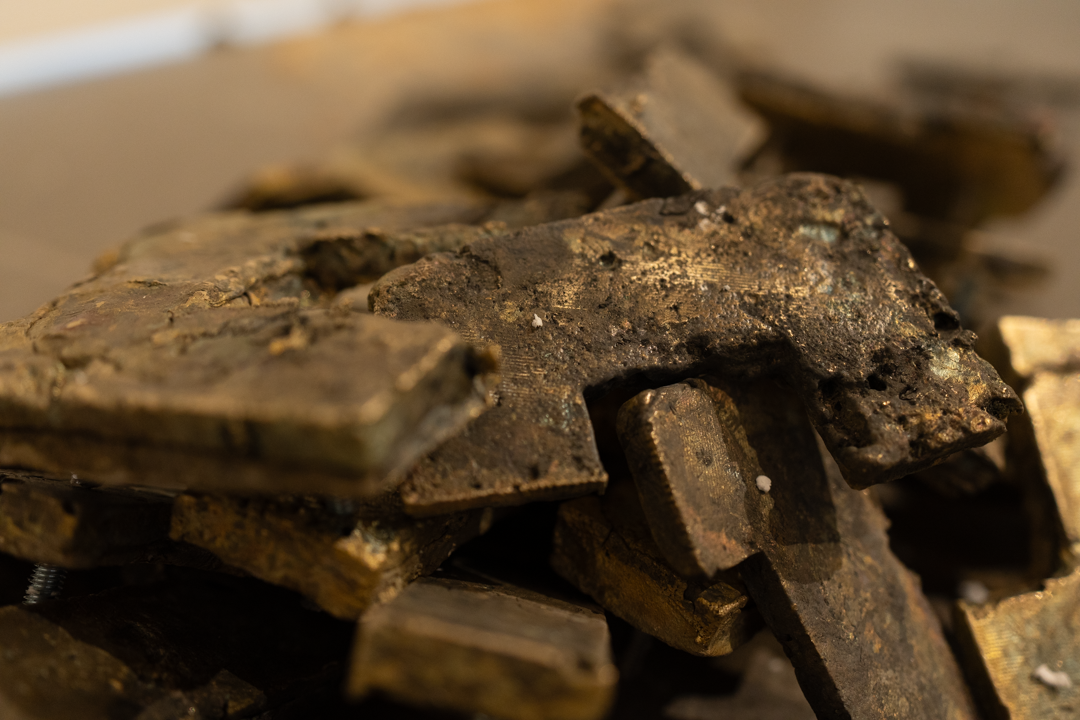
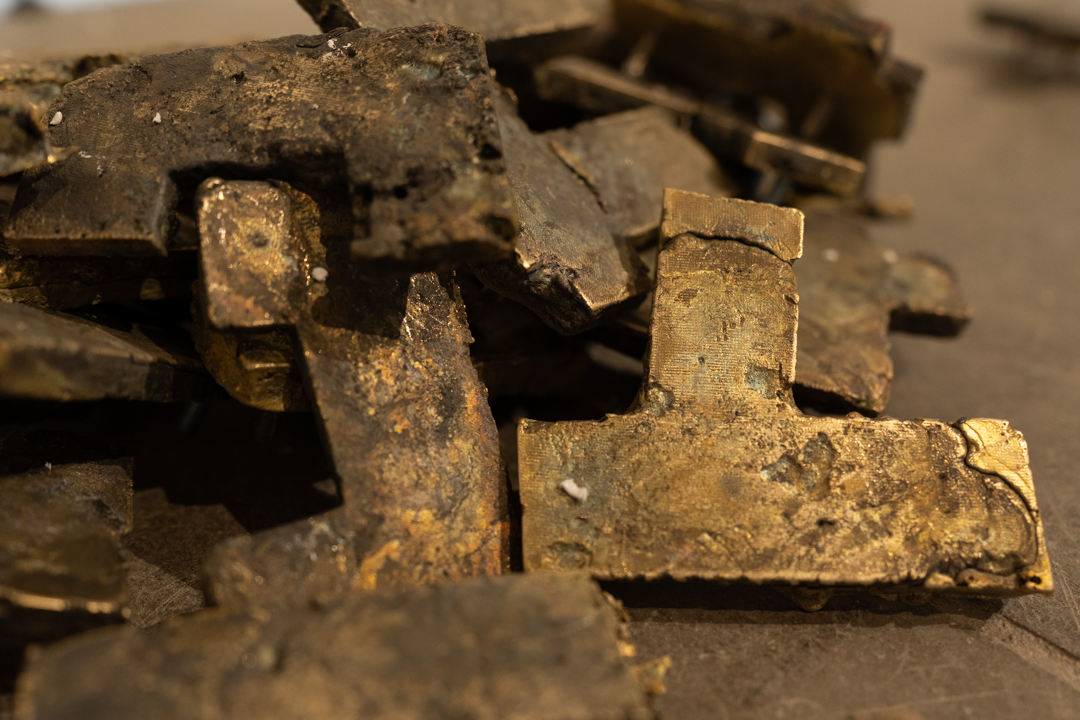
Off the wall work was inspired by a few works at the 2024 Venice Biennale. I was there to participate in an artist panel, and had a lot of time to just walk through the entirety of the exhibitions. While the art itself was, of course, in large parts exquisite and inspiring, I felt somewhat of a disconnect. the theme of that year’s Biennale was an attempt to make the art of the global south visible. And at the same time, it happened in these very large and present, traditional and western settings. To me, it's made the Missing art of the global North even more present than it would've been present if the actual art of the global North would've been hanging in those halls.
That almost overwhelming presence by absence comes with a special challenge. You cannot deal with what is absent, even if it's overwhelmingly present. It's not there to face you - it's like an absent parent.
That's the feeling leading to this work.
Blue Morning
1000mm x 2000mm
Acrylics on canvas
2023
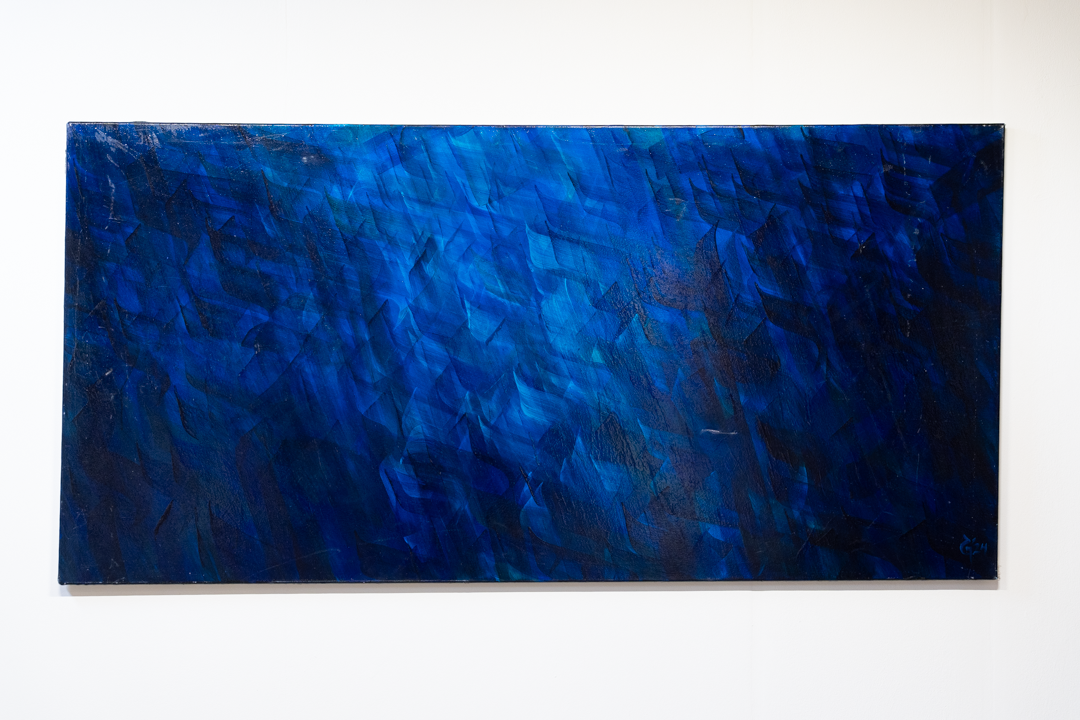
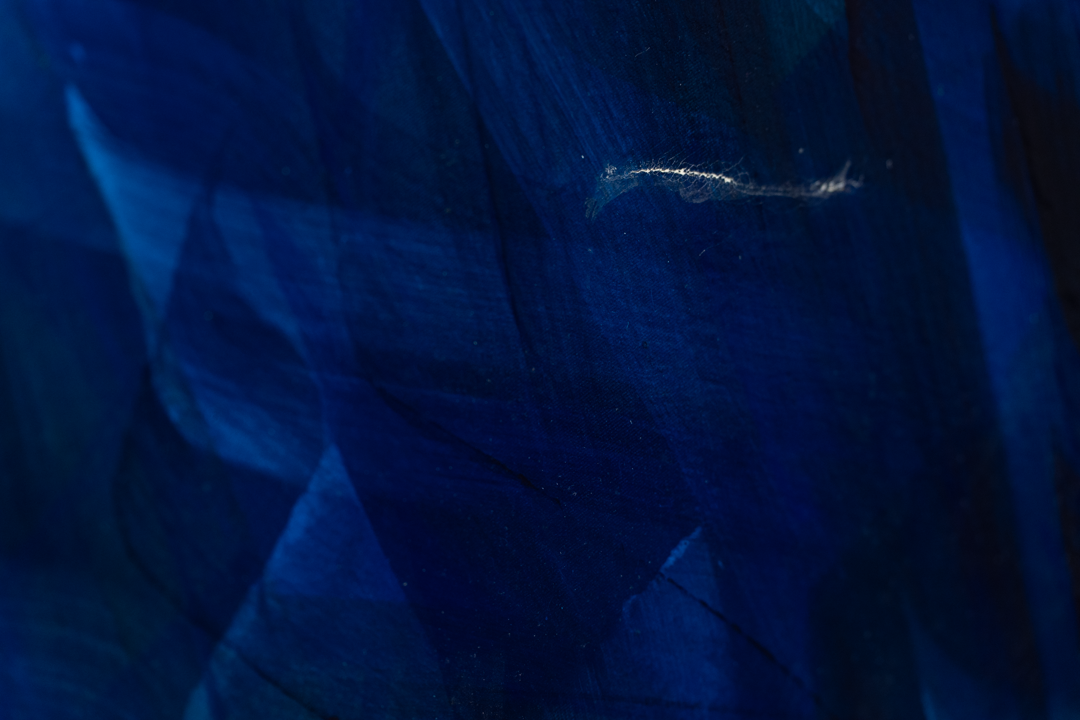
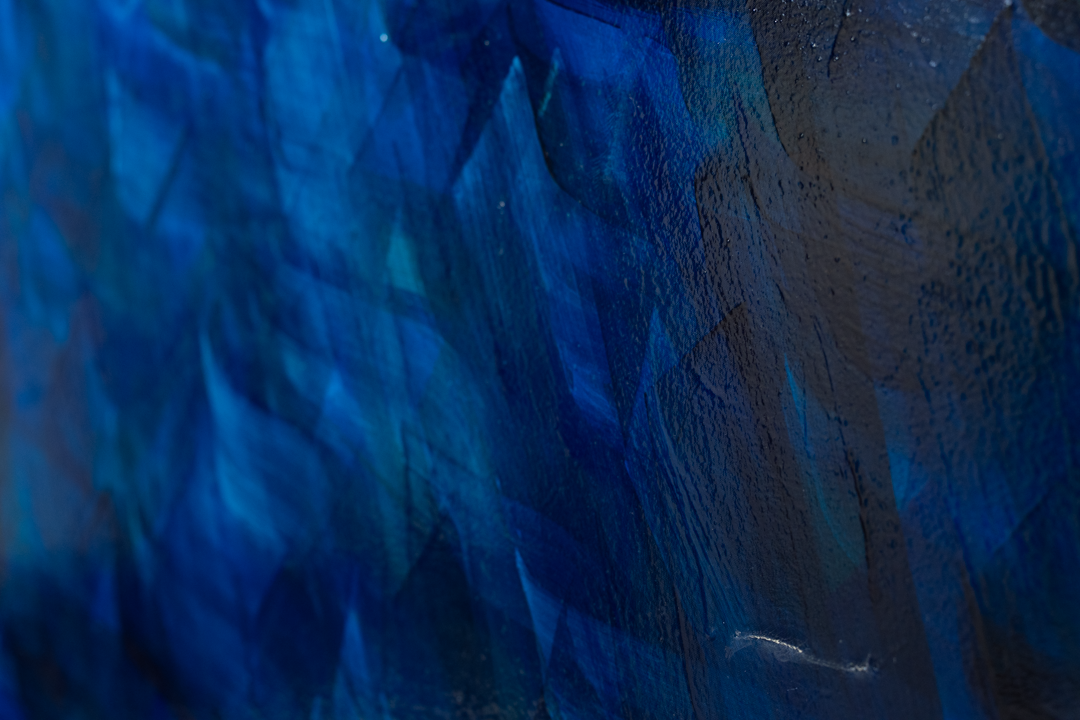
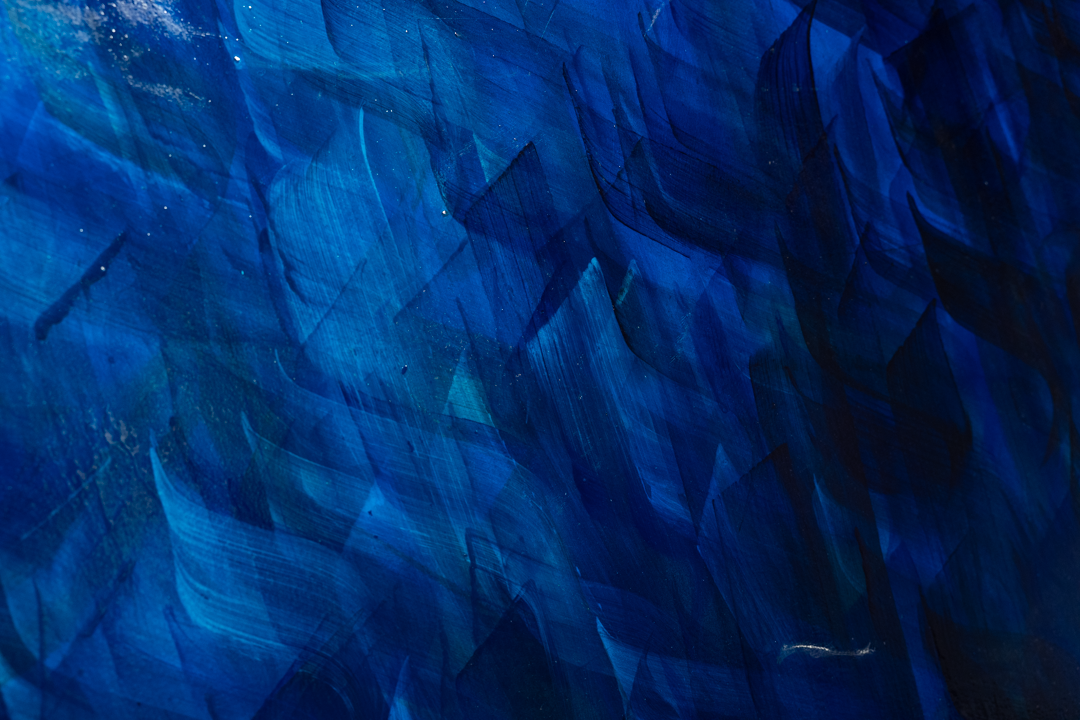
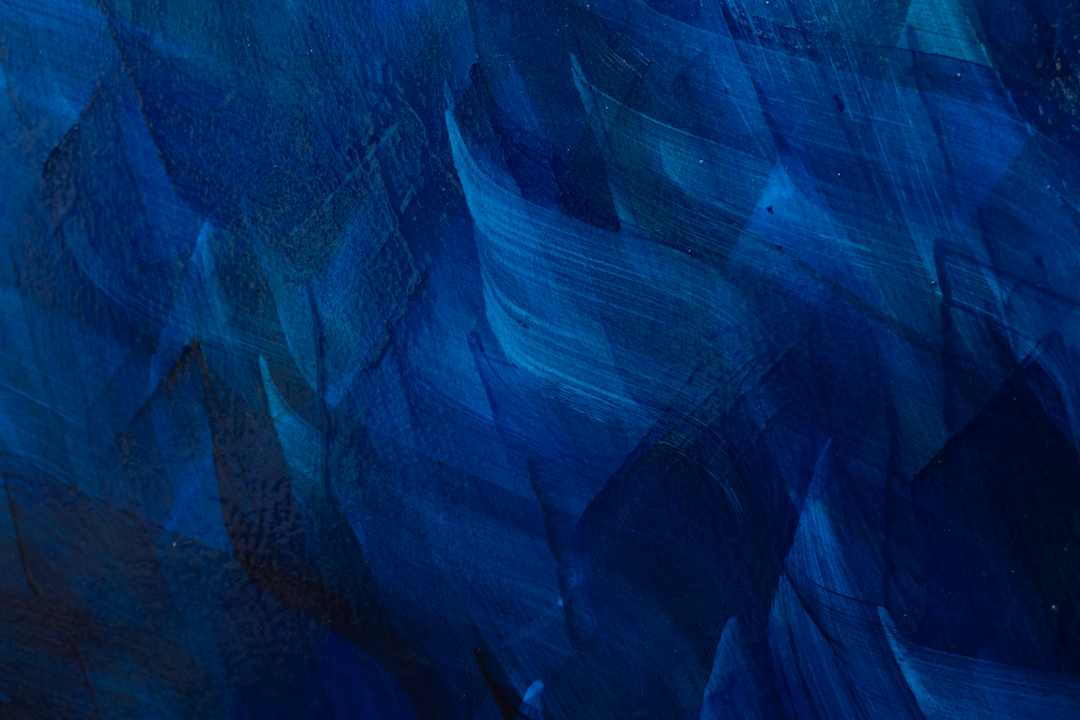
Blue morning and Green morning, are the first larger works I painted after October 7. I was still very much using the language of the world up to October 6. Both works are created from the text of the morning prayer, which I wrote in dozens of layers, one of the other.
That is a technique I often use in order to render a text illegible. And sometimes, when the text has become illegible and hence unreachable, inapproachable, evasive, a different structure appears. When it does, I feel that this must have been the feeling of discovering a new layer in the pardes. You know: it's still the same text, but suddenly an entirely different, additional horizon appears within it.
I can't claim it's entirely intentional. But the search for the structure is definitely what I'm busy with when painting
Der Auszug aus dem Haus des Seins
1000mm x3000mm
Acrylics on
2021
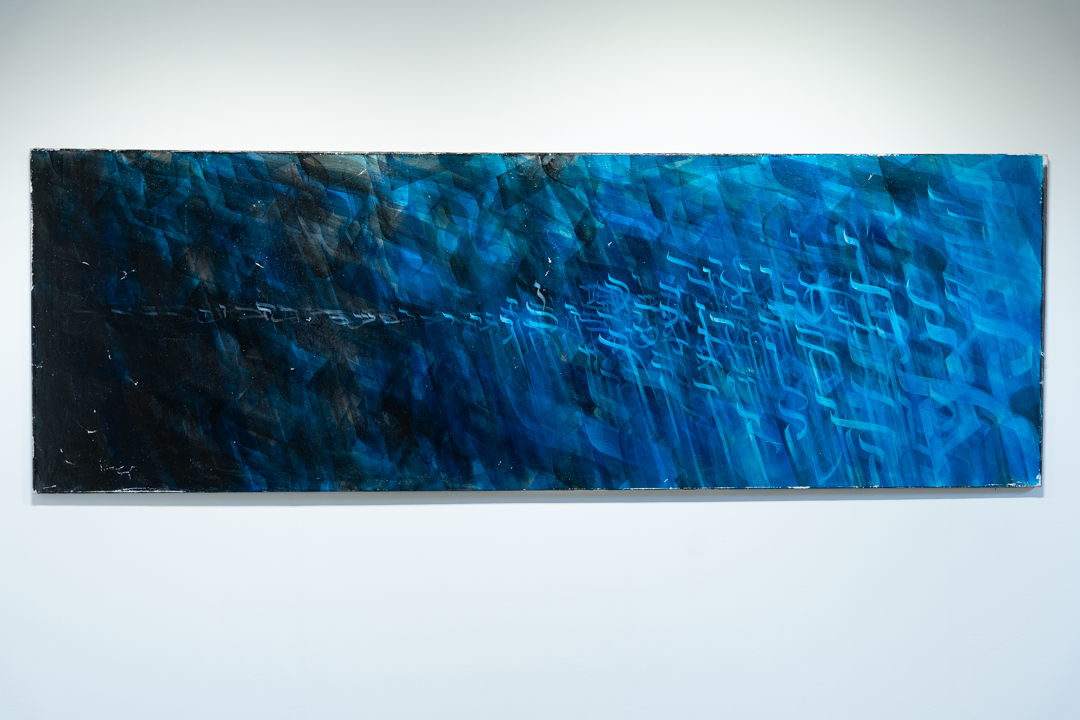
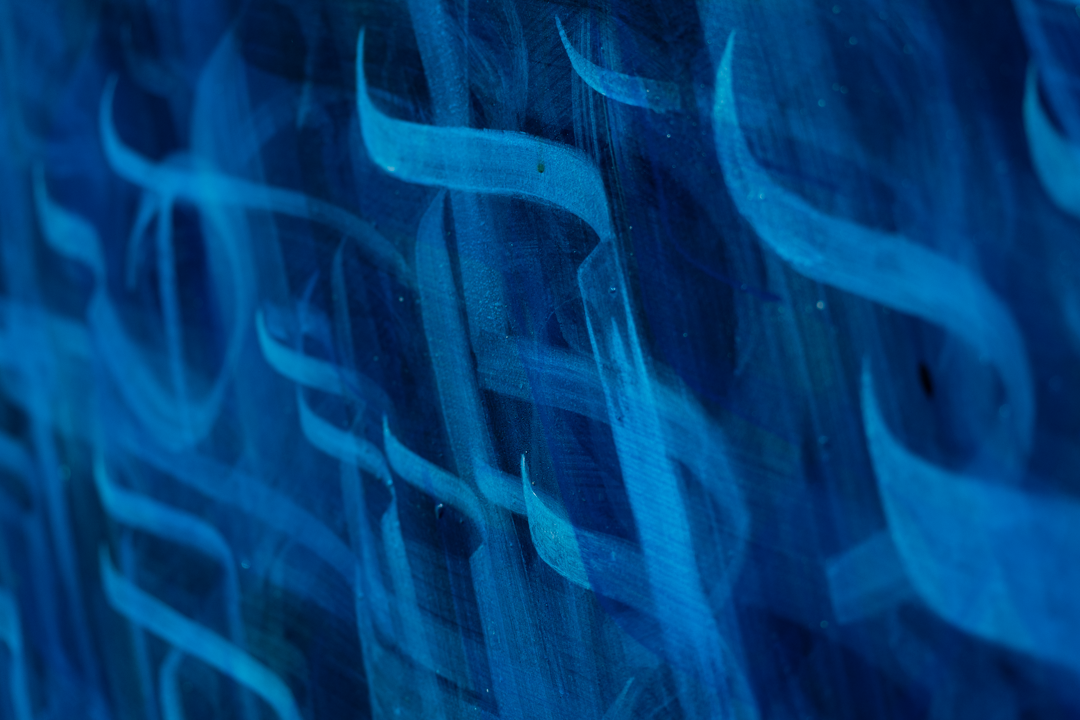
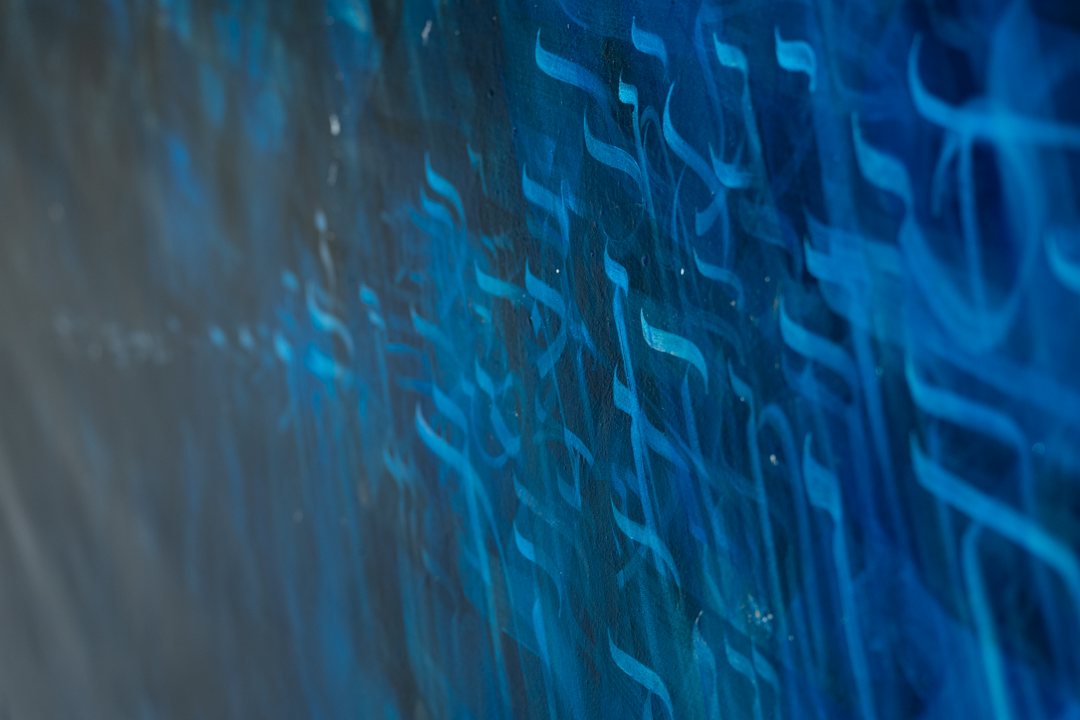
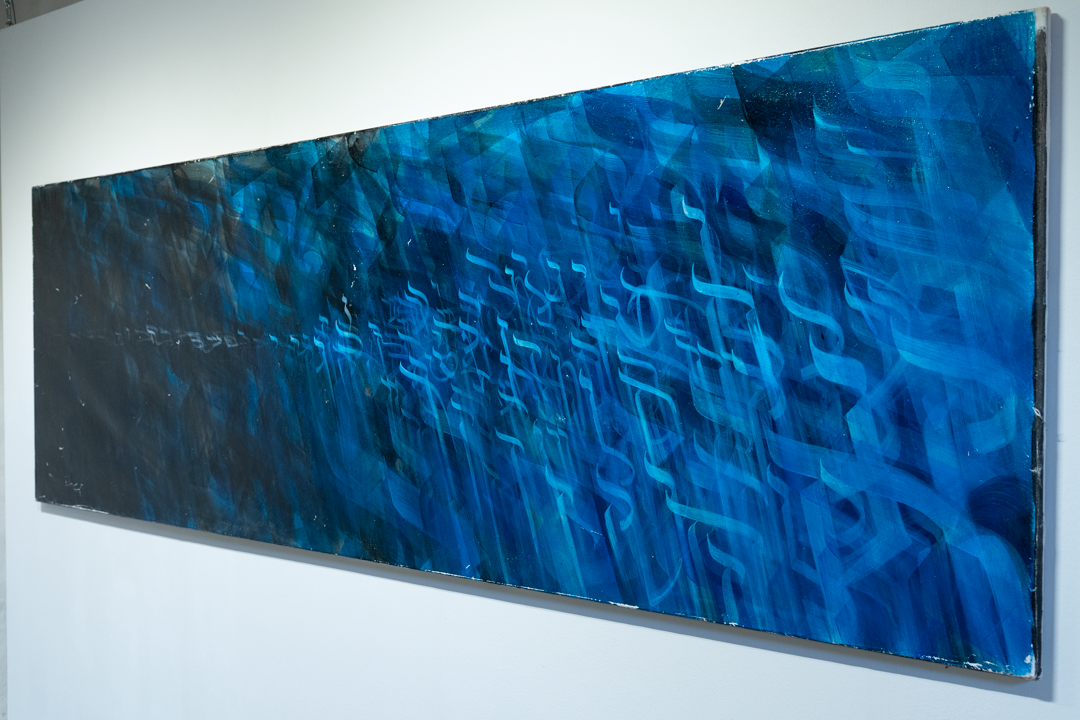
Der Auszug aus dem Haus des Seins is from a series I painted about the connection between two thinker is that influenced me a lot: the German philosopher Heidegger and the Jewish mystic Rabbi Nahman.
I felt that they share something. They share the space within which truth seeking is possible. And specifically, that space, for both of them, is a space of emptiness. And at the same time, they share an interest in language. For Heidegger, it's very obvious. He tried to rewrite German language in order to be able to express his philosophy. That is why reading some of his texts is just nerve wrecking. In the case of Rabbi Nachman, it's a bit more vague. But he as well put an emphasis on the way we relate to language. And both of them aim at transcending language in order to seek deeper understanding of our reality.
The title of the work refers to Heidegger’s idea of language as “das Haus des Seins”, “the house of being”, kind of the space within which existence is made possible. And in our case, in the work behind us, “the departure from the house of Being”, refers specifically to transcending language as a limiting structure.