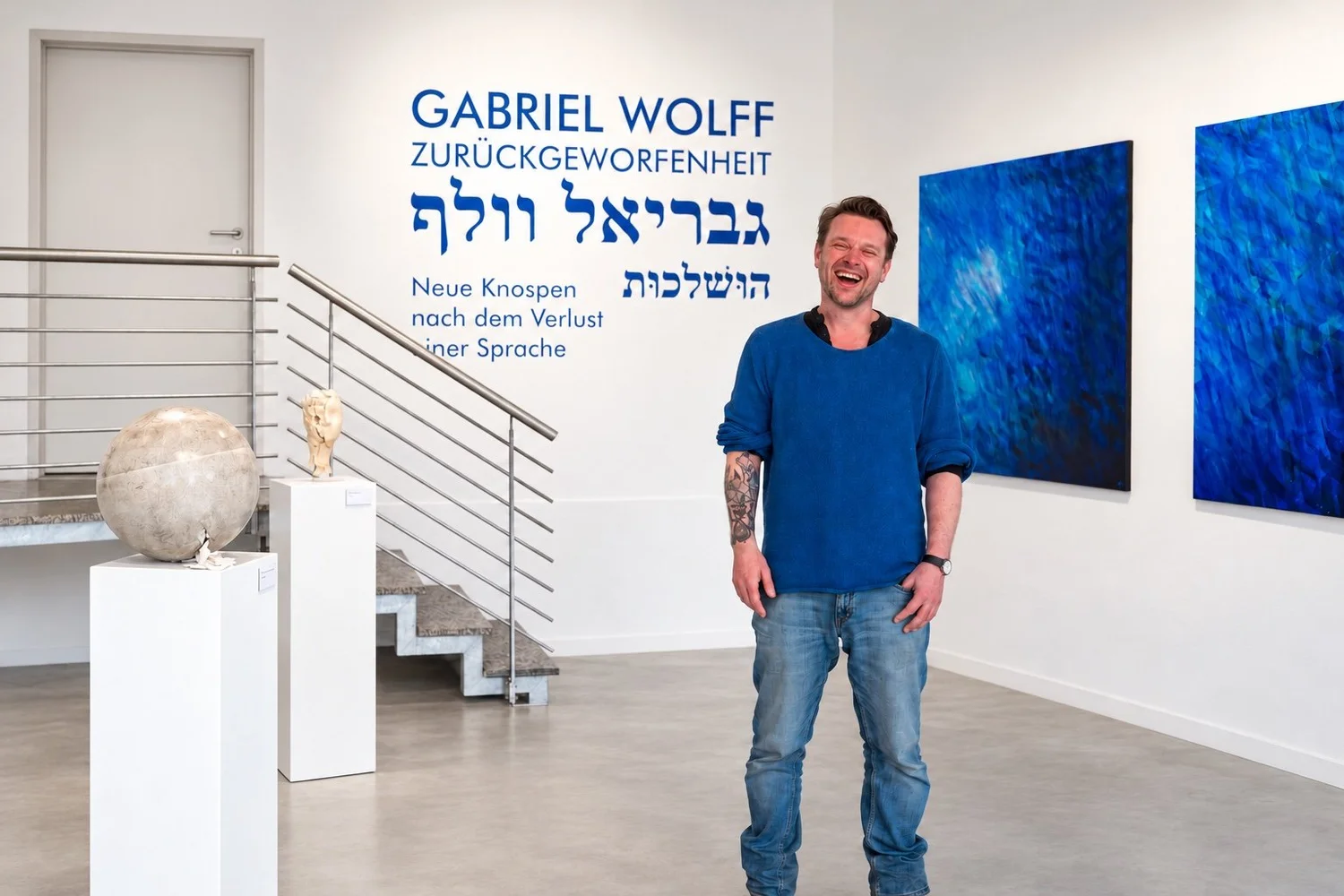
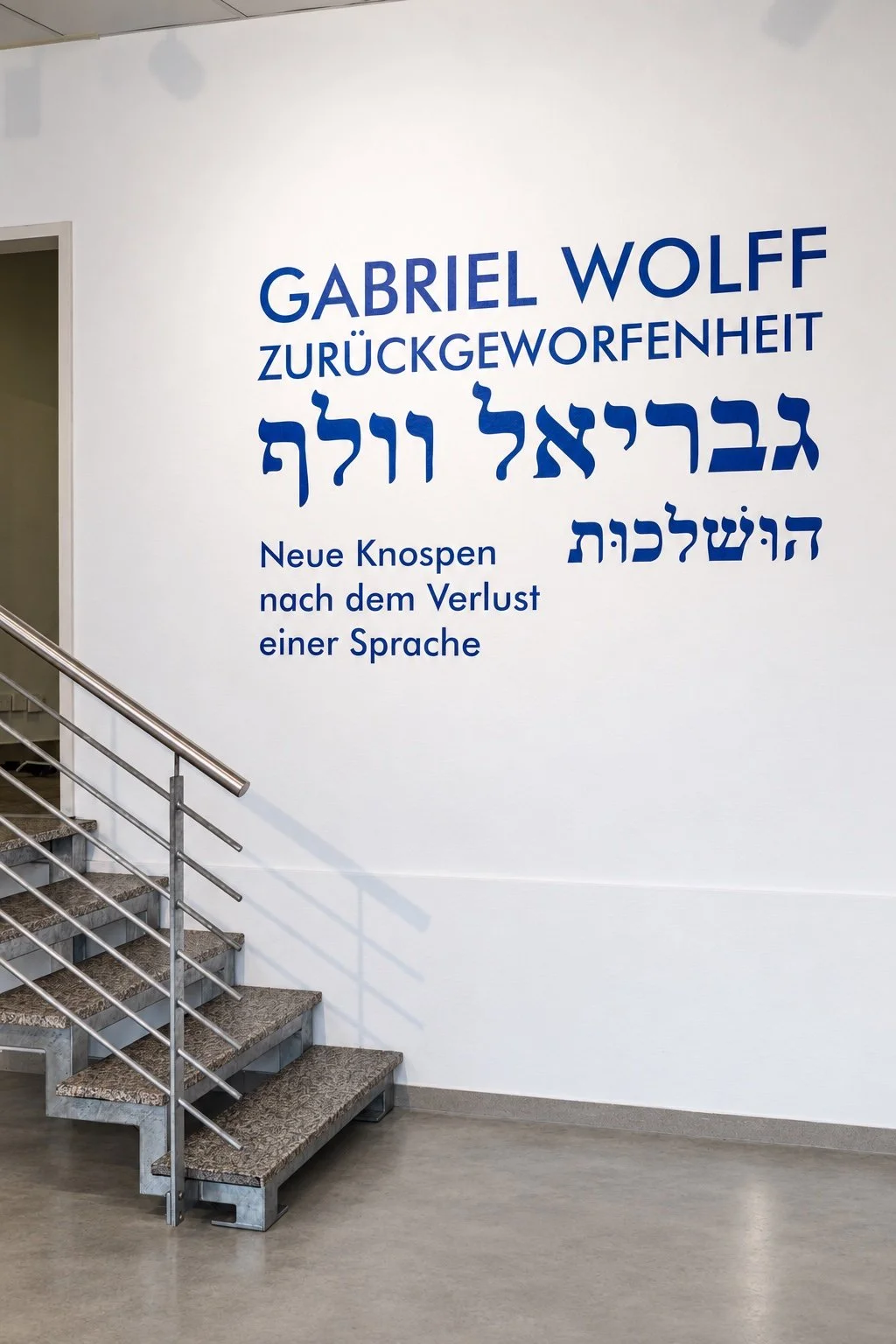
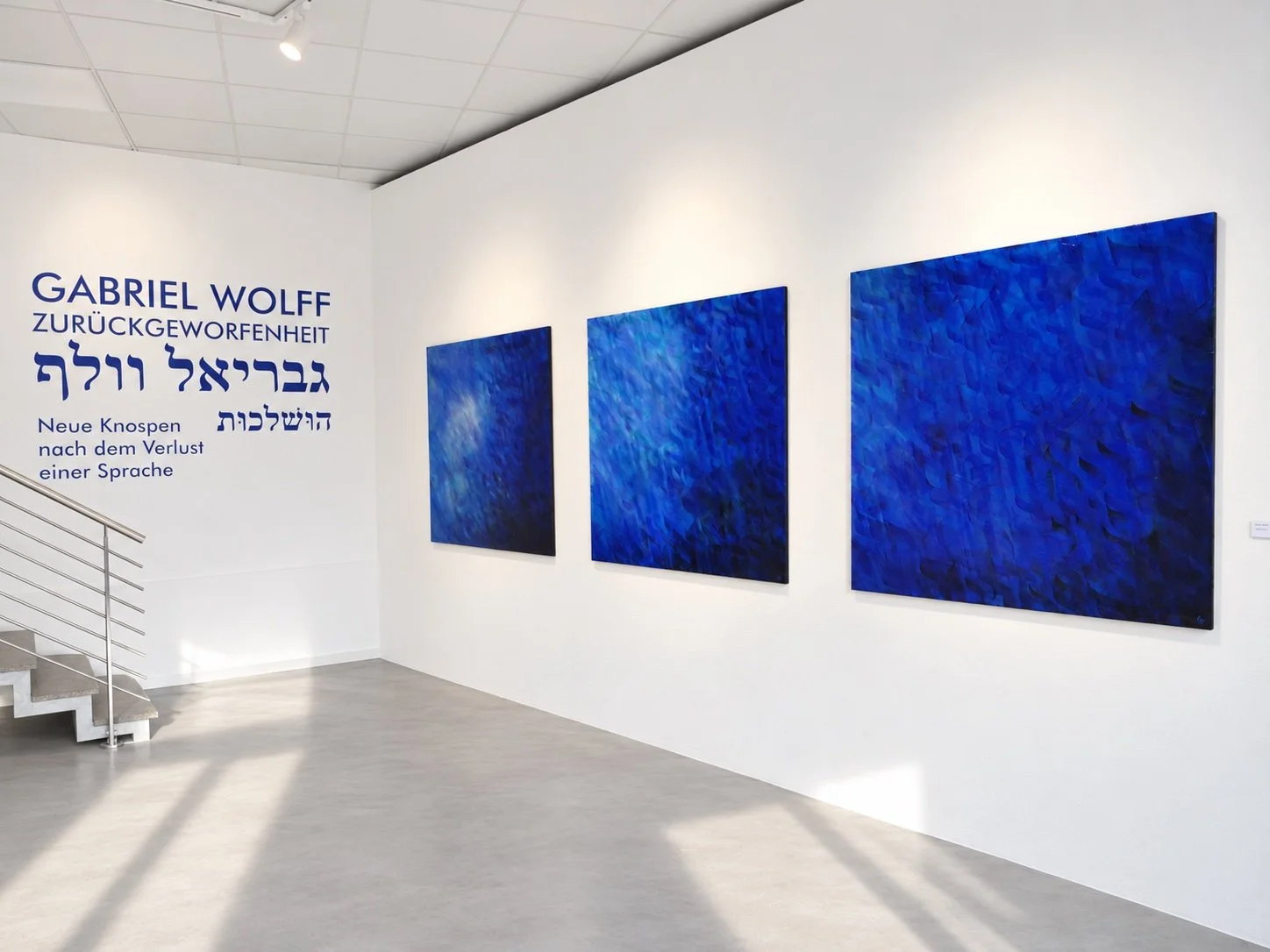
Gabriel Wolff
Zurückgeworfenheit
Neue Knospen nach dem Verlust einer Sprache
Fürth, 2026
Language is the space in which we experience ourselves and the world. For me, it is also the material of my work.
In the weeks and months following 7 October 2023, my Hebrew mother tongue fell silent. My thoughts seemed to have lost their home, the place where they could gather and rest. After years of feeling foreign in my own country, I now felt foreign within my own language.
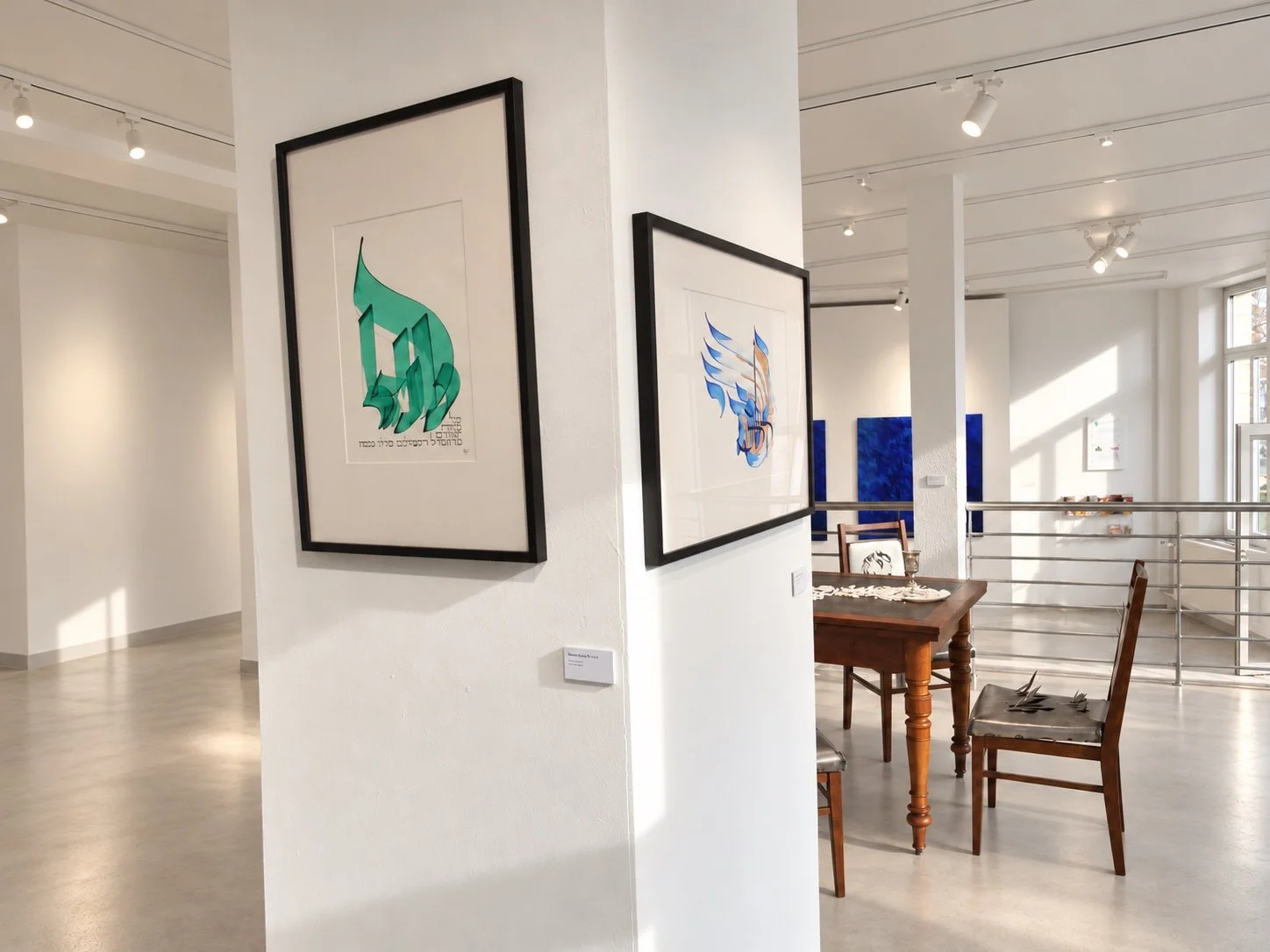
Zurückgeworfenheit explored my attempt to build a new relationship with that language. Hebrew letters appeared throughout the exhibition as painted forms, fragments, physical objects and traces. Some remained recognizable, while others were broken, displaced, layered or transformed until they hovered between language and abstraction.
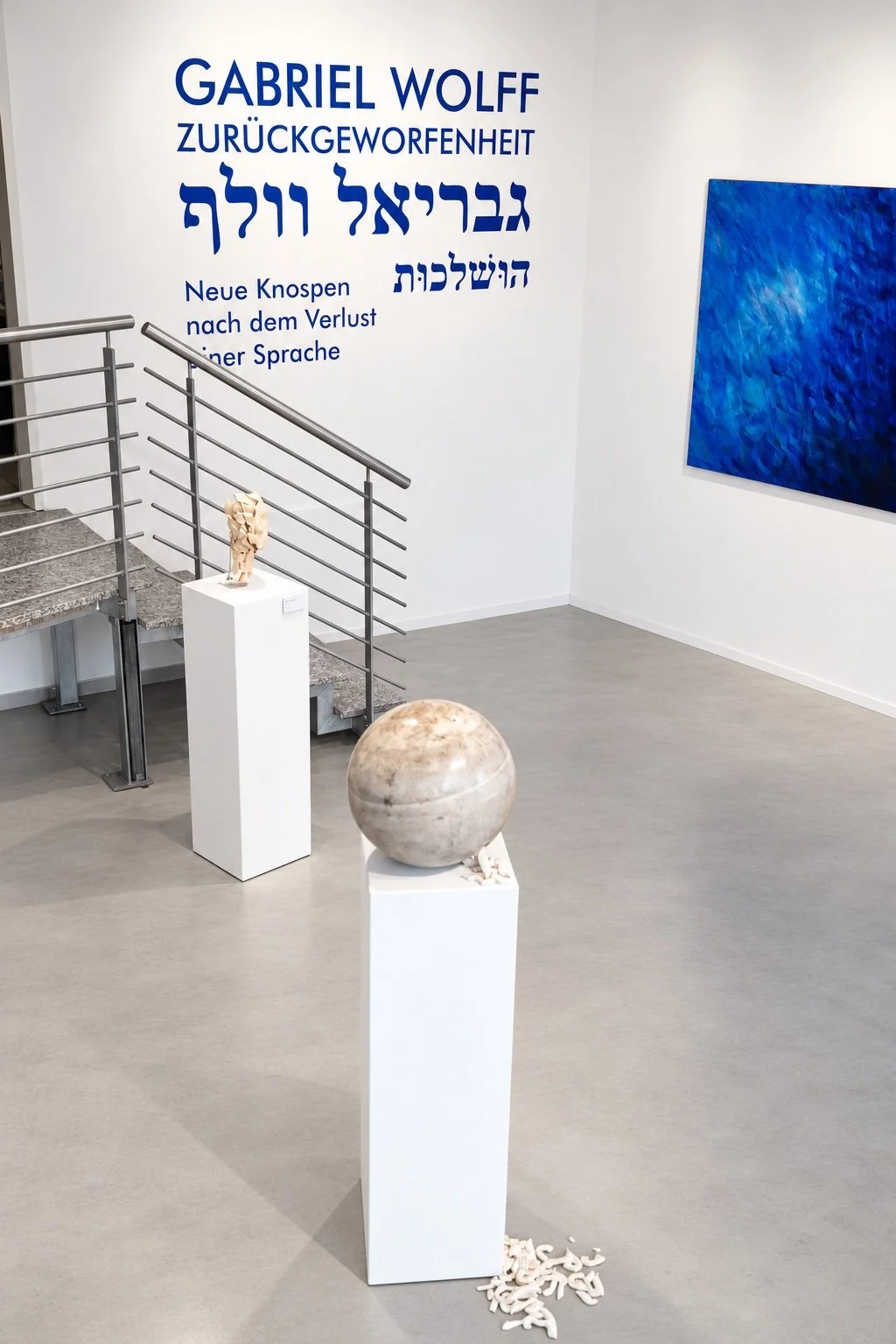
The exhibition brought together large blue paintings, works on paper, porcelain sculptures and spatial installations. Letters emerged from fractured vessels, gathered in fragile piles and occupied furniture and domestic objects. What had once carried meaning became material, while the act of writing became a process of reconstruction.
The German title Zurückgeworfenheit suggests being thrown back upon oneself. The accompanying Hebrew word, hashlakhut, carries the sense of being cast away. Within the exhibition, this condition was not presented as a conclusion. The fragmented language also contained the possibility of new growth, new forms and a different way of speaking.
My native language still lies in ruins, yet within it there are signs of life, traces of a different kind of self growing out of what was broken.Gabriel Wolff, from the catalogue
Exhibition information
- Artist
- Gabriel Wolff
- Exhibition
- Zurückgeworfenheit
- Subtitle
- Neue Knospen nach dem Verlust einer Sprache
New Shoots After the Loss of a Language - Venue
- kultur.lokal.fürth, Bahnhofplatz 2
- City
- Fürth, Germany
- Dates
- 7–15 March 2026, daily 14–19 h, admission free
- Year
- 2026
- Context
- Jewish Music Today 2026 (Klezmer Festival Fürth)
- Presented with
- Kulturamt der Stadt Fürth
- Photography
- Patrick Wolfmar
Installation views
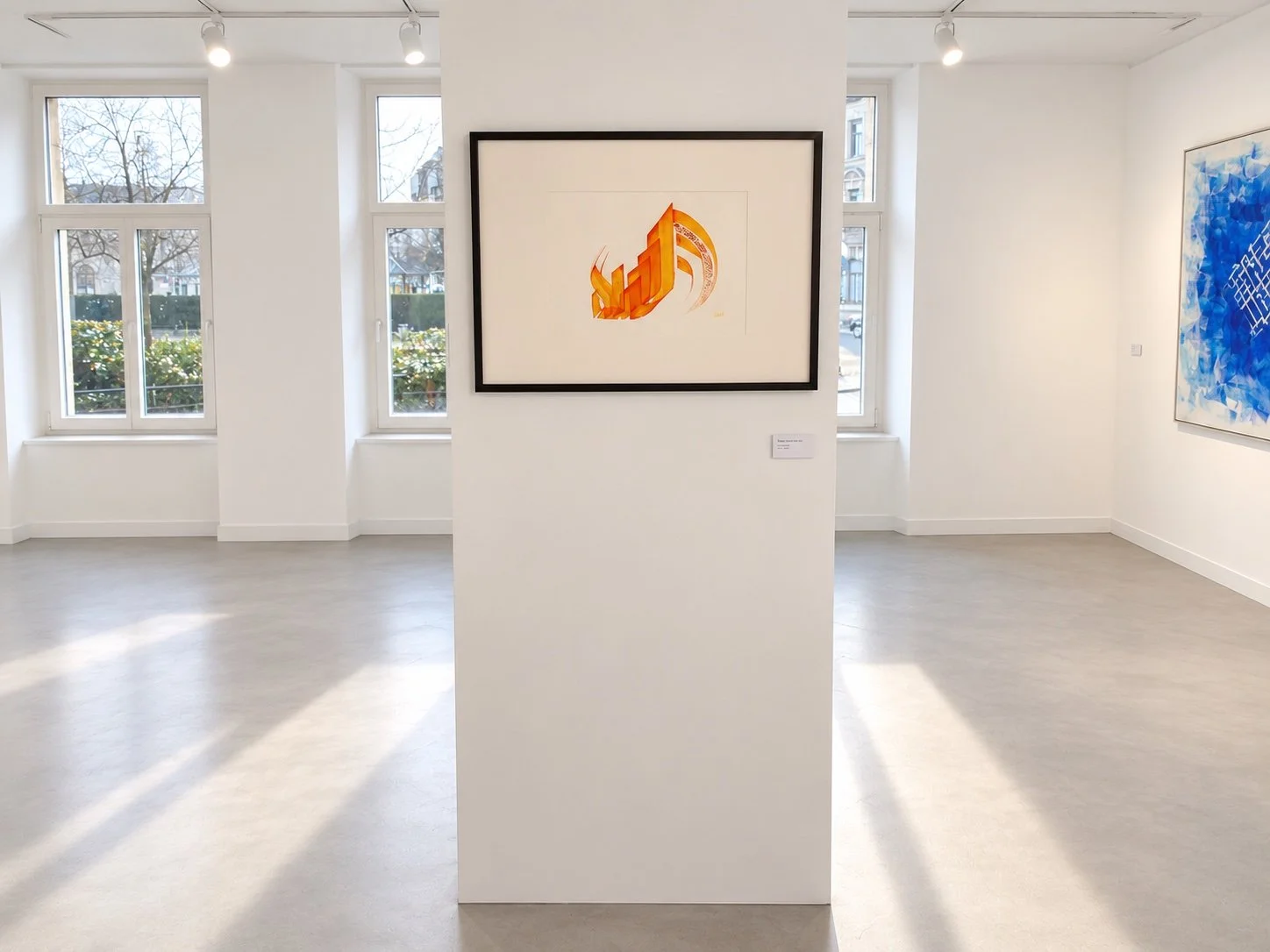
Kaddish 2026
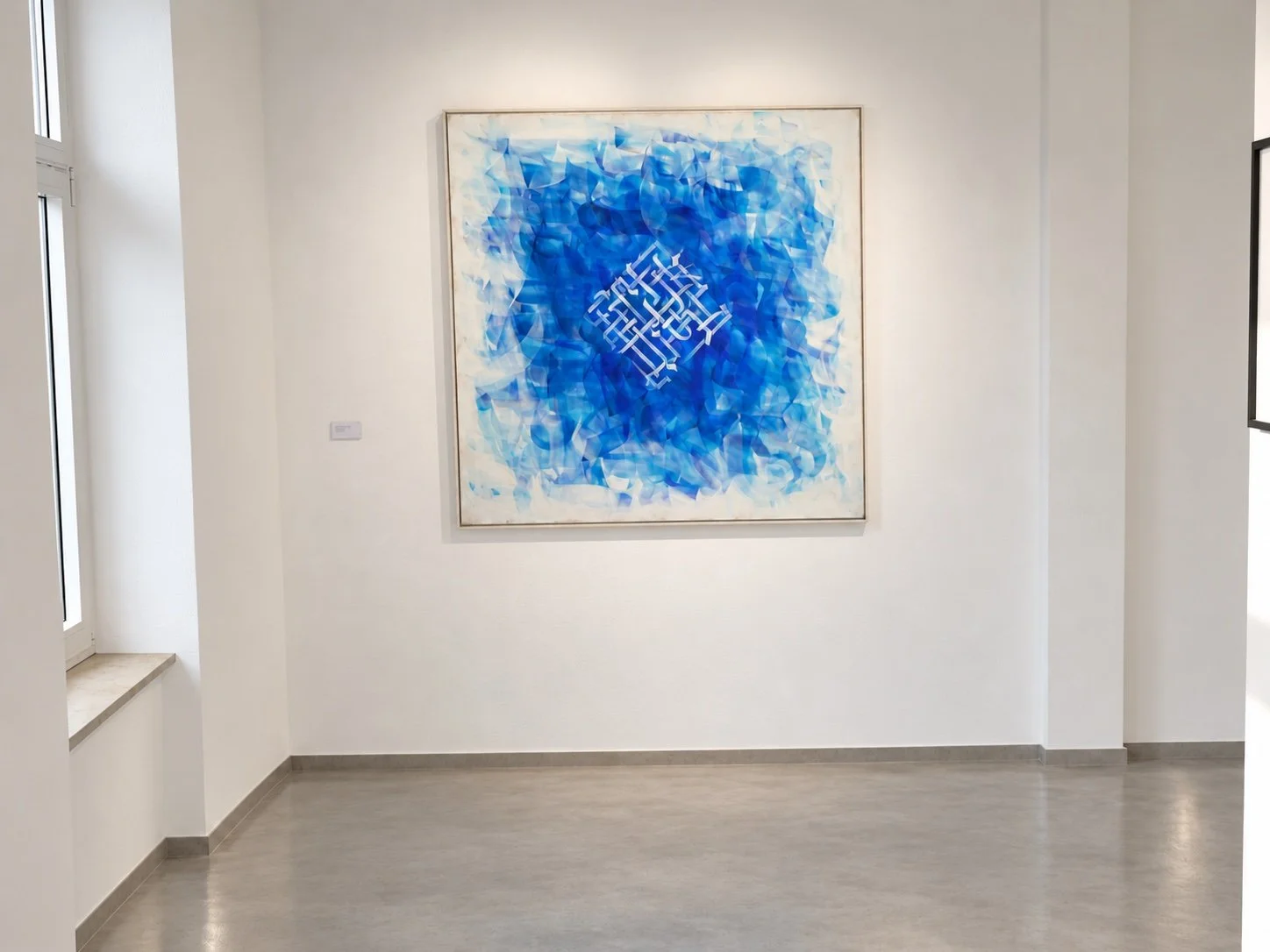
There is one technique I have been unable to leave behind for years. I write a text in many layers, again and again, until a flow begins to appear, until a form slowly emerges. Sometimes this unfolds over a subtle background, but often it begins on a white canvas. In this case, it is the text that defines the work: the Kaddish.
For several weeks, I have built layer upon layer of the same text, rendering it both recognizable and illegible, mirroring the way a ritual such as prayer gradually shifts from a carrier of content into a carrier of form.
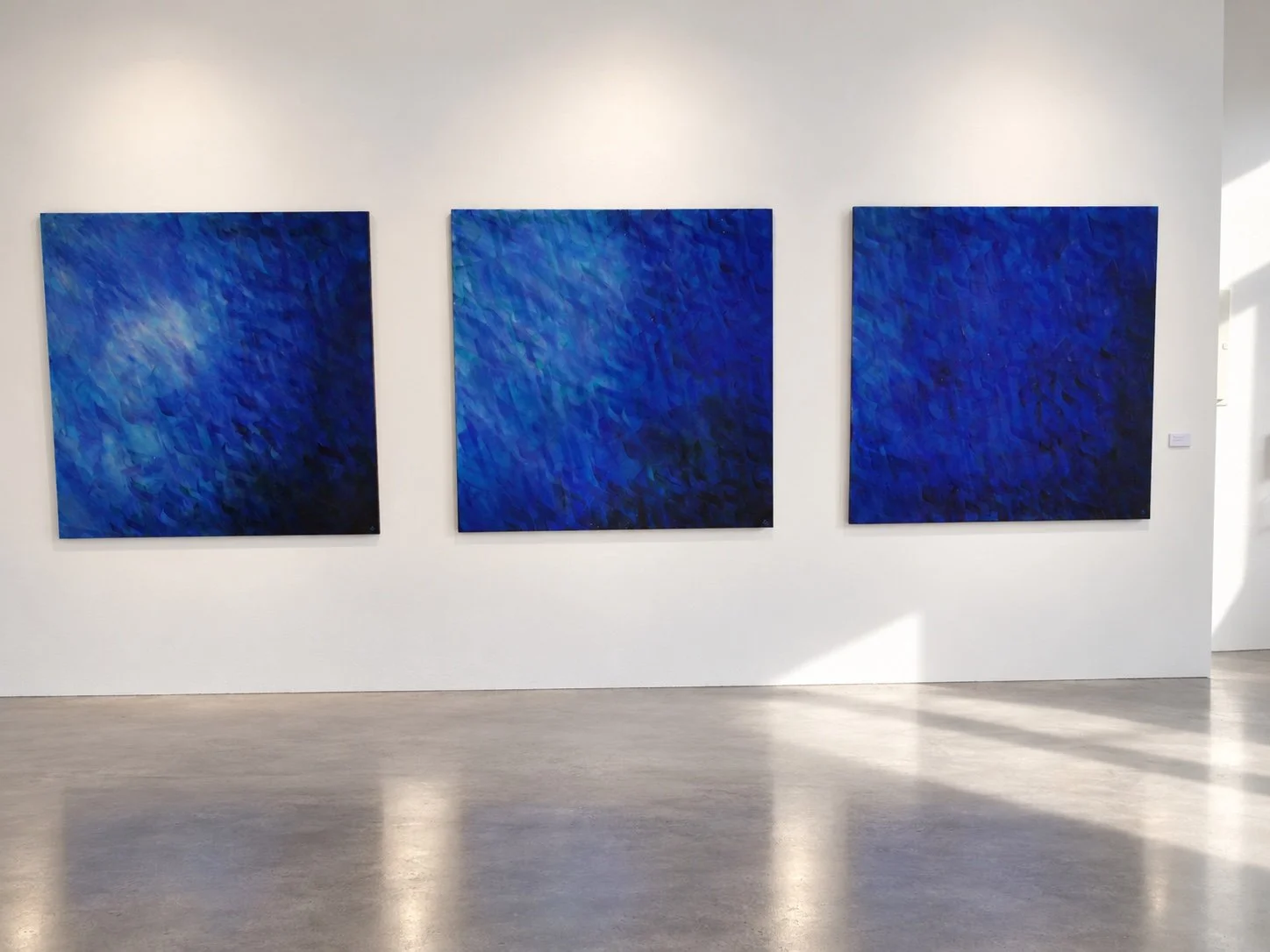
No Title 2020
This work dates from 2020. At the time, I was thinking intensely about two figures, Heidegger and Rabbi Nachman. I had the sense that they shared something essential. Both seem to point toward a place where the search for truth might still remain possible, and that place is marked by a certain emptiness.
What drew me in was, in part, their relationship to language. In different ways, both move toward a kind of dismantling of language. They seem to arrive at a threshold where language begins to fail.
This piece is an attempt to give form to that place. At first glance, anyone familiar with Hebrew will recognize these shapes as letters. But on closer inspection, it becomes clear that none of them are actual letters. They resemble letters, yet they do not belong to the alphabet. There is, therefore, an immediate sense of familiarity, followed by a feeling of distance or inaccessibility upon a second look.
That tension matters to me. It carries both a sense of rejection and something I am actively seeking. It opens a space where abstraction makes verbal or intellectual connection almost impossible, yet where something else might emerge.
In the absence of language, the possibility of an intuitive connection remains, something closer to the gut. Perhaps this space, where language falls away, is also where new thought or new growth can begin. In the end, it may even become a space of spiritual growth.
Framed calligraphic works
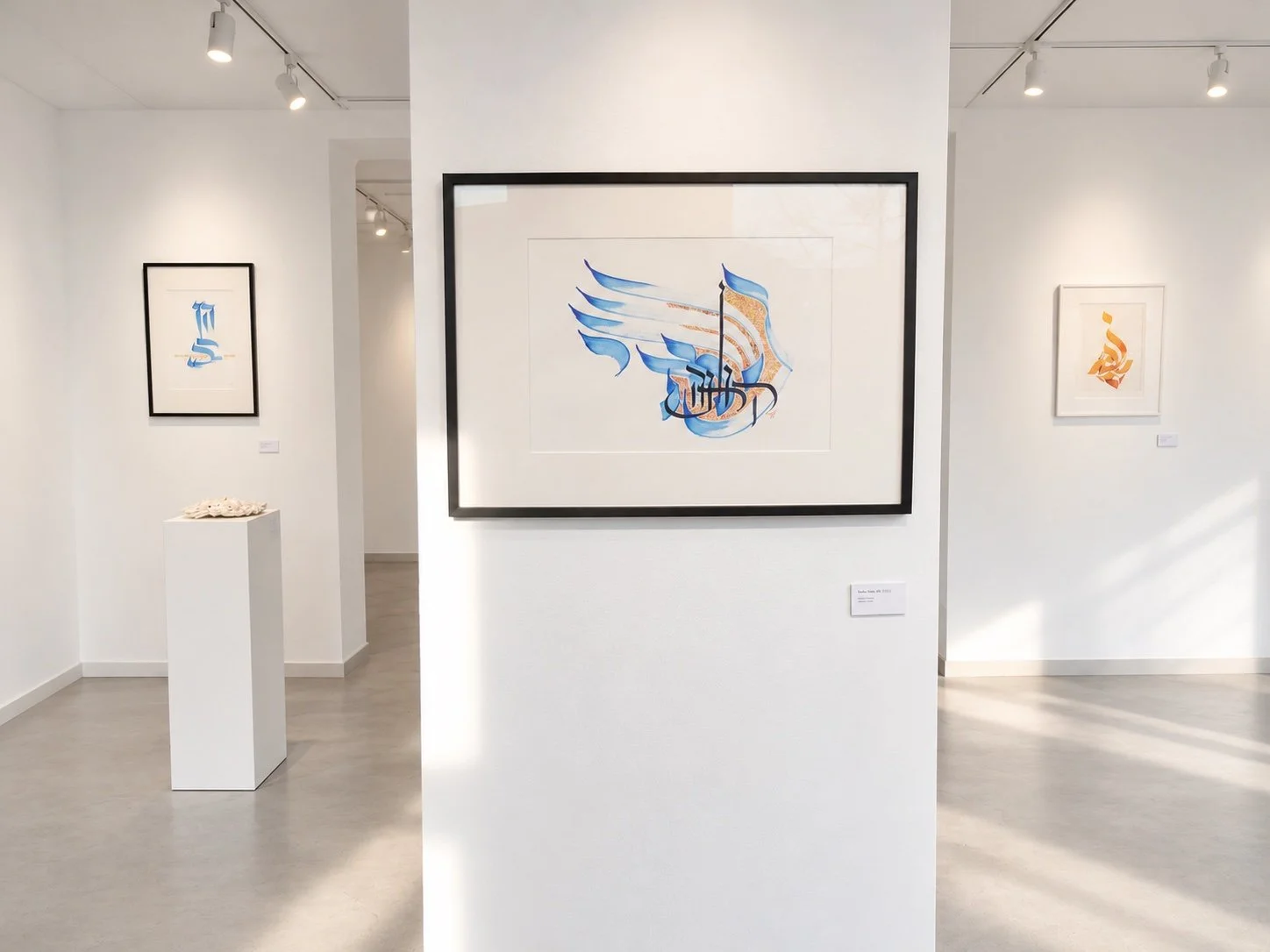
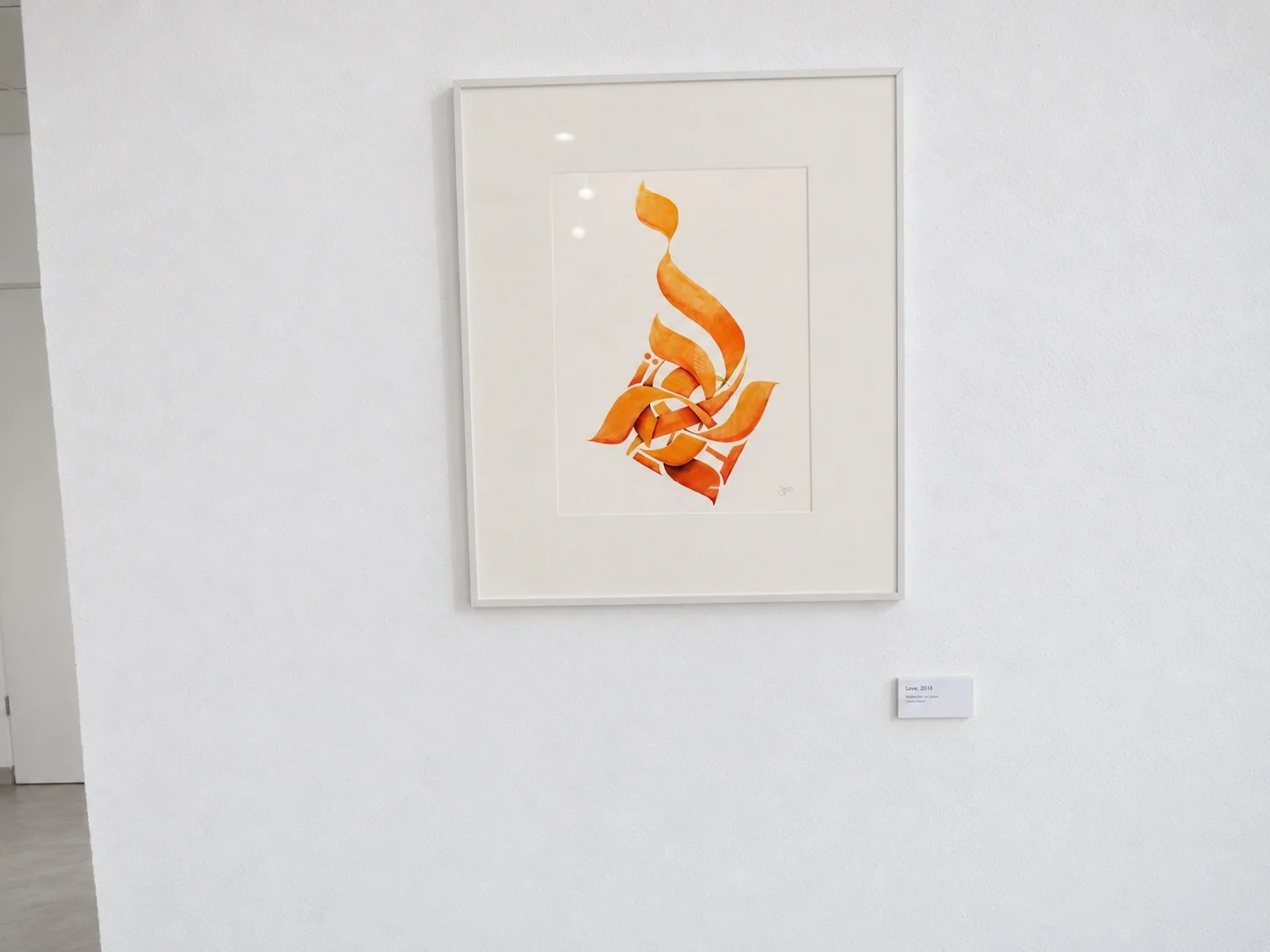
The exhibition included framed calligraphic works on paper. According to the catalogue, these are the series HaRav Kook #1–#5 (ink and China ink on paper, 2021) and Love (ink and China ink on paper, 2018). The exhibition also included a framed work titled Hassan Massoudy.
HaRav Kook is a series of five works. The texts are quotes from Rav Kook, the early twentieth century mystic who lived and worked in Jerusalem. On the one hand, I feel very close to him. As a mystic, many parts of his writing resonate deeply with me and feel almost intimate. On the other hand, he was also a strong nationalist, and some of the things he wrote in that regard are very difficult for me. This tension between a deep closeness and a very clear distance is what keeps me coming back to his writings again and again.
Love is the earliest work in the exhibition. It dates back almost a decade and was inspired by Eva Illouz’s Why Love Hurts: A Sociological Explanation (2012). I chose to include it because it shares the same underlying duality present in the other works: intimacy and alienation, proximity and distance.
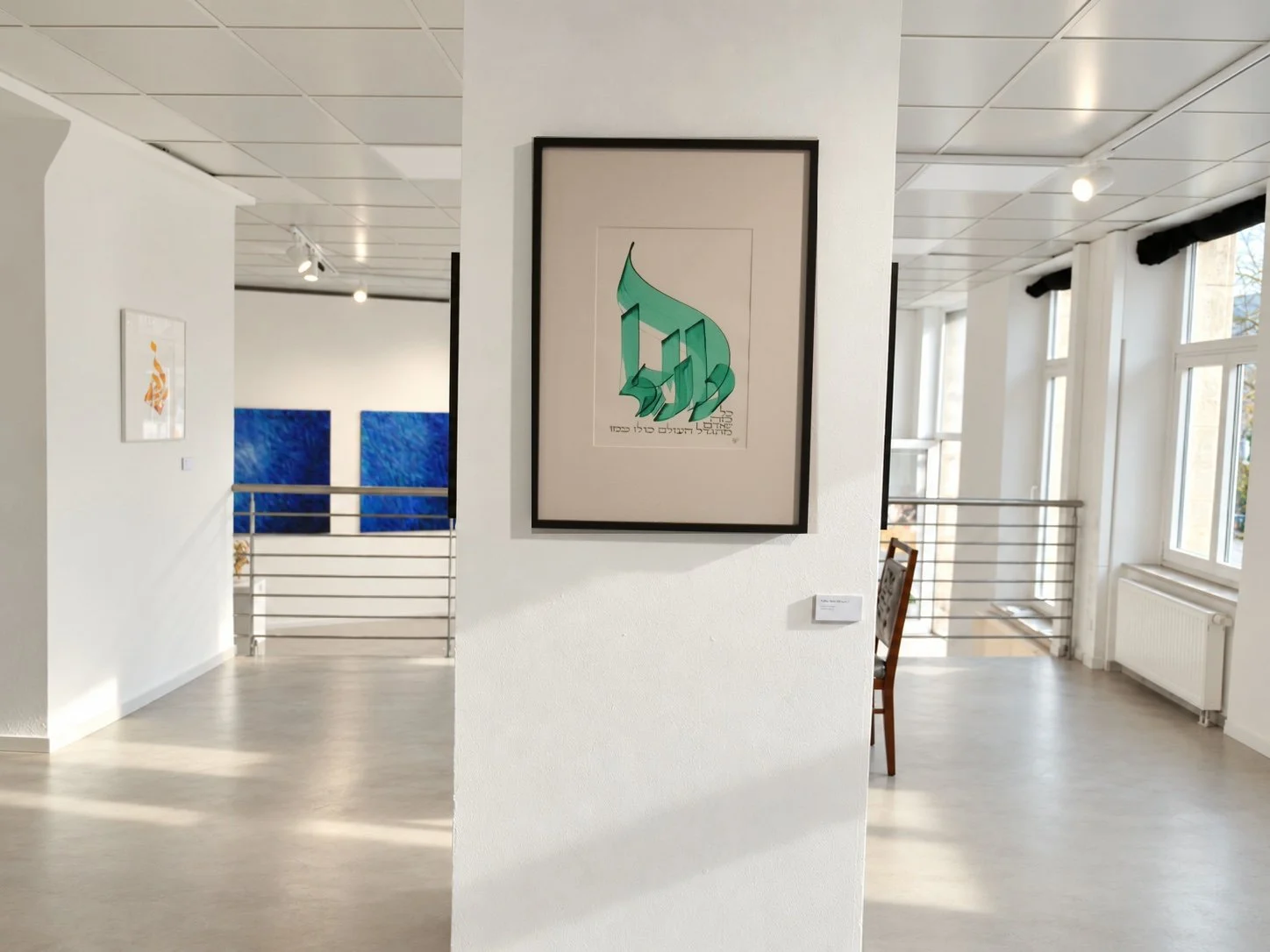
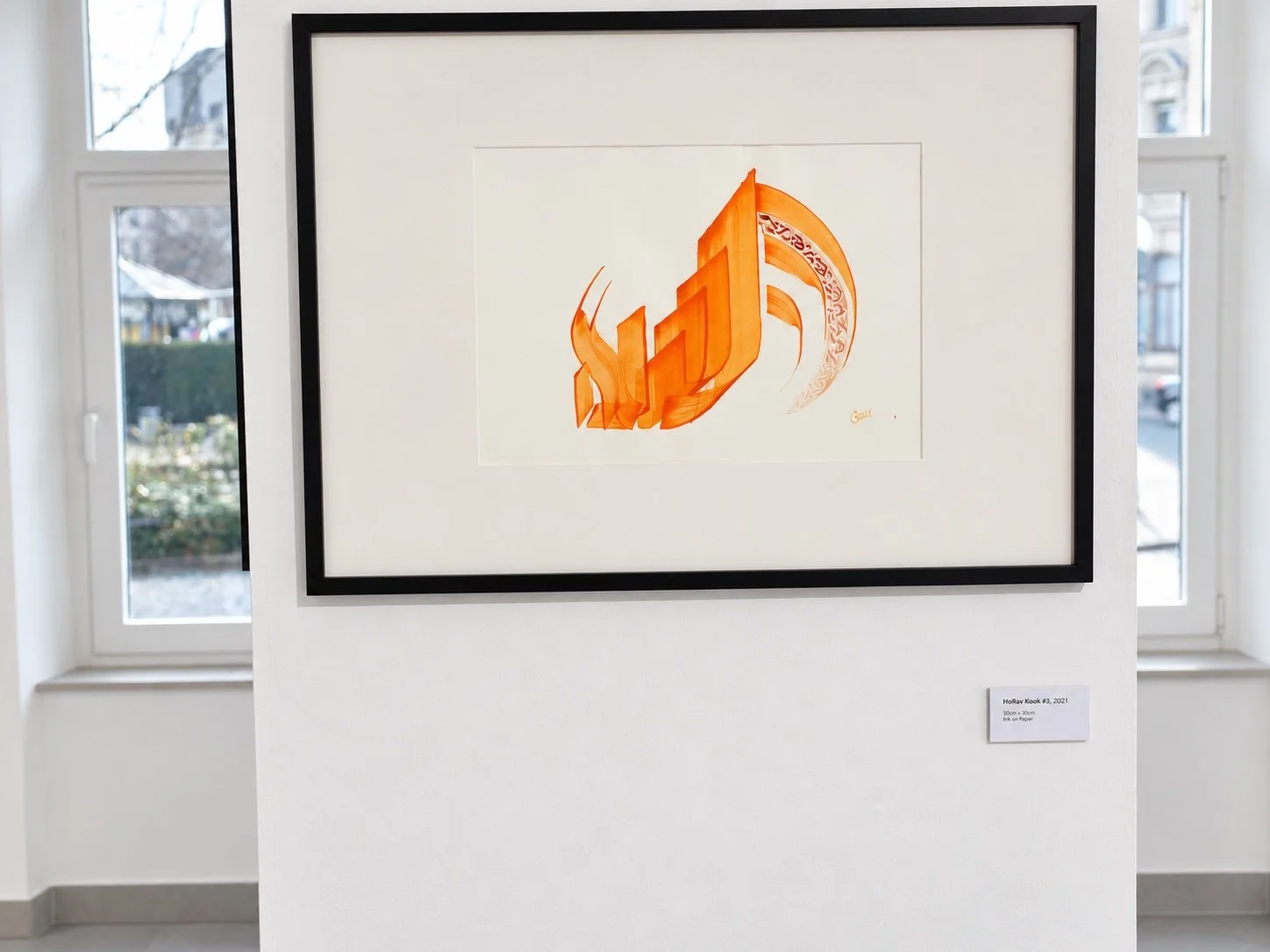
Quotations in HaRav Kook #1–#5
English translations as given in the catalogue.
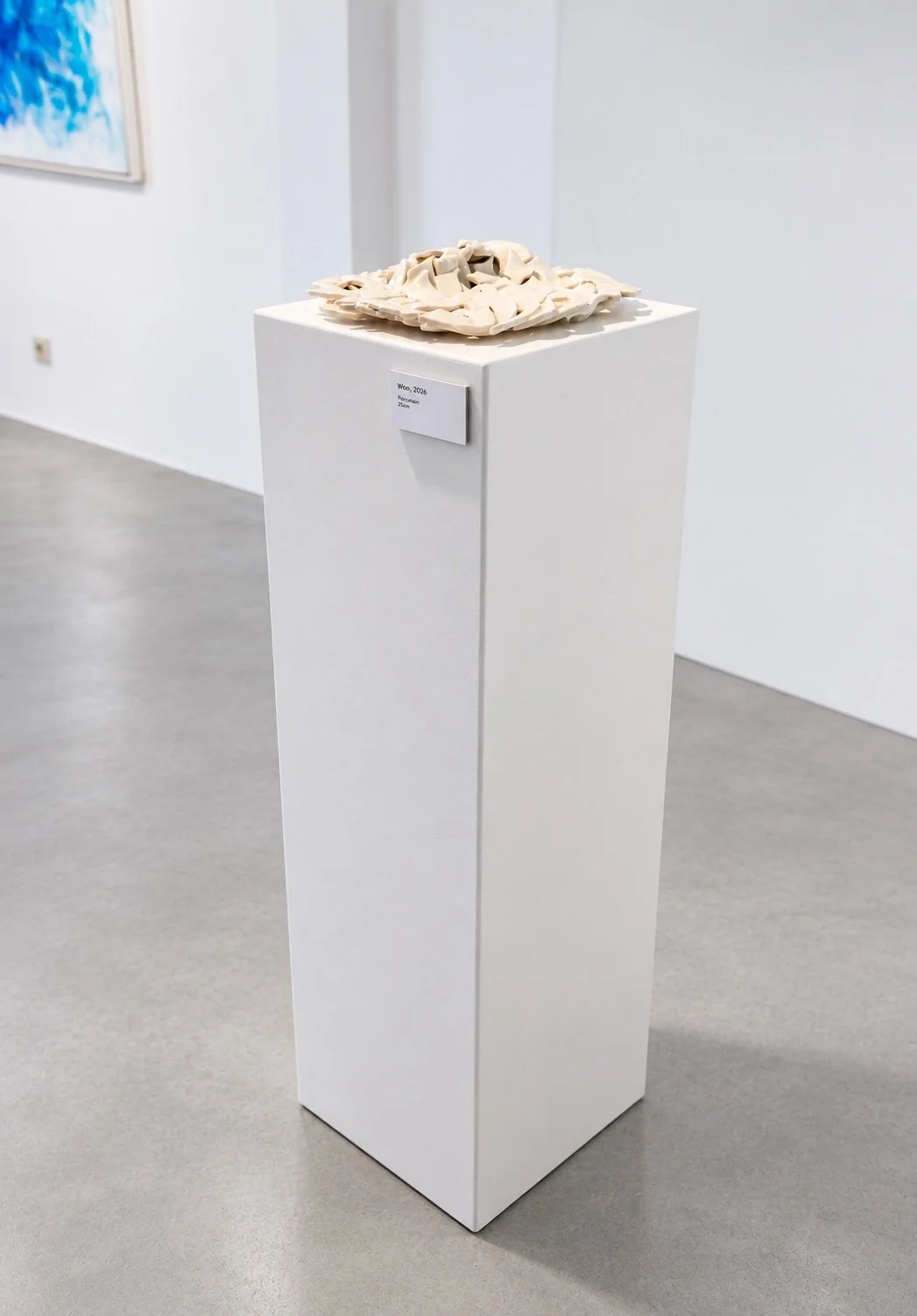
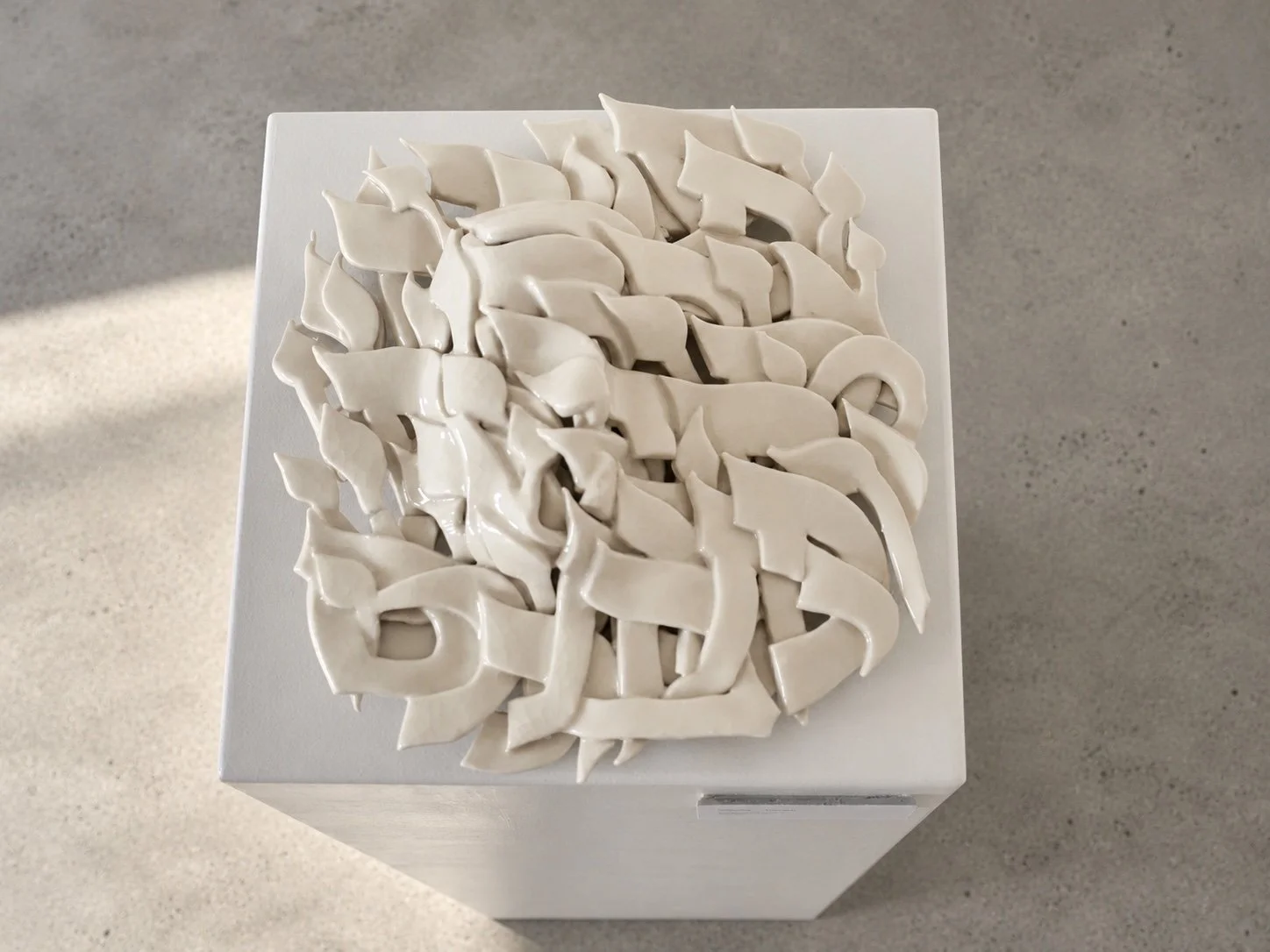
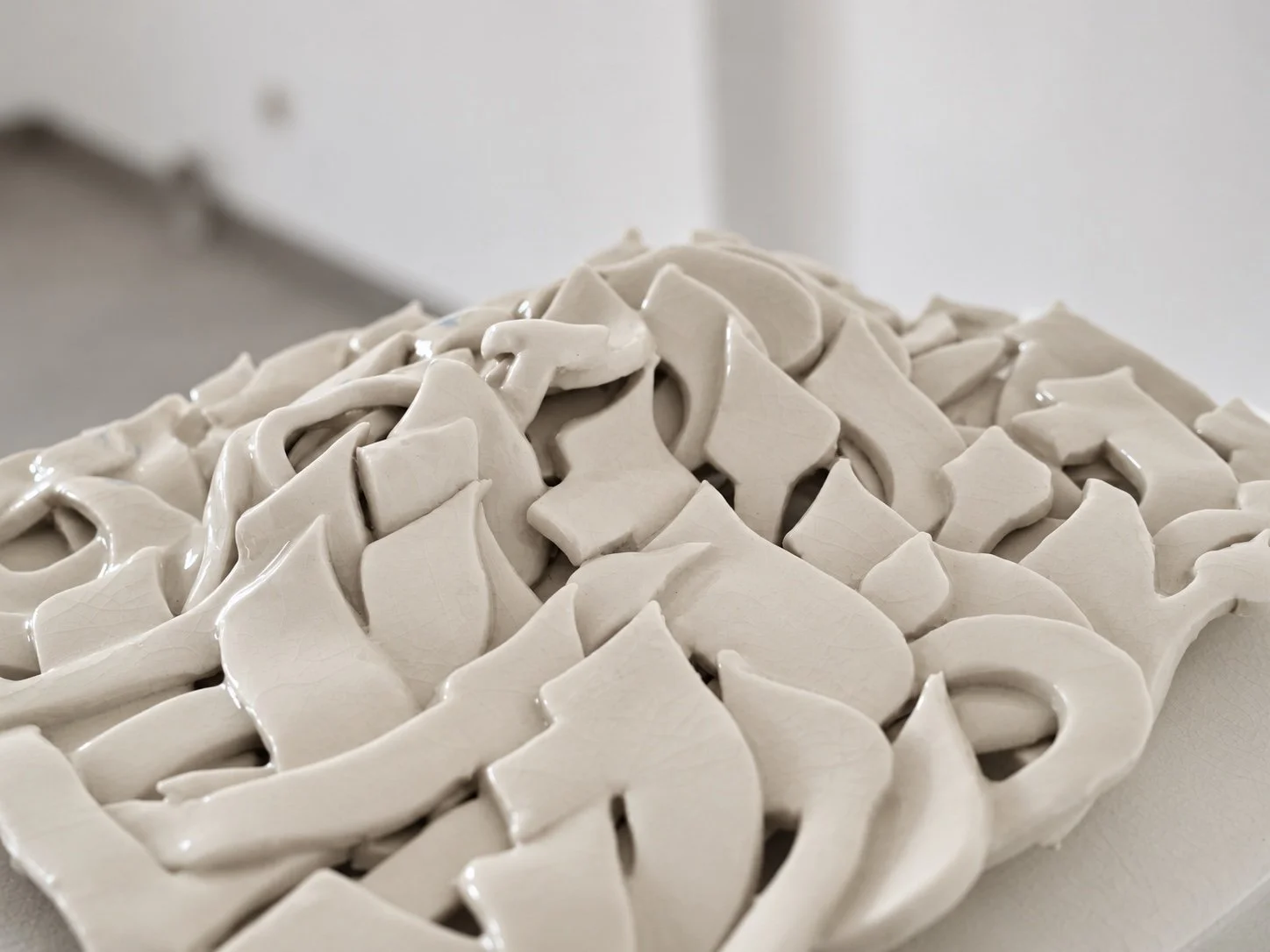
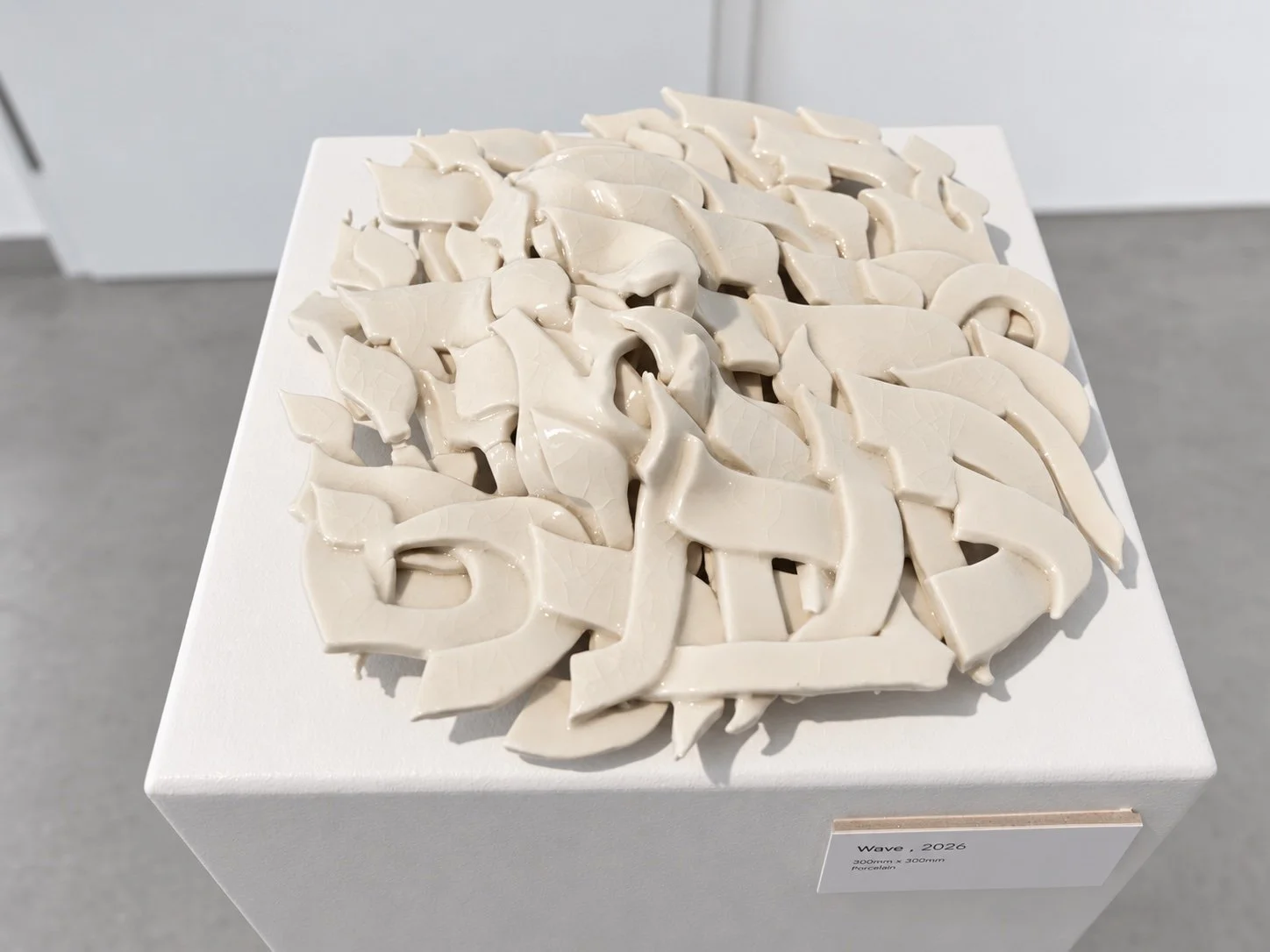
Wave
“Wave” is another attempt to express the liminality I feel in front of a changing personal as well as collective identity, these days. Things tend to appear subtly without taking enough form to be caught or expressed in words, making them elusive and intangible, yet not less present.
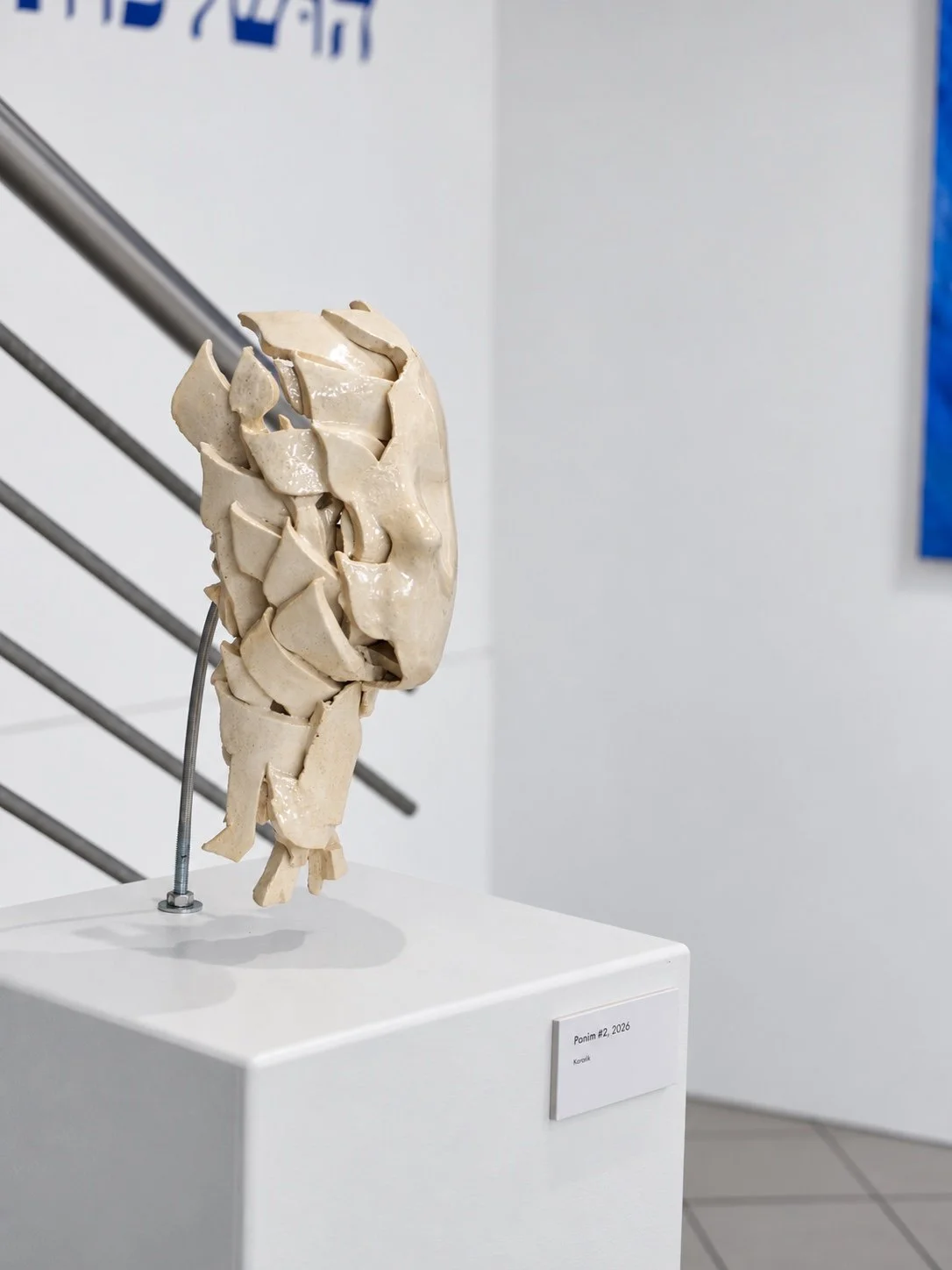
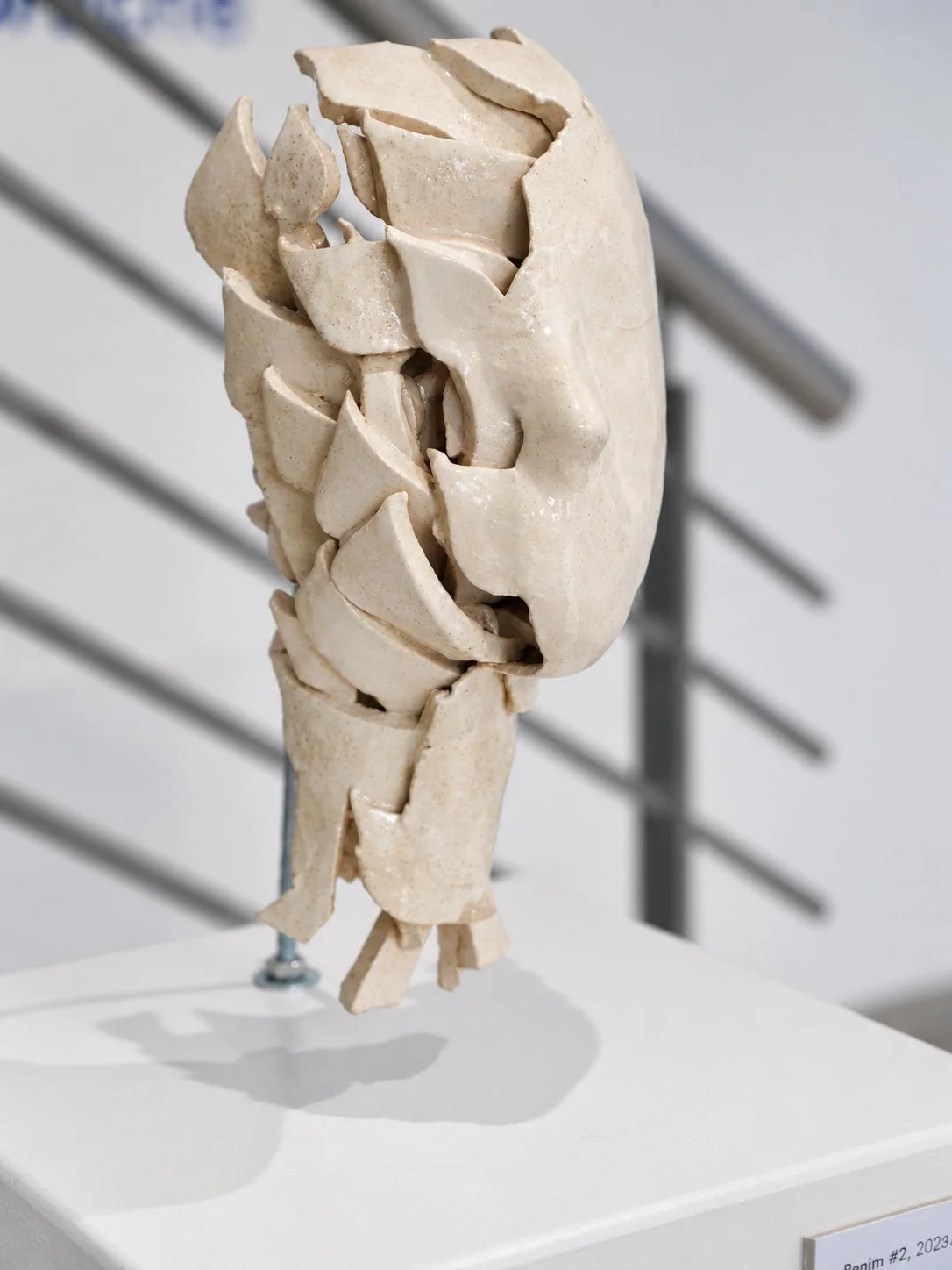
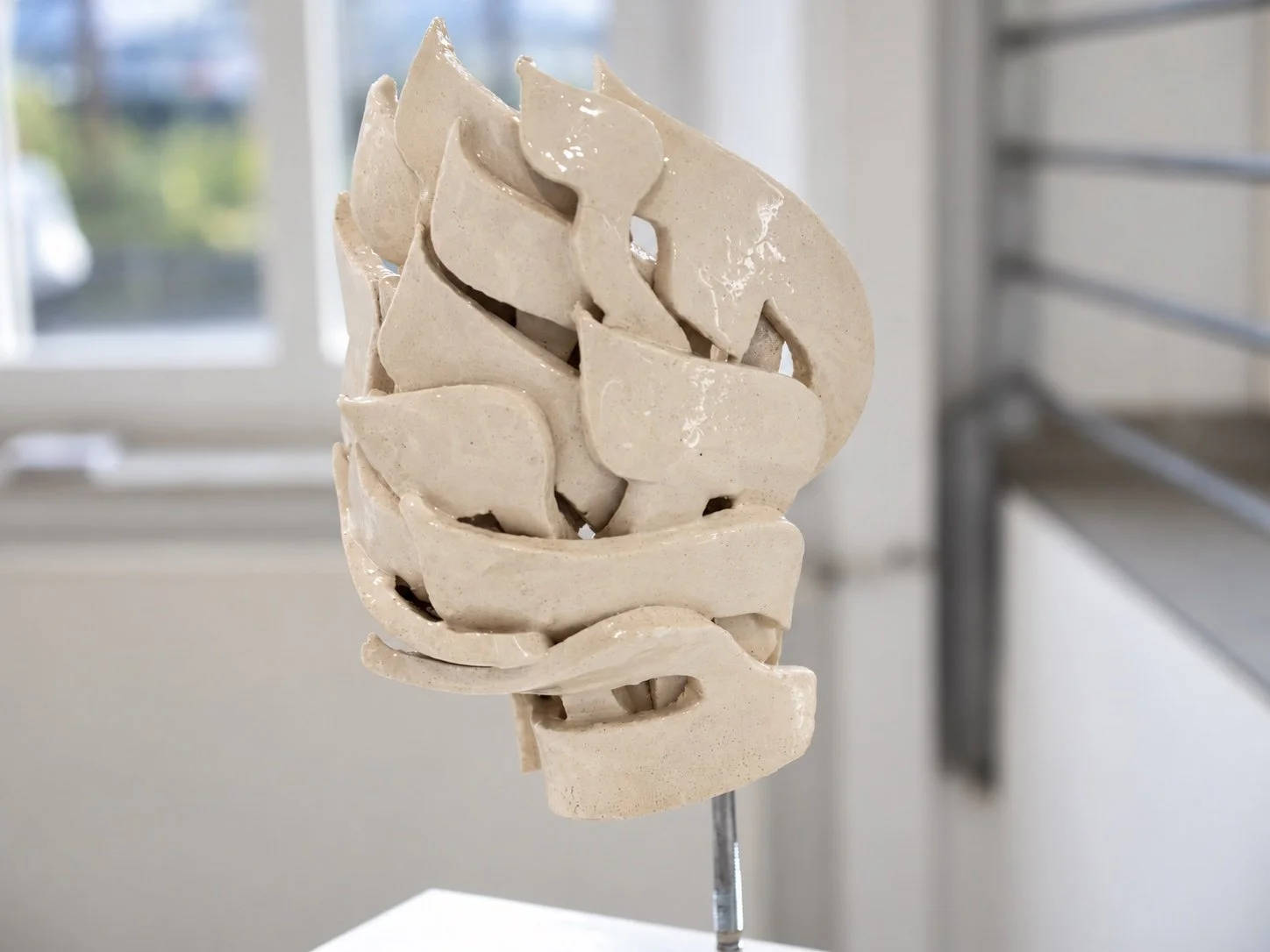
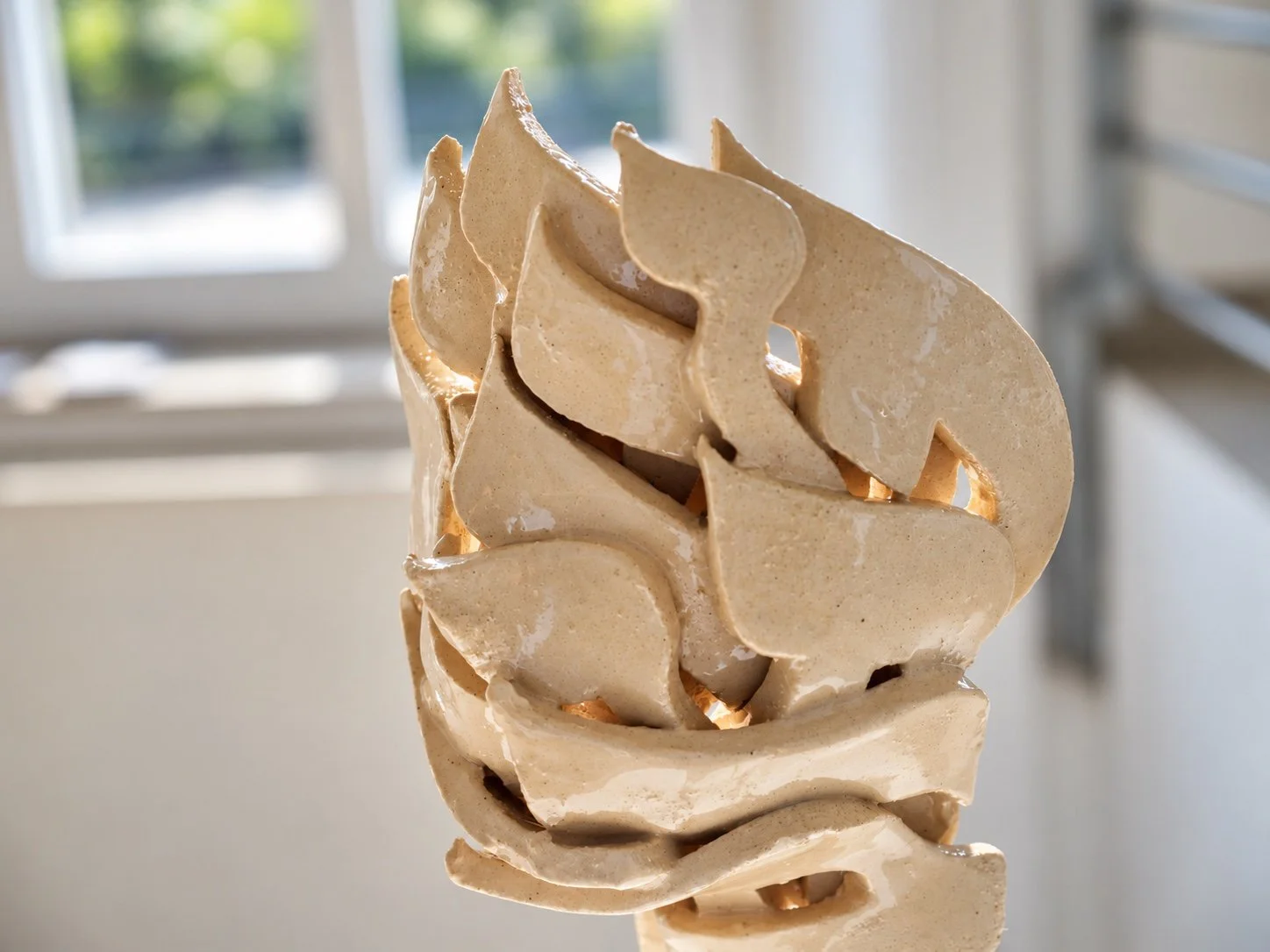
Panim #1 and #2
The Hebrew word panim carries a layered, paradoxical structure, which has been explored extensively in Jewish thought, especially in mystical traditions.
At the most basic level, panim means face, but grammatically it is always in the plural form. This already introduces a duality or multiplicity within what appears to be a single, unified presence. A face is never just one thing. It is shifting, relational, and never fully graspable.
There is also a well known linguistic connection between panim and penim, meaning inside or interiority. The same root gestures both outward and inward. The face is what is most visible, yet it is also the gateway to what remains hidden. In this sense, the exterior already contains the interior.
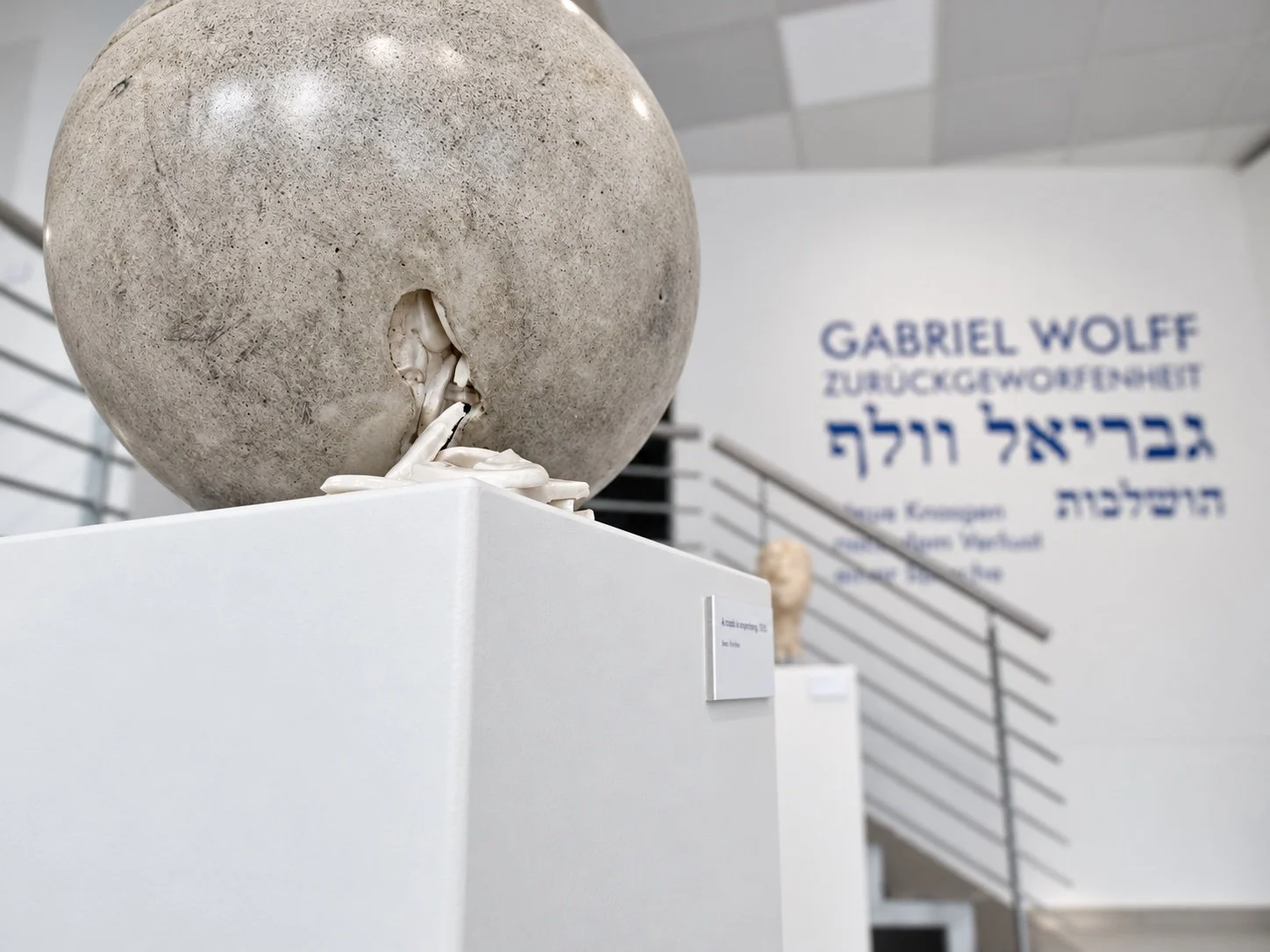
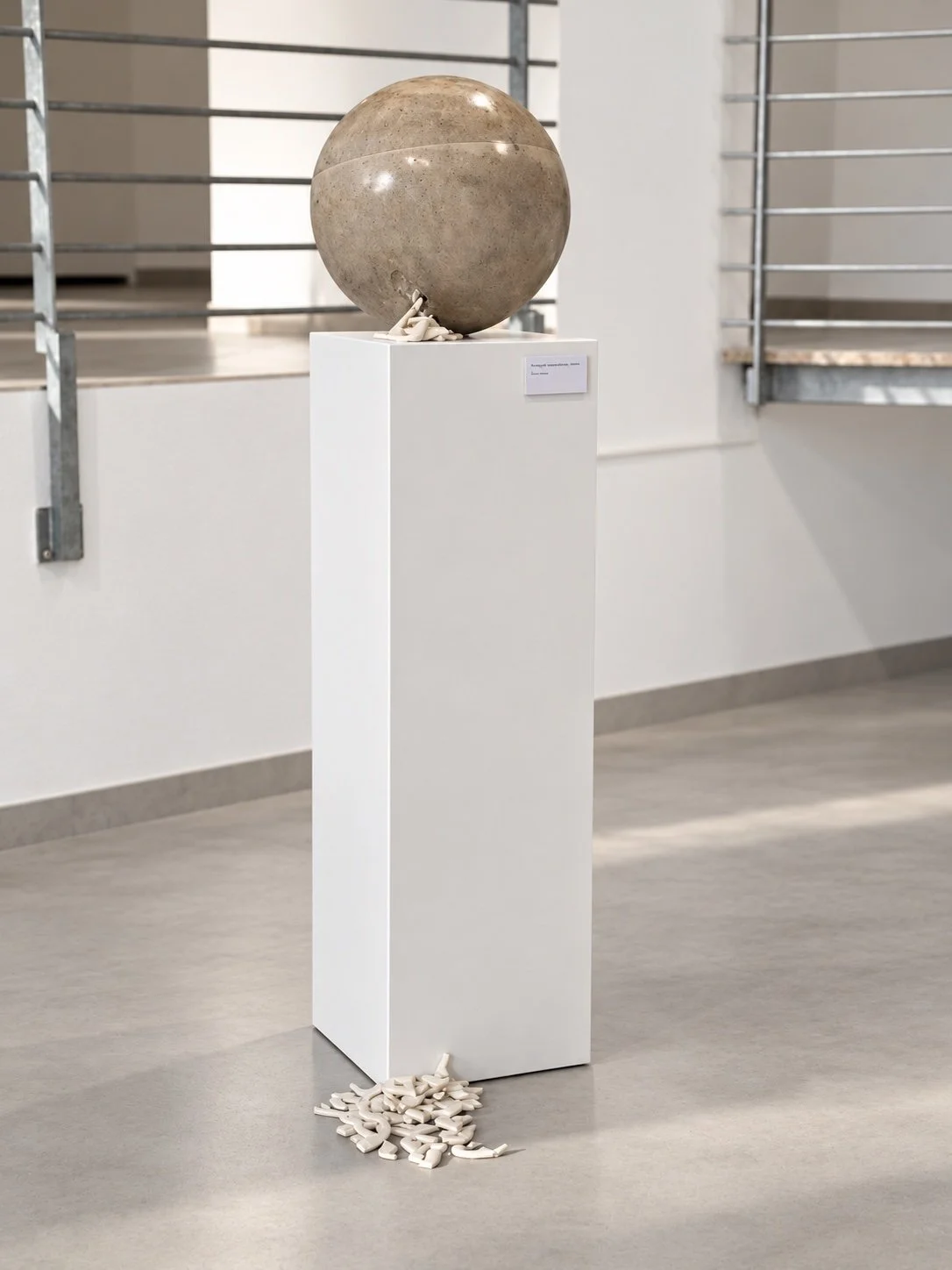
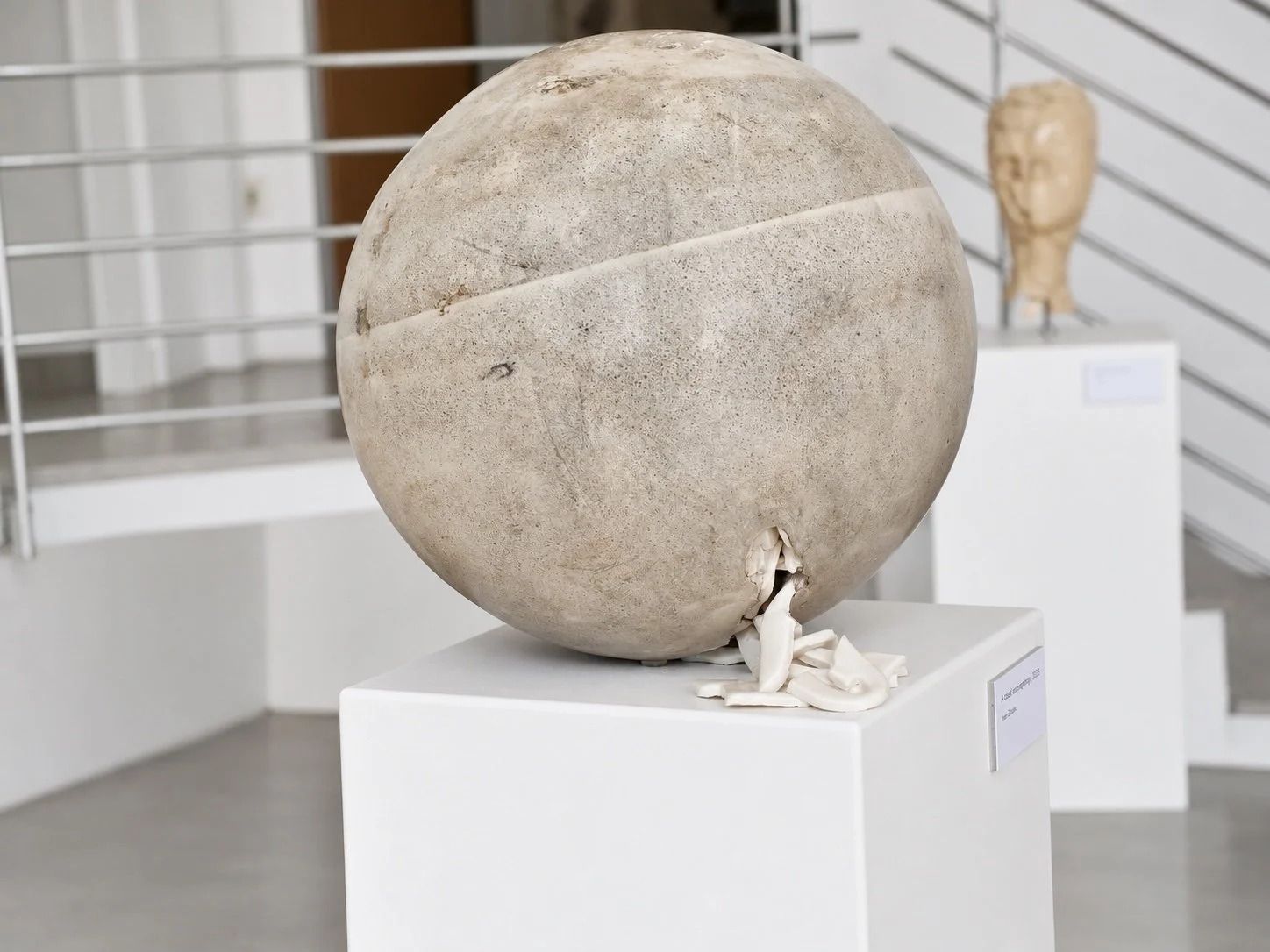
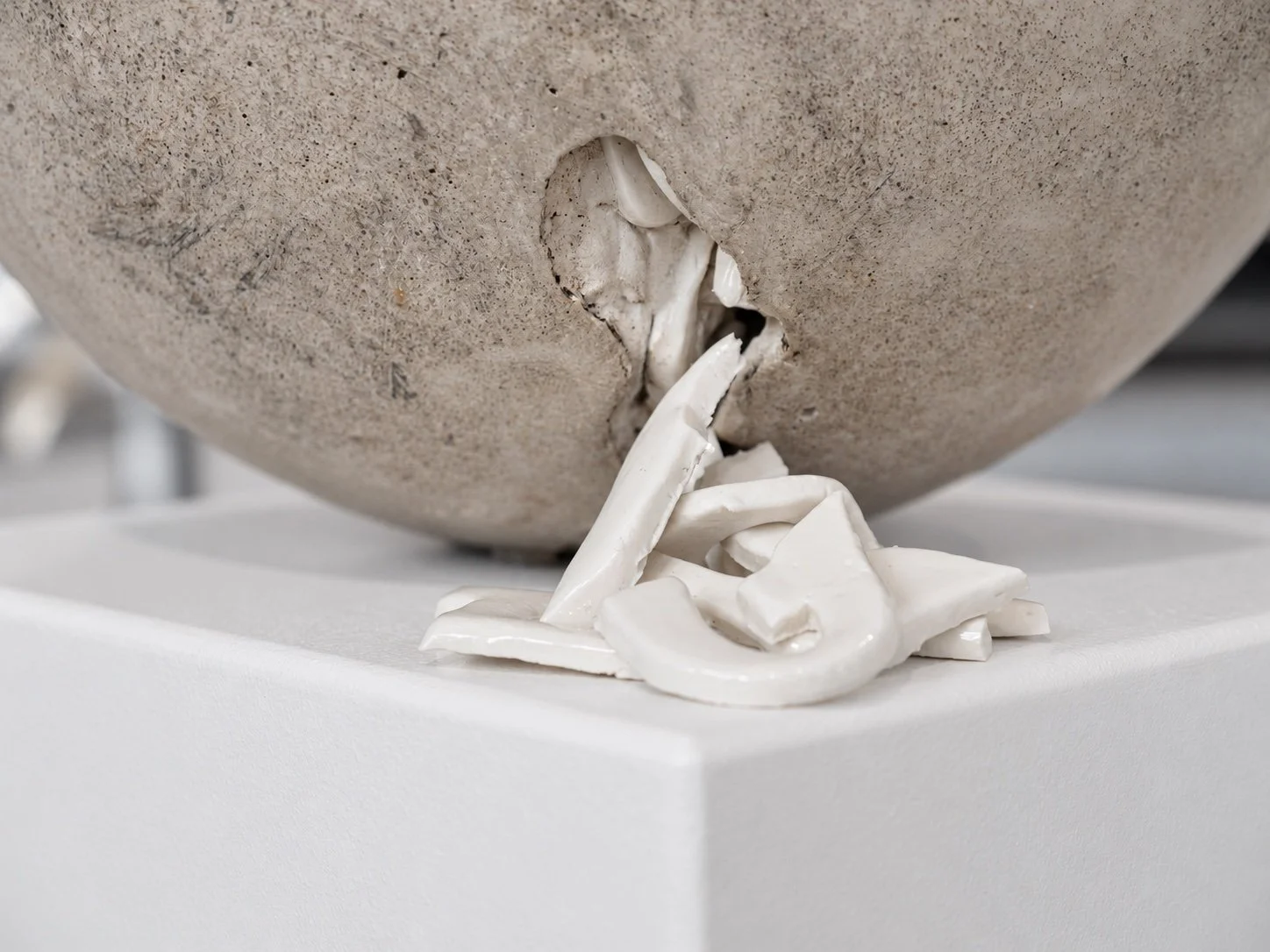
A crack in everything
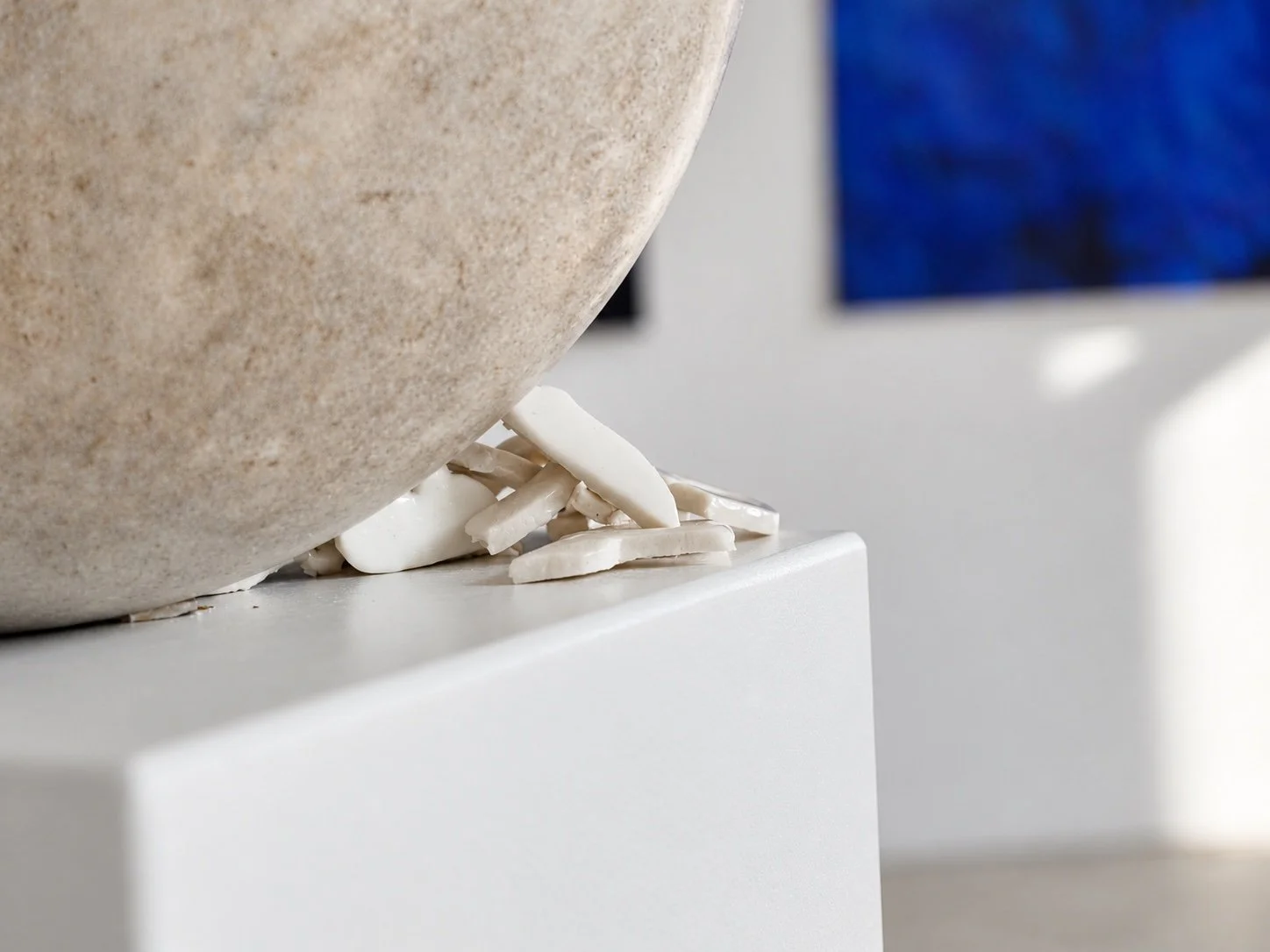
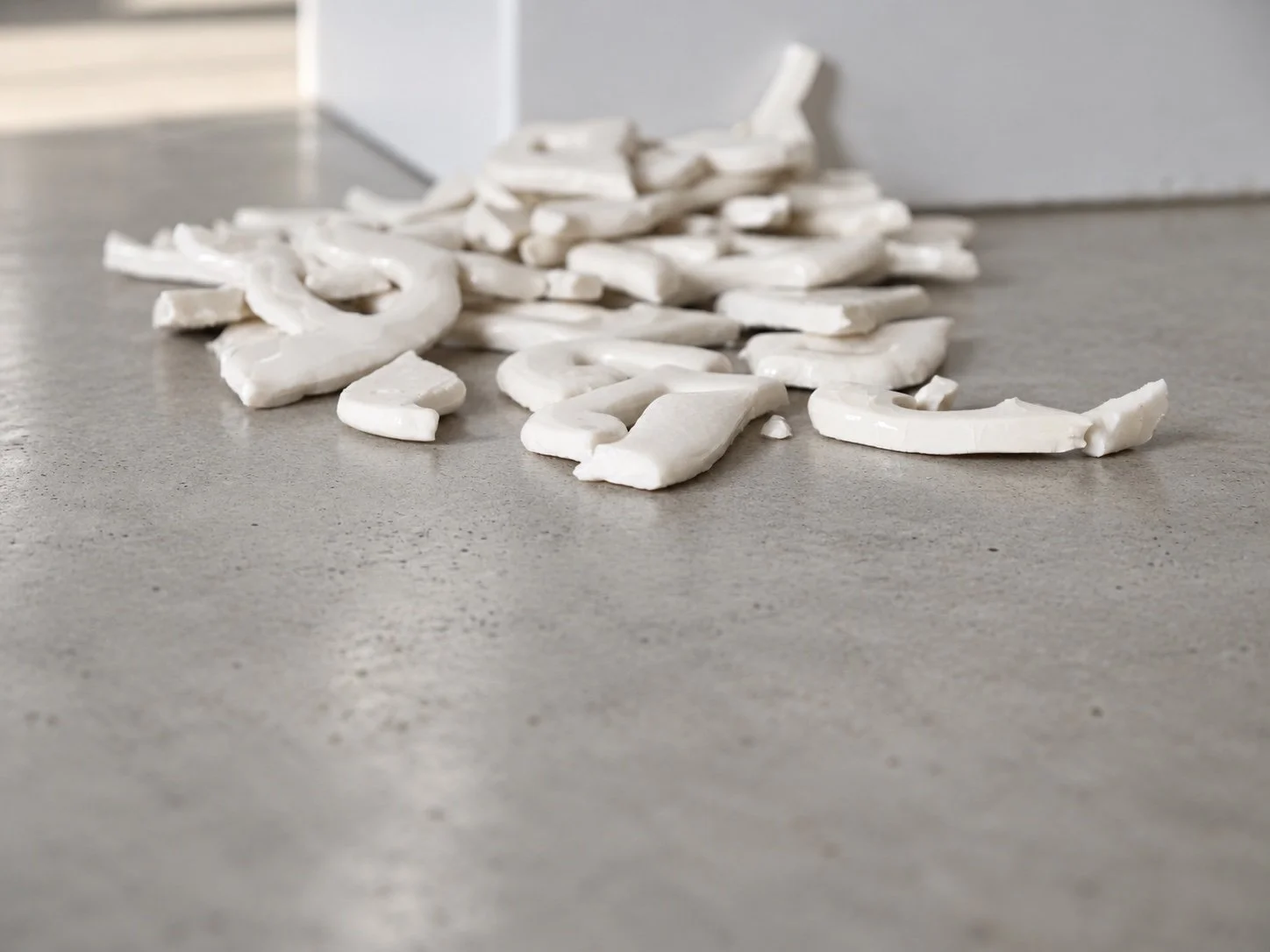
In my artistic language, round forms often suggest perfection and wholeness. At times they point toward God, at times toward the unharmed self. These forms serve as the ground for both growth and deconstruction. Here, the round form holds both at once.
Into this form I placed the idea expressed in Leonard Cohen’s line: “There is a crack in everything. That’s how the light gets in.” I experience this thought as deeply Jewish, closely echoing a teaching attributed to the Kotzker Rebbe: “There is nothing more whole than a broken heart.”
Letting the roughness of concrete meet the vulnerability of porcelain, this work exists within that tension.
Moshav Litzim
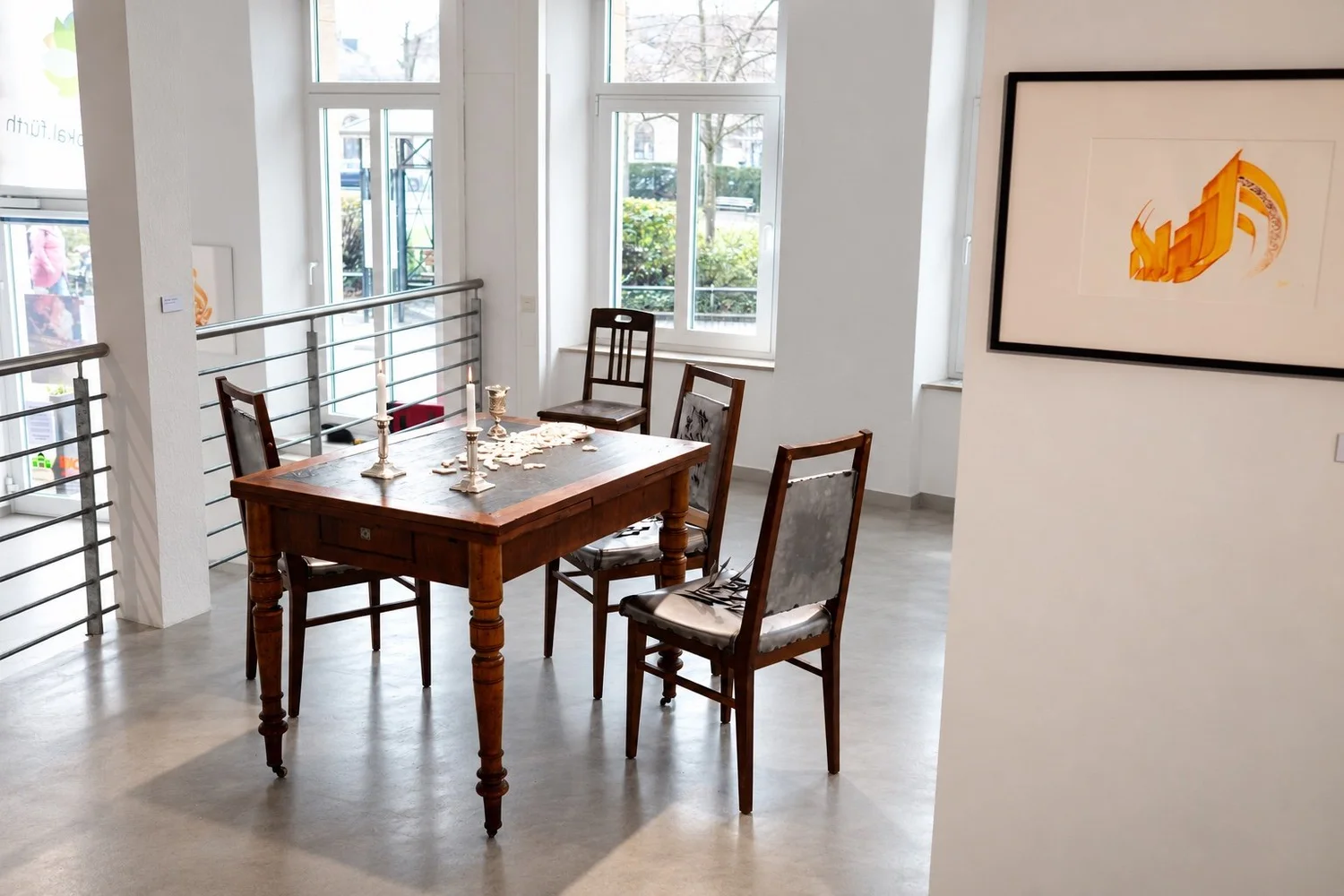
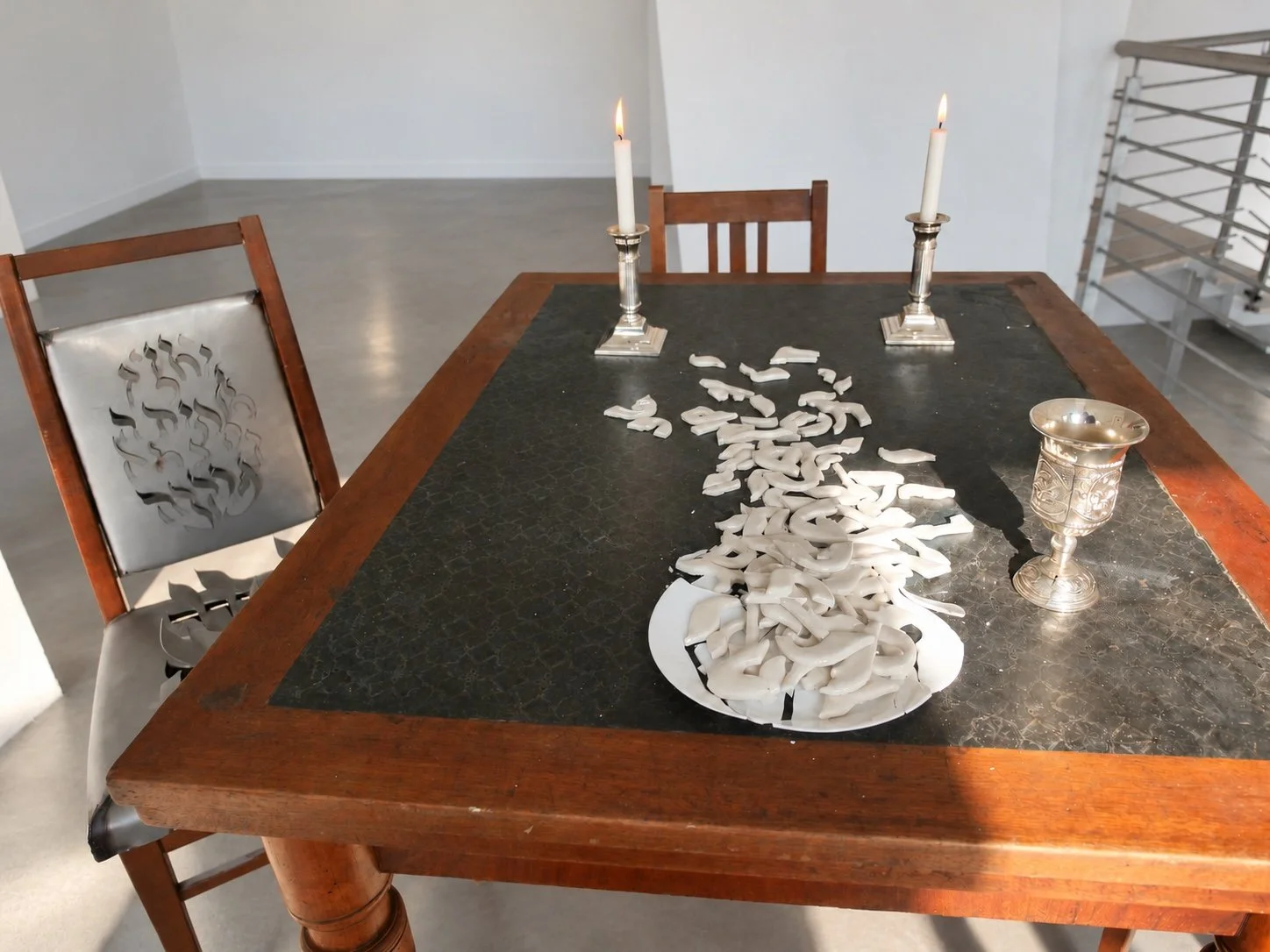
Moshav Litzim is the central work of the exhibition, bringing the tension present in all the works in the show to a peak. The title draws on a term that appears in Jewish texts, most notably in Pirkei Avot, where the “moshav leitzim” is described as a place of mockery or spiritual emptiness, a gathering that stands in opposition to spaces of study, prayer, or meaning.
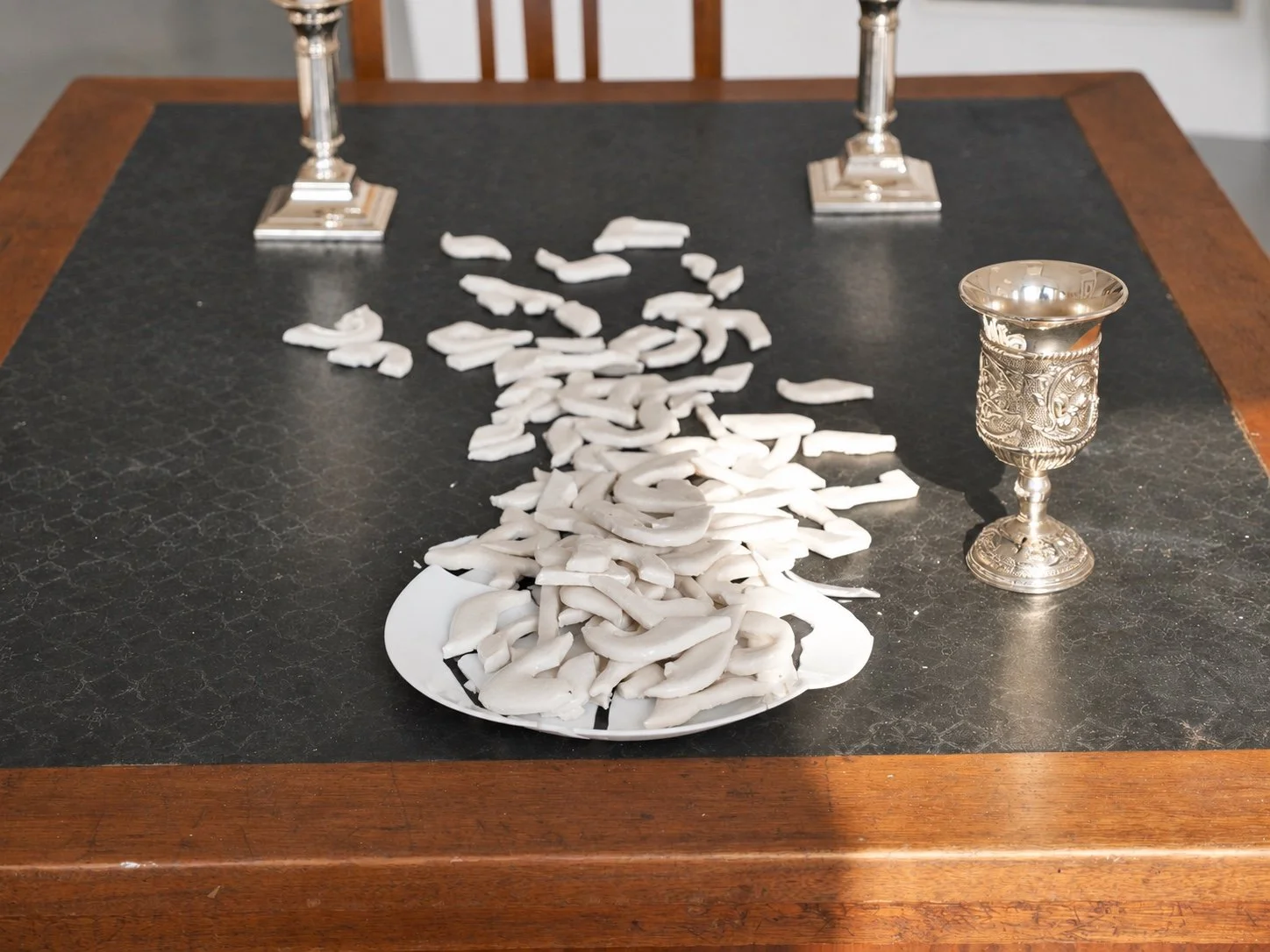
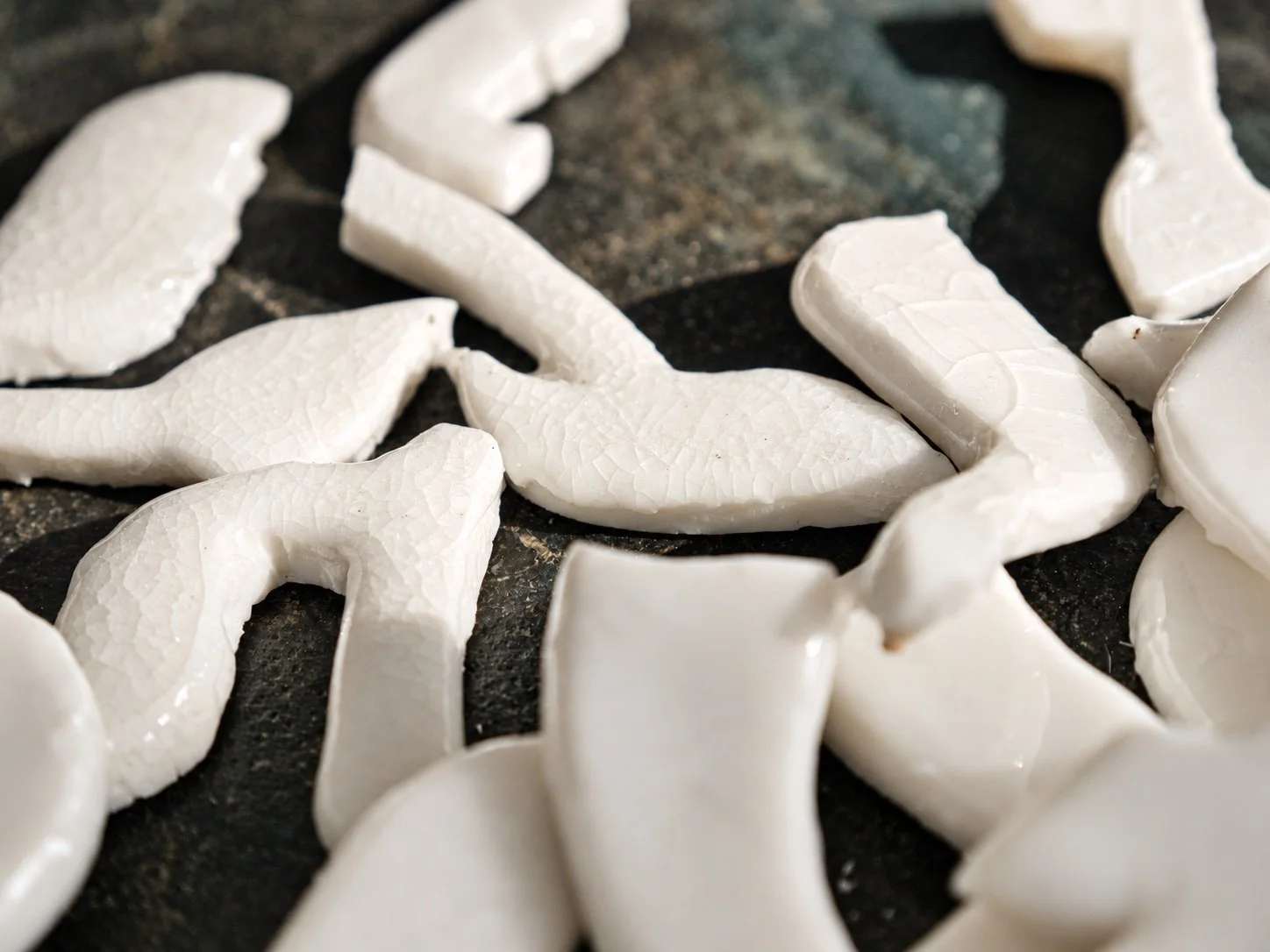
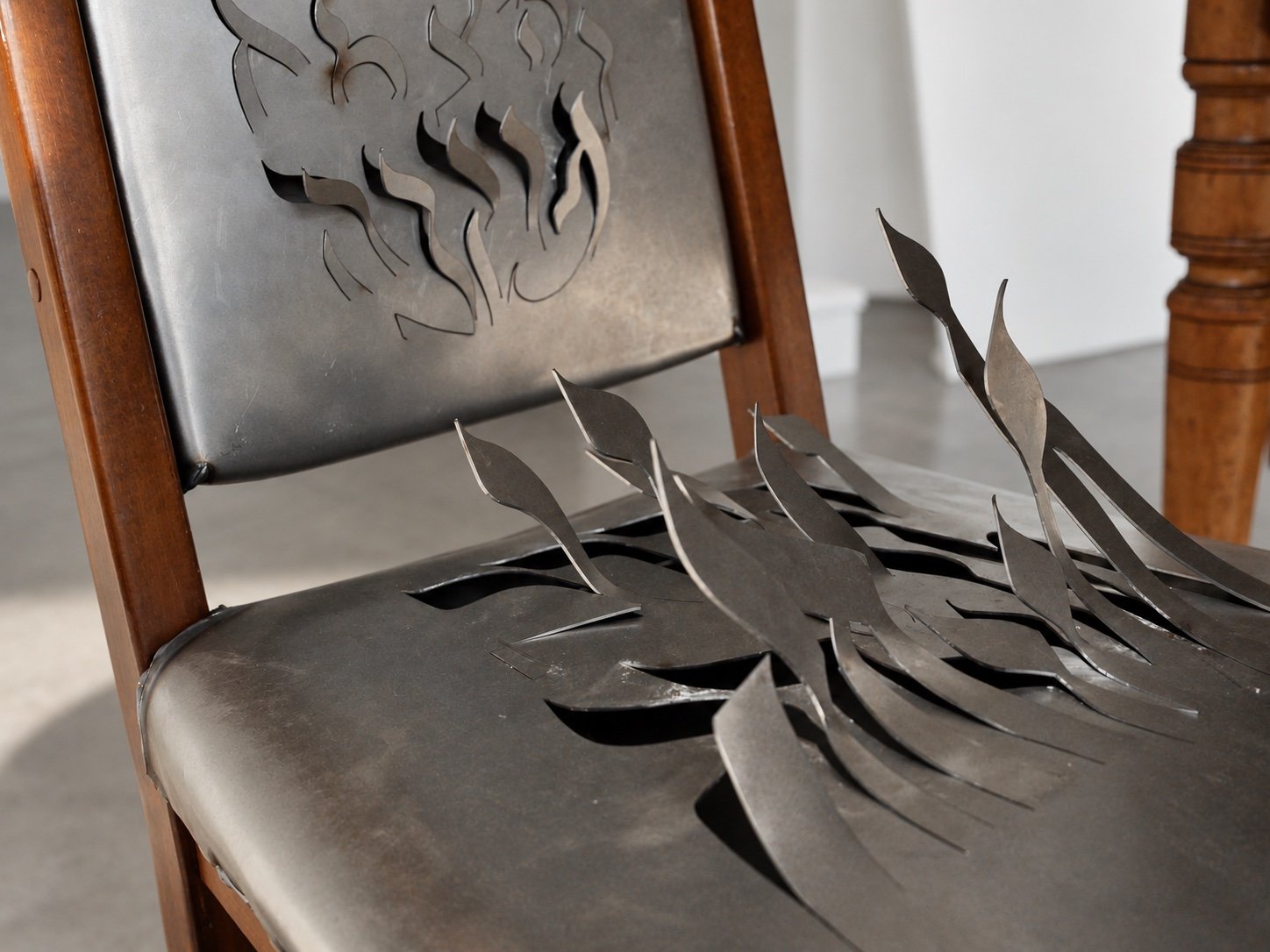
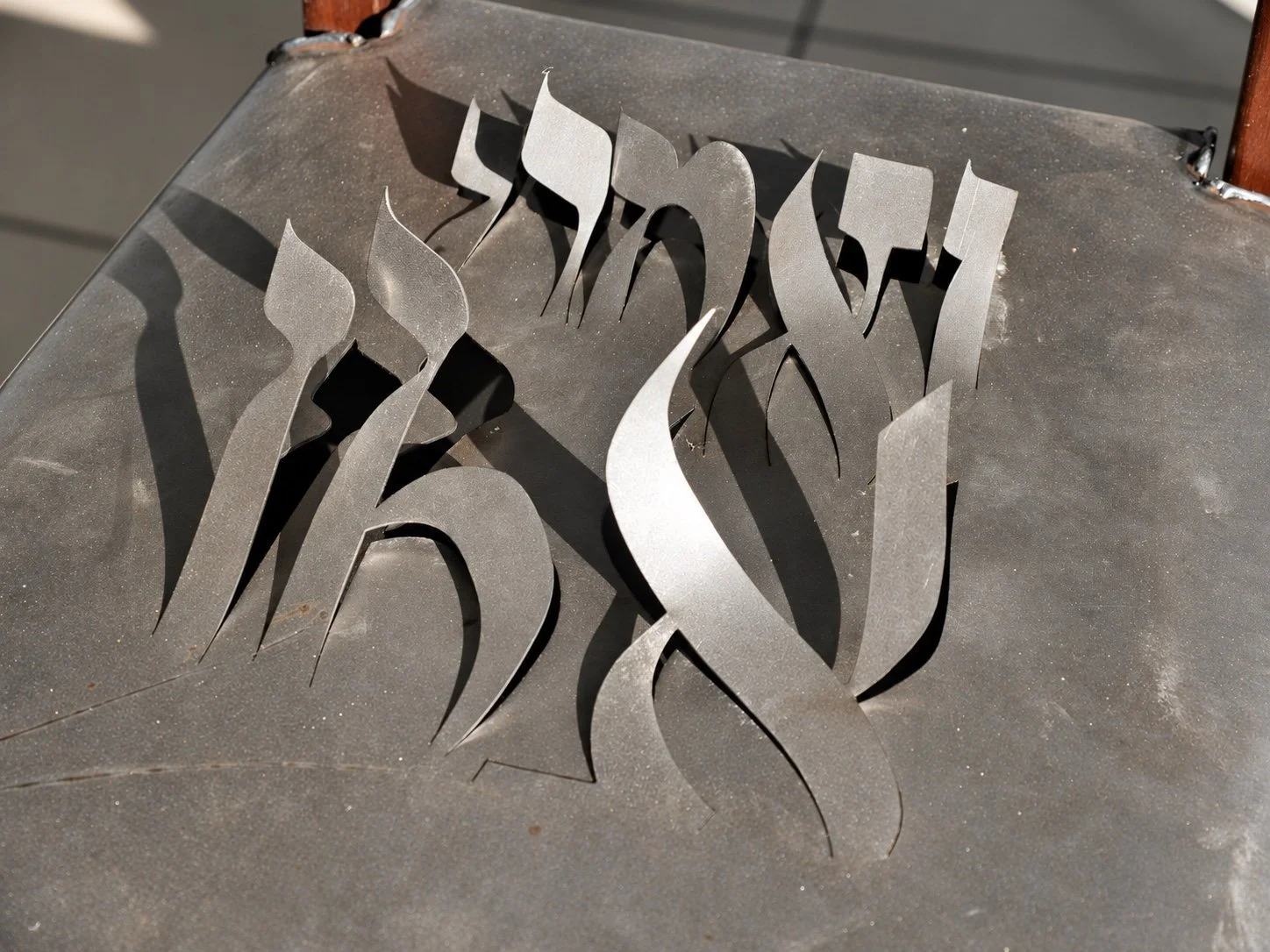
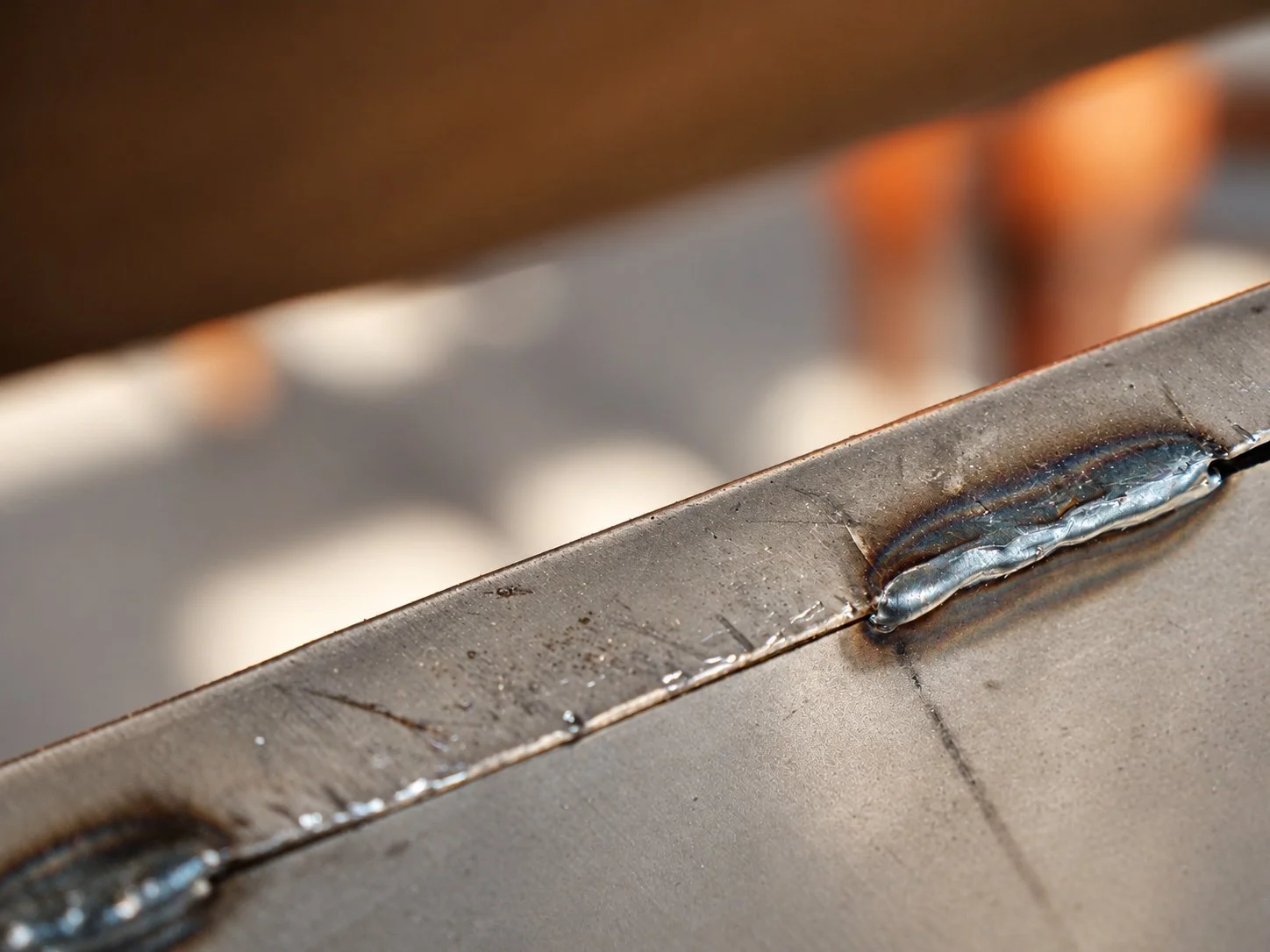
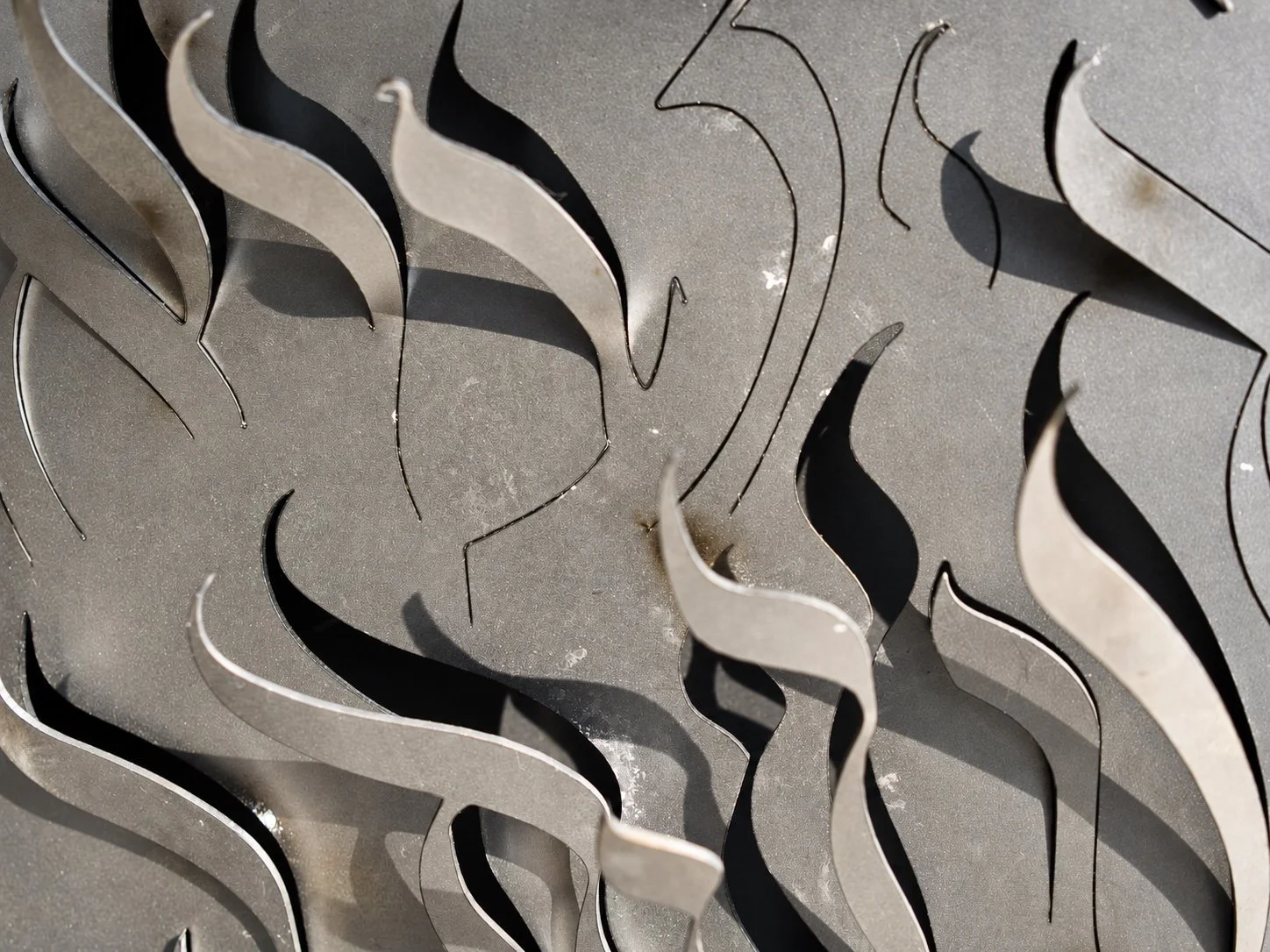
This cultural resonance introduces a quiet tension into the work, evoking a site that resembles a home or communal setting, yet carries an undercurrent of estrangement. The text used is, once again, the Kaddish, placing the intimacy of the text at the center of the work while simultaneously alienating the viewer and distancing them through the materials I chose, with steel replacing cushions and broken porcelain replacing food.
The text flows from the chairs onto the table, disrupting the scene and deconstructing the text in the process. The ready made elements I chose, the Kiddush cup and the Shabbos candlesticks, are taken from my own home.
Table
Chairs
The artist in the exhibition
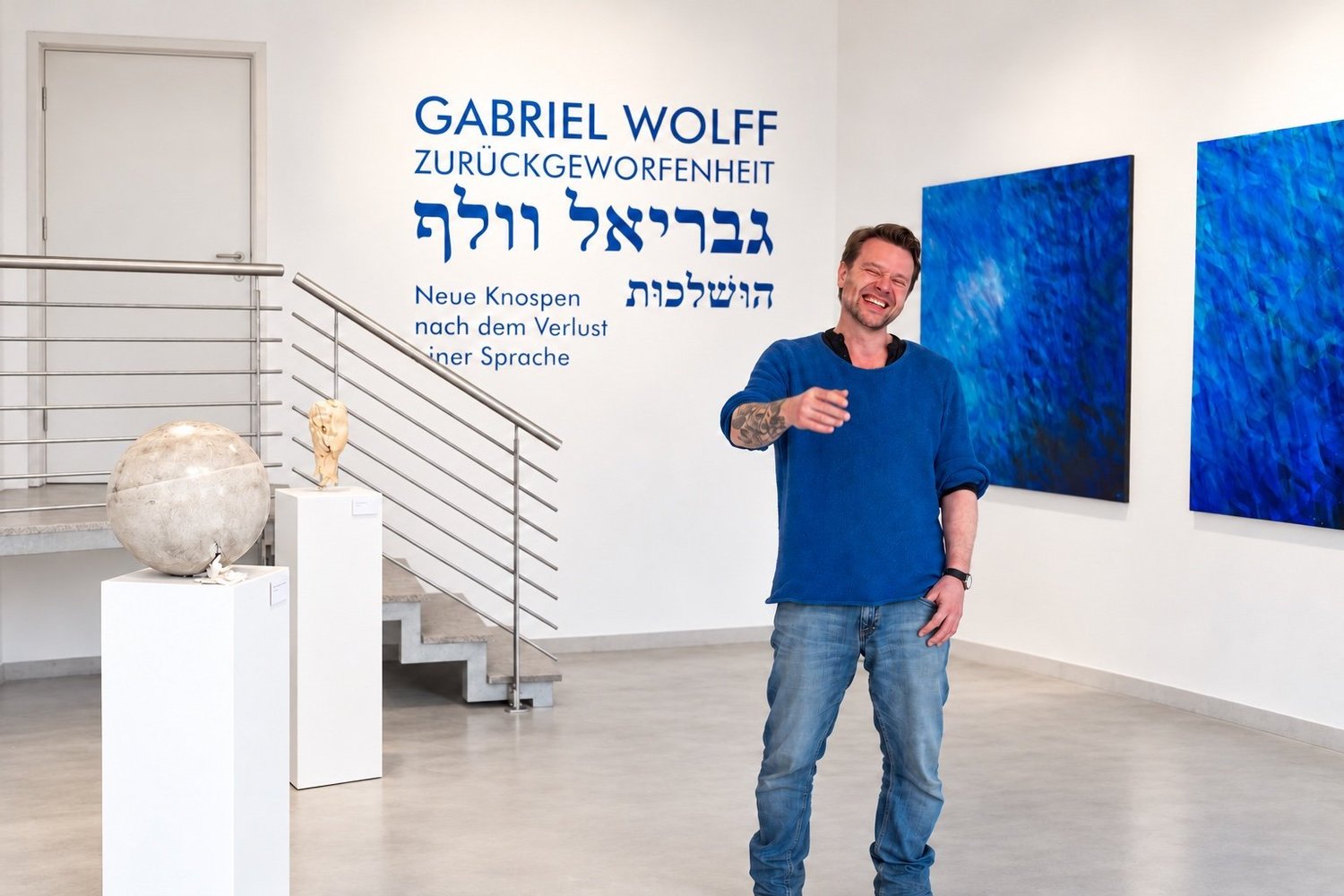
During Jewish Music Today 2026, I worked in the exhibition space and spoke with visitors as the project continued to develop. This made the gallery not only a place in which finished works were shown, but also a temporary studio and a space for conversation about language, Jewish identity, migration, rupture and renewal.
Press
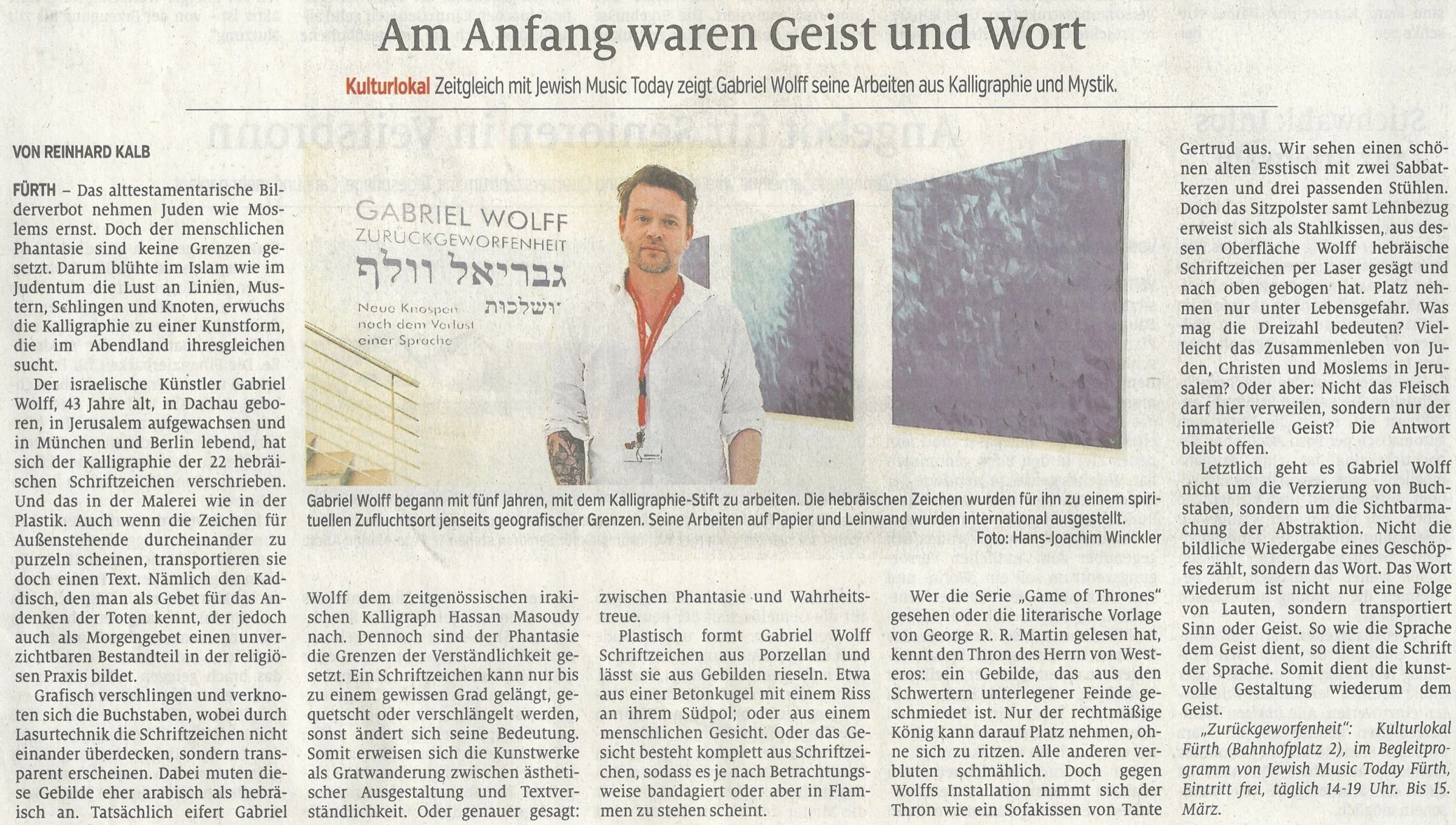
Reinhard Kalb reviewed the exhibition for the Nürnberger Nachrichten (online, 11 March 2026) under the headline “Am Anfang war das Wort: Fürth zeigt Gabriel Wolffs Kunst aus hebräischen Schriftzeichen”, and for the Fürther Nachrichten (12 March 2026) as “Am Anfang waren Geist und Wort”.
The exhibition was also featured in the official programme of Jewish Music Today 2026 and in the City of Fürth publication INFÜ.
Catalogue
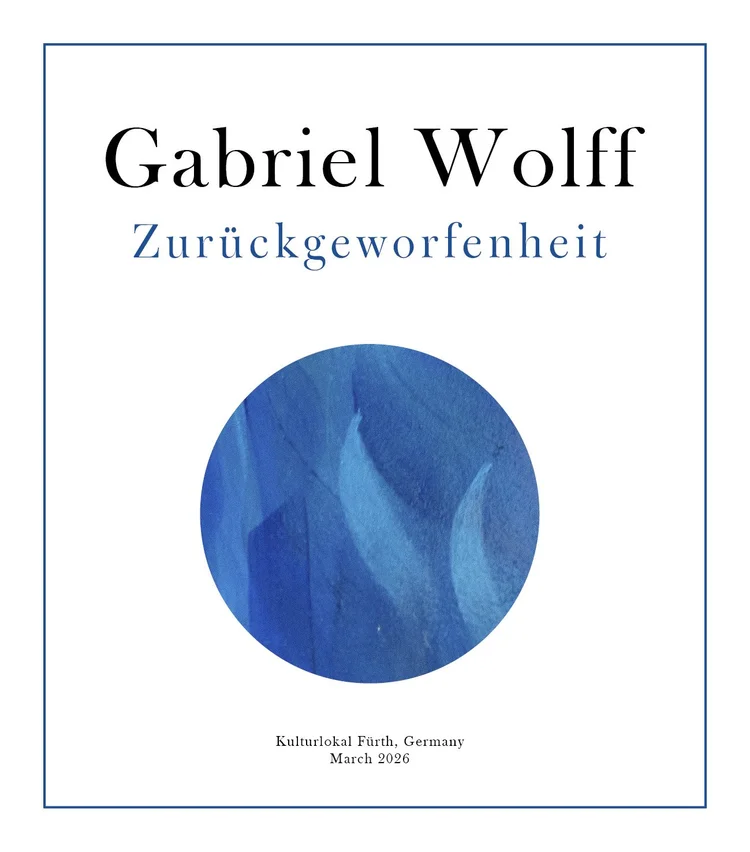
The catalogue of Zurückgeworfenheit, Fürth 2026, can be read page by page online.
Print catalogue: Sold Out · View in shop
Credits
- Exhibition
- Gabriel Wolff
- Photography
- Patrick Wolfmar
- Venue
- kultur.lokal.fürth, Bahnhofplatz 2, Fürth
- Presented with
- Kulturamt der Stadt Fürth
- Context
- Jewish Music Today 2026, Klezmer Festival Fürth
- Press
- Reinhard Kalb, Nürnberger Nachrichten and Fürther Nachrichten; press photograph by Hans-Joachim Winckler
- With thanks
- The team at Jewish Music Today, organizers of the Klezmer Festival Fürth, especially Anna Sankowsky, Gerti Köhn and Jacqueline Roscher; and Daniel Sgan Cohen for his support, feedback and experience.